




There are famous buildings, and then there are buildings that have become so hopelessly attached to a city that separating the two feels impossible.
Paris has the Eiffel Tower. New York has the Empire State Building. Dubai has the Burj Khalifa.
And Sydney has a giant white structure sitting on the harbor that looks suspiciously like Sonic the Hedgehog froze mid-sprint and somebody poured concrete over him.
Welcome to the Sydney Opera House.
It is one of the most recognizable buildings on Earth, a UNESCO World Heritage Site, and arguably the single piece of architecture responsible for turning Sydney Harbour into one of the world’s most recognizable skylines.
It is also the spectacular result of an architectural project that ran wildly over budget, dragged on for more than a decade, became a political nightmare, and ended with its architect leaving Australia before the thing was even finished.
In other words, everything went perfectly.
DESTINATION: SYDNEY OPERA HOUSE
GPS COORDINATES
-33.8565, 151.2150
CLOSEST AIRPORT
CURRENT WEATHER
few clouds (66F / 19C)

AIR QUALITY INDEX (AQI)
Good (19)
AN ARCHITECTURAL IDEA THAT PROBABLY SHOULD NOT HAVE WORKED
The story begins in the 1950s, when Australia decided Sydney needed a proper performing arts venue.
An international design competition was launched, attracting more than 200 submissions from architects around the world.
Most proposed something that looked reasonably like a building.
Danish architect Jørn Utzon apparently decided reasonable was boring.
His design featured enormous curved shells rising above Bennelong Point, unlike almost anything being built at the time. It looked futuristic, dramatic and completely ridiculous from an engineering standpoint.
Naturally, it won.

Construction began in 1959.
There was just one minor problem.
Nobody had completely figured out how to build the roof.
This is generally something you like to have sorted out before the cranes arrive.
Engineers spent years trying to make Utzon’s enormous curved shells work structurally. Eventually, the solution came from designing the shells as sections of the same sphere, allowing standardized concrete ribs and panels to be manufactured instead of engineering every curve independently.
It was brilliant.
It was also expensive.
Very, very expensive.
THE BUDGET LEFT THE BUILDING
The Sydney Opera House was originally expected to cost about A$7 million and take roughly four years to build.
That did not happen.
Four years became fourteen.
A$7 million became more than A$100 million.
Governments changed. Politicians argued. Costs exploded. Construction schedules became increasingly theoretical.
Eventually, the relationship between Utzon and the New South Wales government deteriorated so badly that Utzon resigned from the project in 1966 and left Australia.
He never returned to see the completed Opera House in person.
Australian architects finished the interiors, and in October 1973, Queen Elizabeth II officially opened the Sydney Opera House.
The building that had spent more than a decade being criticized as expensive, impractical and overly ambitious almost immediately became the architectural symbol of Australia.
Funny how that works.
SYDNEY BEFORE THE OPERA HOUSE
Sydney Harbour has never exactly struggled in the looks department.
You already have deep blue water, rocky shoreline, ferries zigzagging across the harbor and the enormous steel arch of the Sydney Harbour Bridge dominating the skyline.
But the Opera House gave the city something different.
It gave Sydney an identity.
Put the Opera House and Harbour Bridge together in the same photograph and there is absolutely no question where you are. You could remove every caption, road sign and geographical clue and practically anyone would still recognize Sydney.
That visual identity became enormously valuable for Australian tourism.
Today, millions of people visit the precinct every year, and more than 1,500 performances take place across its theaters and performance spaces.
Opera is obviously part of the equation, but the calendar extends far beyond people dramatically singing in languages you probably don’t understand.
There are concerts, theater productions, comedy performances, talks, contemporary music and major international acts.
But here’s the slightly embarrassing truth.
You don’t actually need to see a performance to enjoy the Sydney Opera House.
I didn’t come here because of a sudden overwhelming passion for opera.
I came because it’s the Sydney Opera House.
Sometimes tourism really is that simple.
THE BUILDING IS MUCH WEIRDER UP CLOSE
From across the harbor, the Opera House looks smooth and almost impossibly white.
Walk closer and that illusion disappears.
The famous shells are covered with more than a million ceramic tiles arranged in a subtle pattern of glossy white and matte cream. That combination keeps the building from becoming a gigantic blinding mirror under the Australian sun while still giving it the shimmering appearance you see from across the water.
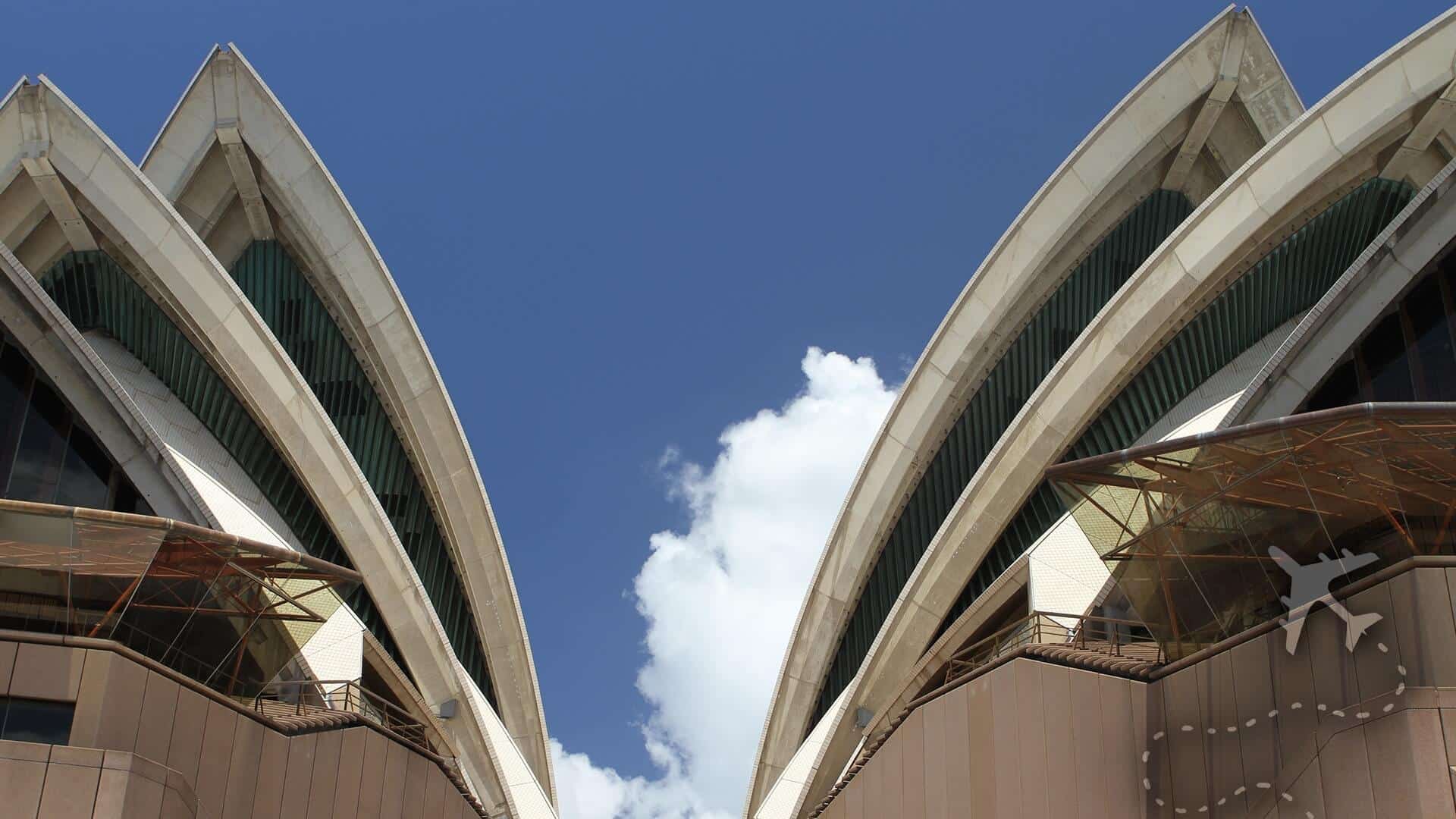
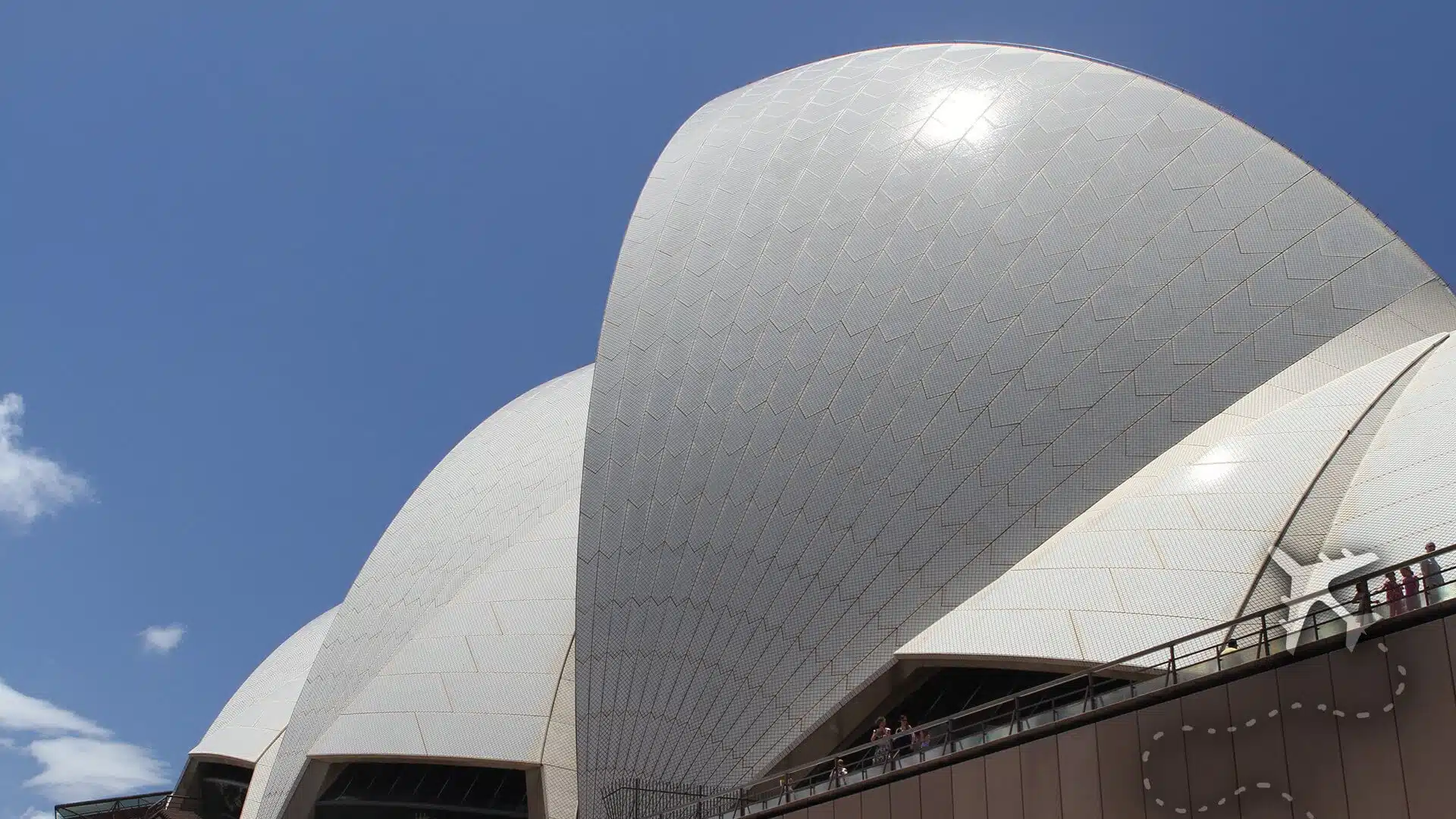
The closer you get, the more the geometry starts messing with your head.
What looks like a collection of simple white sails from a distance becomes overlapping concrete shells, staircases, glass walls and enormous structural ribs.
Every few steps produces another completely different composition.
Which presents a problem.
You’re going to take approximately 400 photographs of the same building.
Welcome to Sydney.
WHERE TO PHOTOGRAPH THE SYDNEY OPERA HOUSE
The obvious photograph is directly in front of it.
It’s also probably not the photograph you’re actually looking for.
The Opera House works best when you give it some context, particularly when you can include Sydney Harbour, the skyline or the Harbour Bridge.
One of my favorite perspectives comes from across the water around Milsons Point and Kirribilli. From here, you can photograph the Opera House against the city skyline while ferries and boats move through the foreground.
For something more dramatic, head onto the Sydney Harbour Bridge. The pedestrian walkway gives you elevated views across Circular Quay, while the BridgeClimb takes things significantly higher if you’re willing to exchange money and dignity for the privilege of being strapped to a giant steel arch.
Another classic location is Mrs Macquarie’s Point in the Royal Botanic Garden.
This is the photograph you’ve probably seen a thousand times: Opera House in front, Harbour Bridge behind it, Sydney skyline surrounding everything.
There is a reason everyone takes it.
It works.
Sunset makes it even better, although you’ll be sharing the experience with photographers, tourists, tripods, phones and at least twelve people filming themselves pretending they just casually discovered the location.
CIRCULAR QUAY: WHERE YOU’LL PROBABLY END UP ANYWAY
Eventually, almost everyone visiting central Sydney ends up at Circular Quay.
Ferries depart constantly for destinations around the harbor, trains arrive directly above the waterfront, restaurants line the promenade and the Opera House sits at the eastern end.
This is also where you start appreciating how much Sydney’s harbor actually functions as transportation rather than simply scenery.

Ferries arrive and depart every few minutes.
Commuters get off.
Tourists get on.
Cruise ships occasionally appear and dwarf half the skyline.
And through all of it, the Opera House just sits there looking absurdly photogenic.
Walk around the waterfront toward Bennelong Point and you can get extremely close to the building, particularly around the monumental staircase leading toward the main entrances.
Then keep walking.
The views from the eastern side looking back toward the Harbour Bridge are completely different from the postcard angle everyone photographs from Circular Quay.
THE BEST VIEW MIGHT ACTUALLY BE FROM A FERRY
If you only do one touristy thing in Sydney, get on the water.
You don’t necessarily need an expensive sightseeing cruise either.
Sydney’s regular ferry network provides some spectacular views of the harbor while also accomplishing the revolutionary concept of actually taking you somewhere.
Take a ferry toward Manly, Taronga Zoo or one of the other harbor destinations and you’ll pull away from Circular Quay with the Opera House on one side and Harbour Bridge on the other.
This is where the building makes the most sense.
The shells were designed for this landscape.
From the water, they rise above Bennelong Point almost like sails entering the harbor, constantly changing shape as the ferry moves around them.
Suddenly the architecture that seemed borderline insane in 1957 looks completely inevitable.
SHOULD YOU TOUR THE INSIDE?
If architecture interests you, yes.
The exterior tells you what the building looks like.
The interior tells you why building it became such an enormous mess.
Guided tours take you through the performance spaces while explaining the engineering problems, political battles and design decisions that shaped the finished building.
It is particularly interesting because the interior isn’t entirely Utzon’s vision.
His departure meant other architects inherited the project and redesigned significant portions of the internal spaces.
Decades later, Utzon was invited back into the architectural conversation surrounding the building, eventually developing design principles to guide future renovations.
It was about as close to reconciliation as architecture gets.
WHEN TO VISIT
Sydney has managed to create one of those rare landmarks that looks good almost regardless of when you show up.
Almost.
Midday sunlight can be brutal, particularly if you’re trying to photograph the pale shells against a bright Australian sky.
Early morning is dramatically better.
Circular Quay is quieter, the light is softer and you can walk around Bennelong Point without fighting your way through quite as many tour groups.
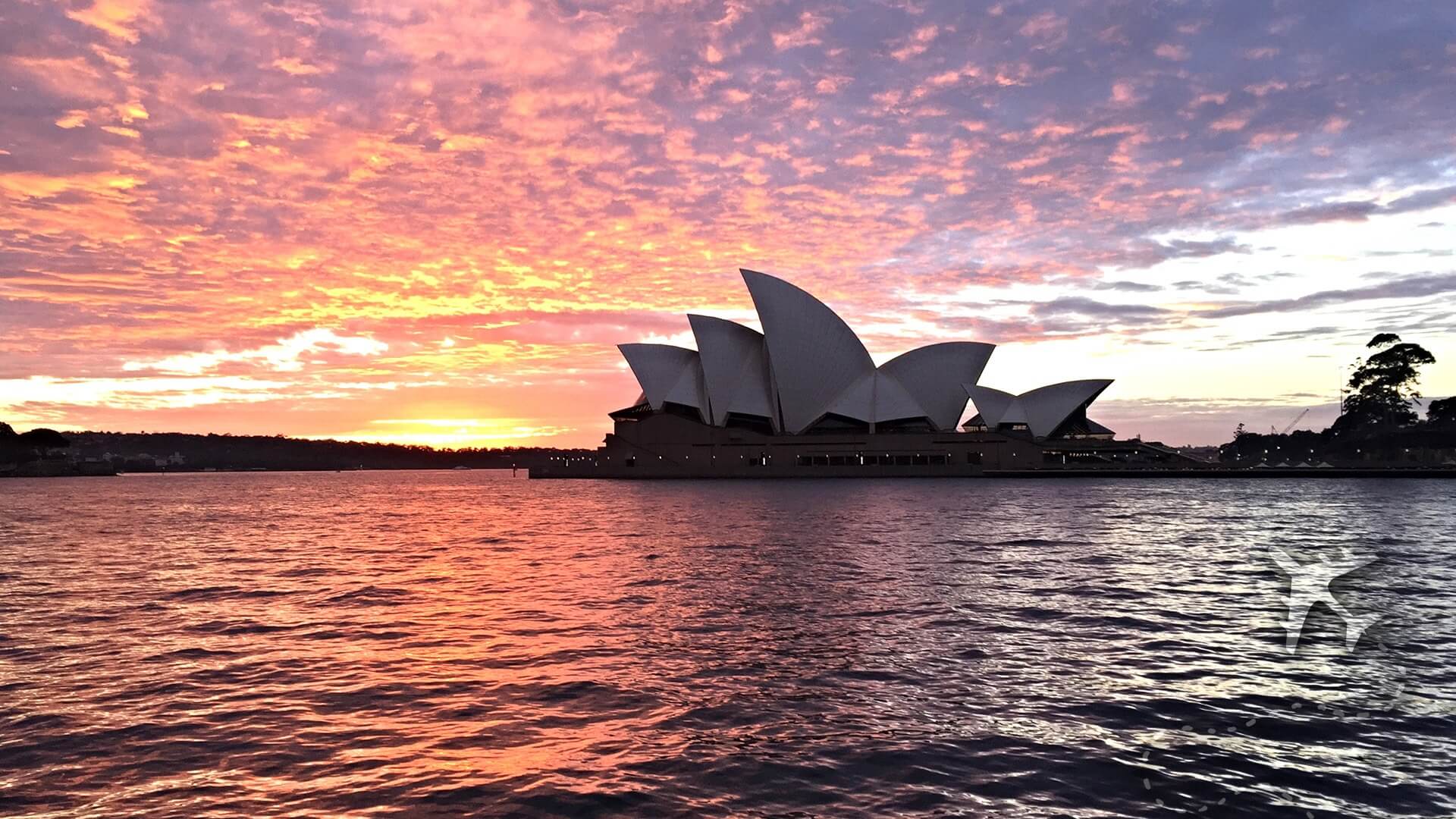
Late afternoon into sunset is even better photographically, particularly from Mrs Macquarie’s Point or across the harbor.
But don’t disappear after sunset.

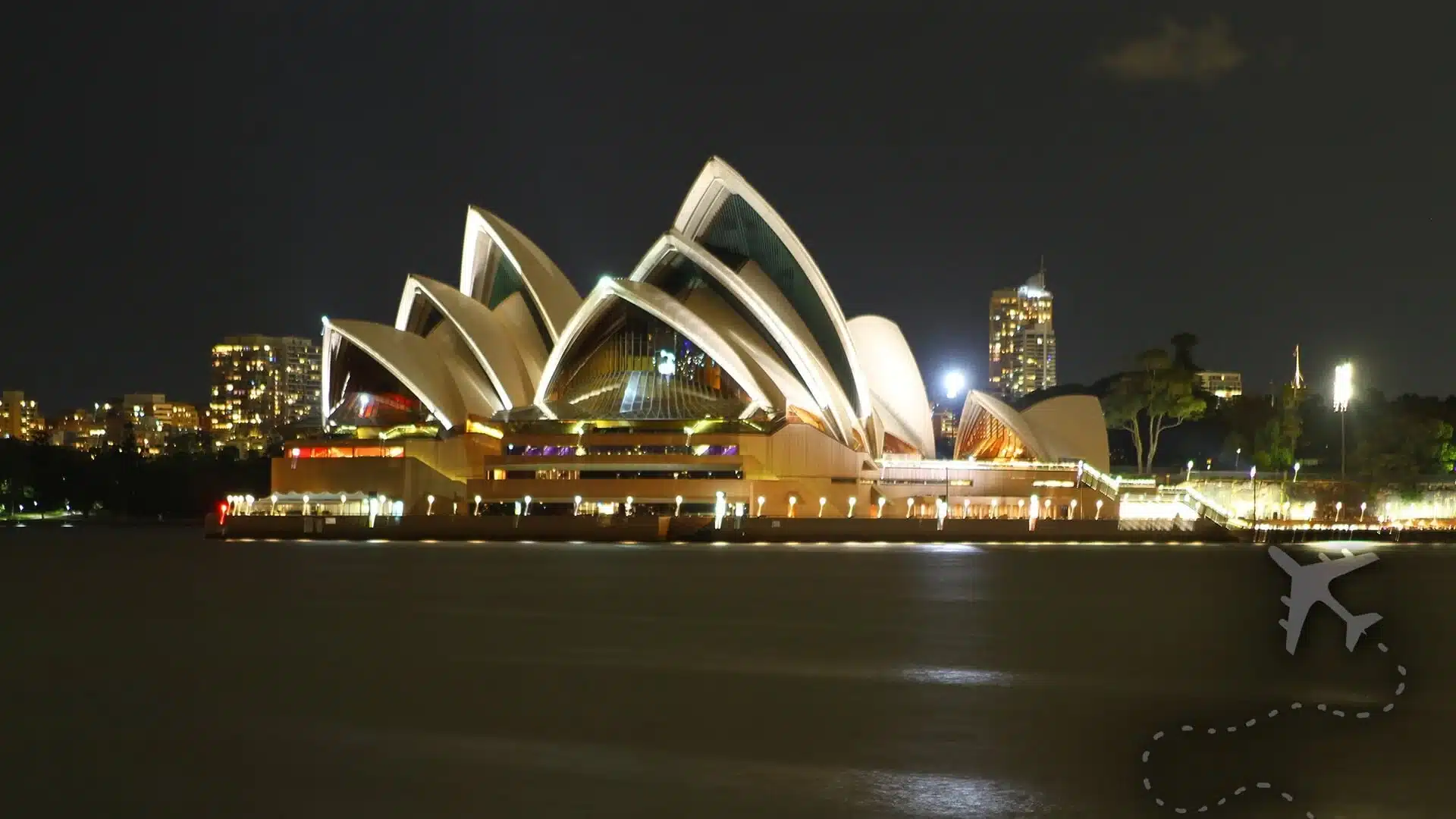
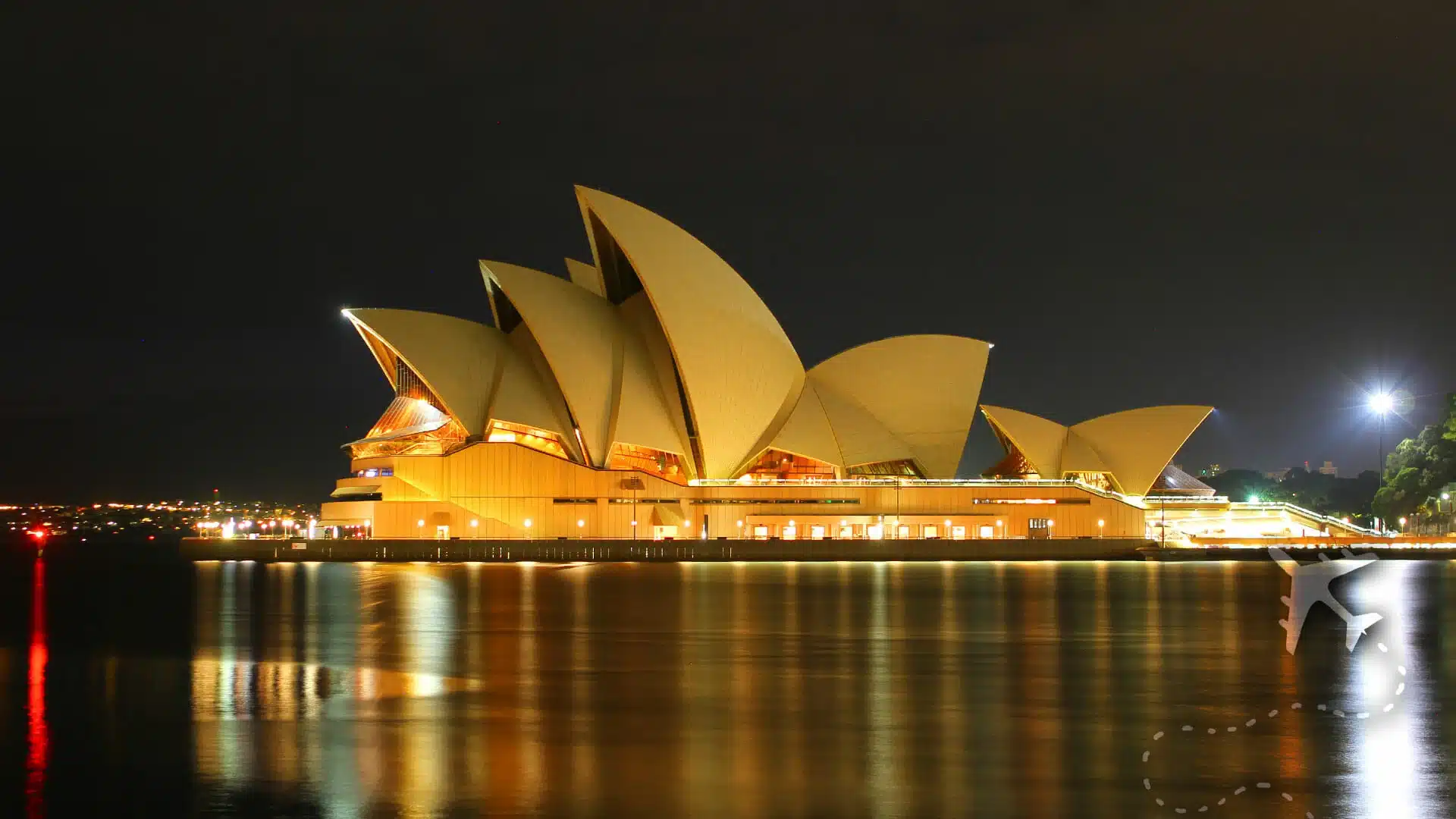
The Opera House is illuminated at night, the skyline lights up behind it and the entire harbor takes on a completely different personality.
If you’re staying around Circular Quay, this also gives you the enormous advantage of being able to wander back repeatedly as the light changes.
And you will.
Because apparently 400 photographs weren’t enough.
SYDNEY OPERA HOUSE UNCENSORED
There are landmarks that become famous because they’re old.
Others become famous because something historically important happened there.
The Sydney Opera House became famous because someone drew something borderline impossible and Australia somehow decided to actually build it.
The project blew through its budget.
It blew through its schedule.
Its architect quit.
Politicians fought over it.
Engineers had to invent solutions to problems nobody had previously bothered creating.
And after fourteen years of chaos, Sydney ended up with one of the greatest buildings of the twentieth century.
That’s what makes the Opera House interesting beyond the obligatory photograph.
It isn’t simply beautiful architecture.
It’s proof that occasionally the wildly impractical idea is the right one.
Today, those ridiculous white shells are inseparable from Sydney itself. They appear on postcards, advertisements, airline commercials and approximately every Australian tourism campaign ever created.
And yes, when you finally stand across the harbor looking back at it beside the Harbour Bridge, it absolutely lives up to the hype.
Even if it still looks a little like Sonic the Hedgehog.


