

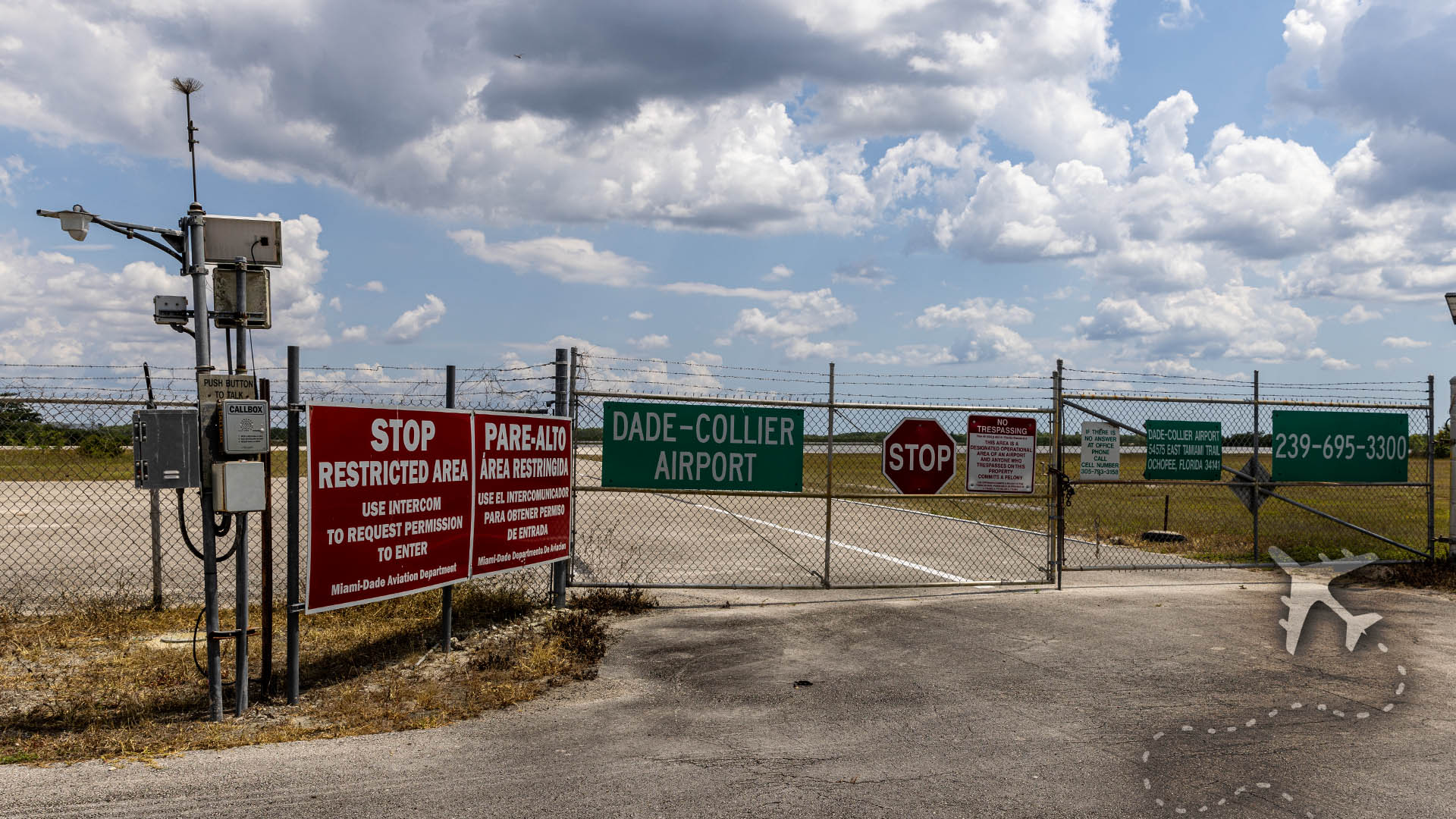
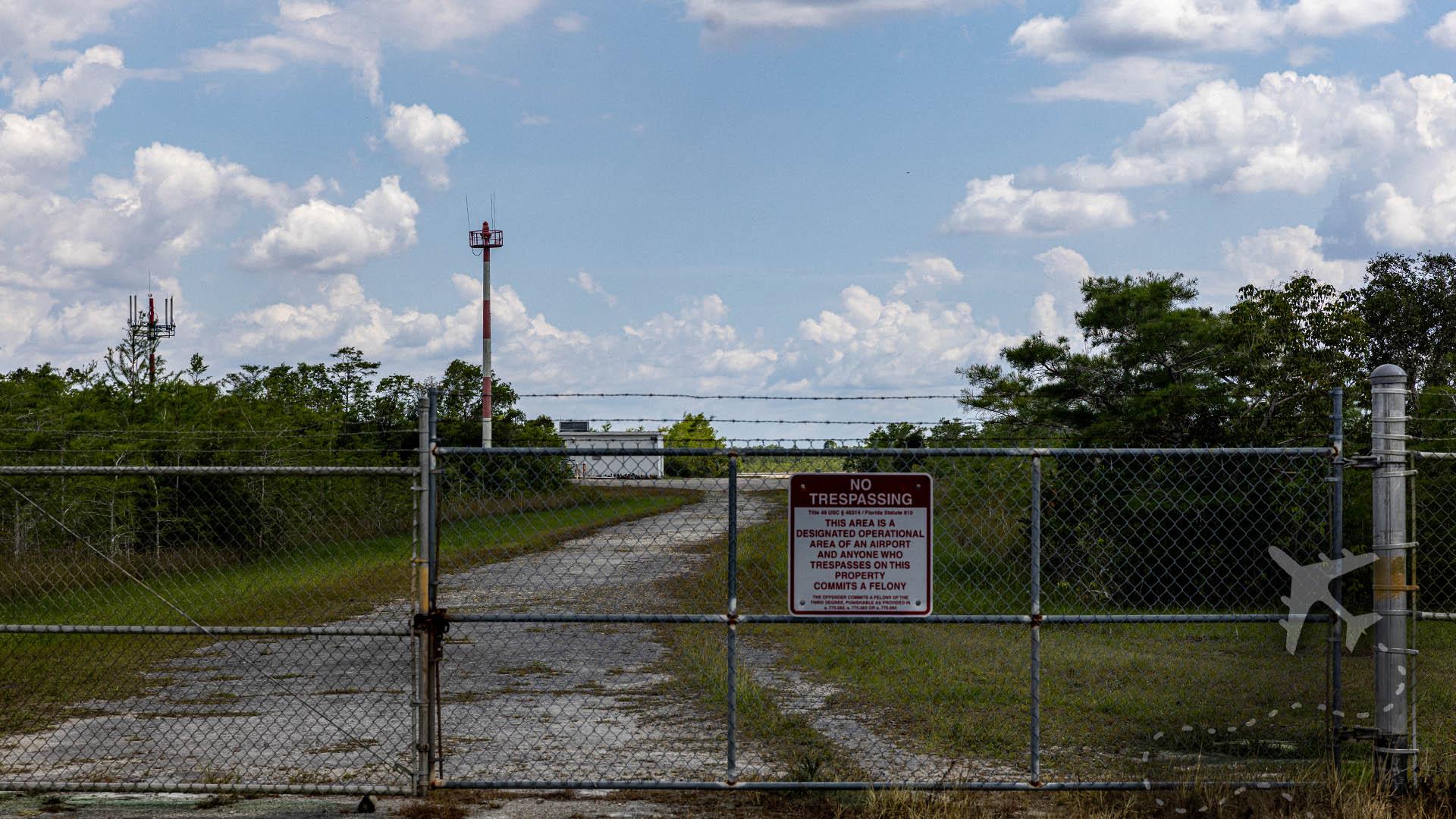


Florida has a remarkable talent for building ridiculous shit in places where ridiculous shit probably shouldn’t be built.
Deep in the Everglades, surrounded by sawgrass, alligators, mosquitoes and approximately seventeen billion gallons of swamp water, somebody once decided this would be the perfect location for the largest airport on Earth.
Not Miami.
Not Fort Lauderdale.
The fucking swamp.
Welcome to the Everglades Jetport, officially known today as the Dade-Collier Training and Transition Airport, one of the strangest leftovers from America’s brief obsession with a supersonic future.
I visited the place years ago, long before the words “Alligator Alcatraz” became attached to this patch of the Everglades and temporarily turned an obscure aviation relic into something people were suddenly Googling.
Back then, there wasn’t much here.
That was precisely why I wanted to see it.
It was basically an enormous runway leading absolutely nowhere, which is somehow the perfect monument to Florida planning.
DESTINATION: Everglades Jetport
CURRENT WEATHER
scattered clouds (81F / 27C)

AIR QUALITY INDEX (AQI)
Air-quality data is currently unavailable.
ThE SKY IS THE LIMIT?
The Everglades Jetport makes more sense when you remember it was conceived during the Golden Age of Aviation, when flying was glamorous, airports were architectural monuments and humanity was absolutely convinced airplanes were about to become ridiculously fast.
The TWA Flight Center at JFK looked like The Jetsons. Boeing 707s were crossing oceans. Pan Am was selling the world as one enormous cocktail lounge.
Then came the Concorde.
Supersonic travel looked inevitable, and South Florida wanted an airport big enough for the future. Apparently Miami International wasn’t ambitious enough, so planners envisioned the Everglades Jetport, a massive complex with multiple runways, terminals and supersonic jets roaring between Miami, Europe and Latin America.
There was just one minor issue.
They decided to build the damn thing in the Everglades.
FLORIDA PAVED A SWAMP
Construction started in 1968, beginning with a runway stretching more than two miles across the swamp.
Then scientists and environmentalists started asking the painfully obvious question: What happens when you build one of the world’s largest airports in one of America’s most fragile ecosystems?
Turns out, nothing particularly good.

The proposed airport, highways, drainage systems and surrounding development threatened the Everglades and Big Cypress watershed. Opposition grew, the federal government intervened and by 1970 the grand plan was essentially dead.
One runway had already been completed.
So Florida was left with an extraordinarily expensive driveway through the swamp.
THE FUTURE FORGOT TO SHOW UP
The best part is that the supersonic revolution didn’t really happen anyway.
The Concorde flew, but sonic booms, enormous operating costs, limited routes and hilariously expensive tickets kept supersonic travel from becoming mainstream. America’s own supersonic passenger jet never even made it into service.
The Golden Age of Aviation gradually gave way to a much more practical philosophy:
Pack more humans into bigger airplanes and occasionally distribute pretzels.
The Everglades Jetport had been built for a future that never arrived.
Naturally, I had to see it.
VISITING THE RUNWAY TO NOWHERE
Driving west from Miami along the Tamiami Trail, civilization slowly disappears until there’s basically nothing but sawgrass, water, alligators and mosquitoes large enough to require FAA registration.
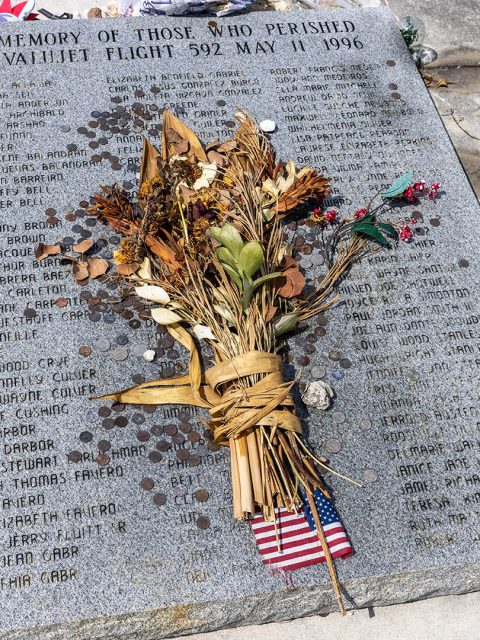
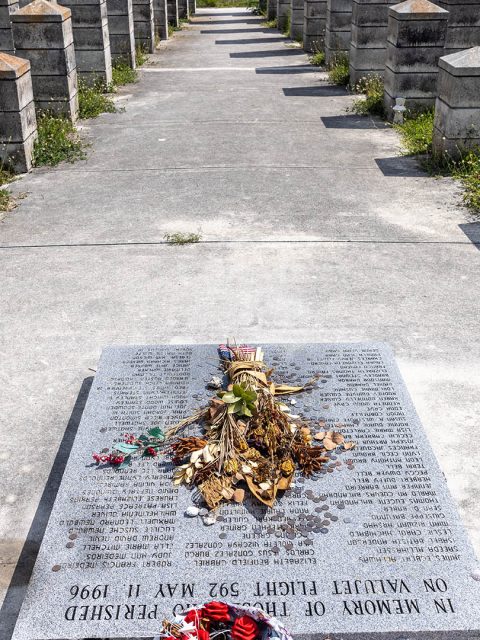
It’s also the same lonely stretch of highway that takes you past the ValuJet Flight 592 Memorial, marking where 110 people died when the DC-9 crashed into the Everglades in 1996. It’s a sobering reminder that South Florida’s aviation history isn’t entirely glamorous terminals and the Golden Age of Aviation.
Keep driving and eventually you reach the “airport.”

No terminal. No departure boards. No baggage claim. No $9 Starbucks.
Just an enormous runway stretching toward absolutely nothing.
Swamp ahead. Swamp left. Swamp right.
Turn around?
Congratulations. More swamp.
That’s what makes the Everglades Jetport fascinating. This wasn’t some forgotten neighborhood airstrip. It was supposed to become one of the world’s great airports, packed with terminals, highways and supersonic aircraft.
Instead, the Everglades basically waited for everyone to shut up.
Eventually, they did.
THEN CAME “ALLIGATOR ALCATRAZ”
Decades later, this forgotten aviation relic suddenly returned to national attention when the site became associated with the temporary detention facility widely nicknamed “Alligator Alcatraz.”
A place previously known mostly to aviation nerds, Everglades historians and weird people like me photographing failed infrastructure was suddenly everywhere.
Then that chapter ended too.
The temporary structures disappeared, the attention moved elsewhere, and the place faded back into the Everglades like a fart in the wind.
Underneath it all remained the same enormous runway I’d visited years earlier.
THE EVERGLADES ALWAYS WINS
That’s why this place is sorta’ worth seeing.
There aren’t sprawling ruins or abandoned terminals to explore. You’re basically visiting a really fucking big runway surrounded by swamp.
But that runway represents something much bigger.
During the Golden Age of Aviation, humanity looked at the Everglades and imagined Concordes, terminals and six enormous runways filled with supersonic aircraft.
The Everglades responded by doing absolutely nothing.
The Concorde disappeared.
The airport never arrived.
The headlines eventually moved elsewhere.
And the swamp remained.

Sawgrass. Water. Alligators. Mosquitoes.
And two miles of pavement pointing toward a future that never bothered showing up.
Welcome to the Everglades Jetport.
Possibly the most Florida airport ever built.


Me gustaría recibir información sobre los terrenos del Everglades Int’l Airport que fueron expropiados por el Gobierno en el año 1975, un total de trece terrenos a nombre de mis padres y abuelos, cuál es la situación de esas propiedades en estos momentos, gracias