



I was wandering around Lima, Peru, with no particular destination in mind, which is generally how I end up finding the best shit.
Lima’s historic center is fantastic for this. You can leave Plaza Mayor de Lima, start walking in basically any direction, and stumble across colonial buildings, enormous wooden balconies, questionable electrical wiring, beautiful churches and approximately nine million opportunities to photograph something old.
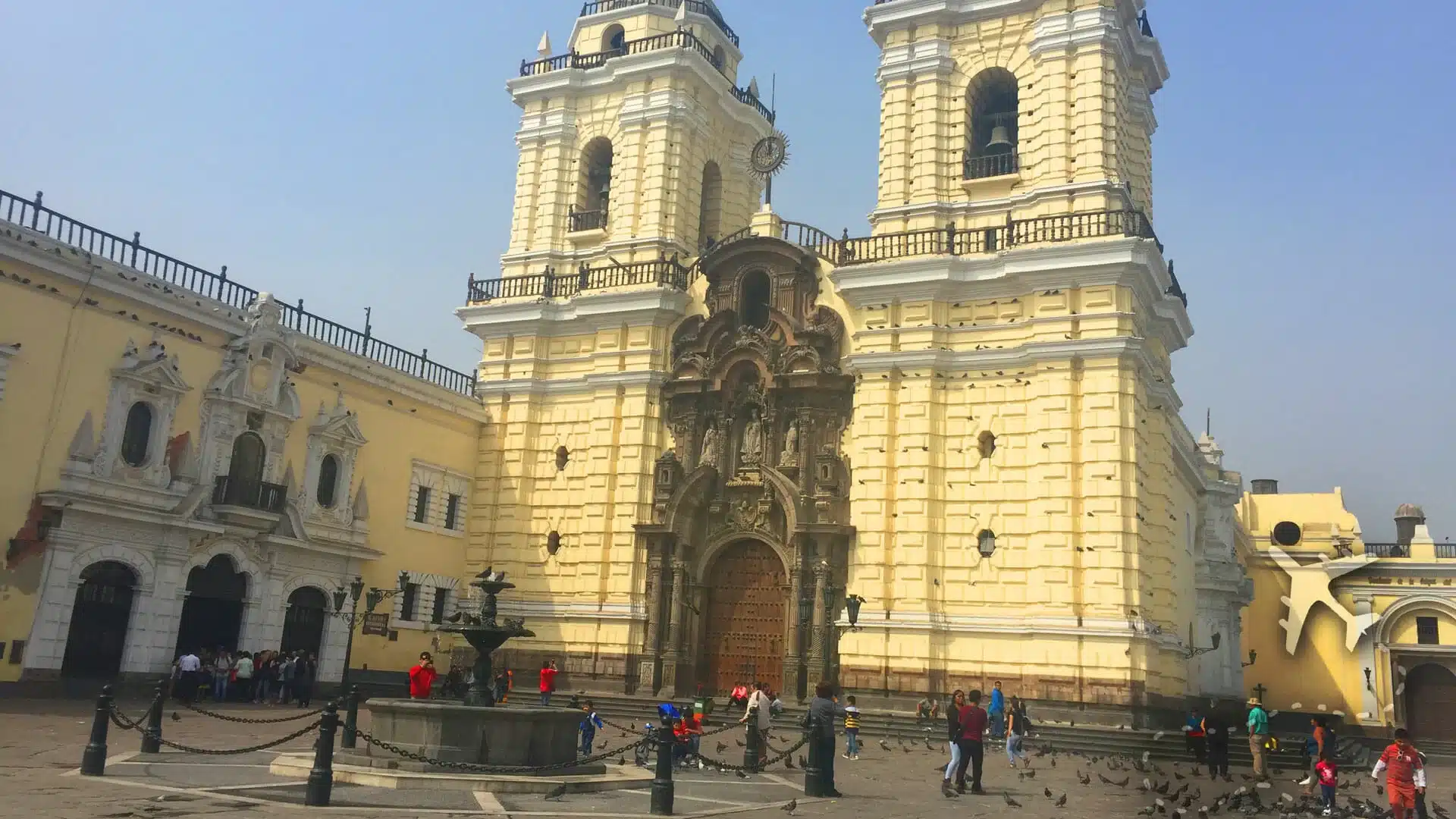
Eventually, I came across the Basílica y Convento de San Francisco de Lima.
Big yellow church.
Fancy entrance.
Very Catholic.
Looked important.
I figured I’d go inside, admire some architecture, learn absolutely nothing about Catholic theology and continue wandering around Lima.
Then I discovered they had approximately 25,000 dead people in the basement.
Well, fuck.
Now I’m interested.
DESTINATIONS: Lima CATACOMBS
GPS COORDINATES
-12.0453, -77.0270
CLOSEST AIRPORT
CURRENT WEATHER
overcast clouds (72F / 22C)

AIR QUALITY INDEX (AQI)
Moderate (70)
WELCOME TO CHURCH. PLEASE IGNORE THE BASEMENT.
From the outside, San Francisco gives you almost no indication of the shit happening underneath it.
That’s what makes this place so fantastic.
There isn’t some enormous entrance advertising the CATACOMBS OF LIMA with skulls, torches and a guy wearing a cape trying to sell you tickets.
It’s just an enormous historic religious complex sitting a short walk from Plaza Mayor.
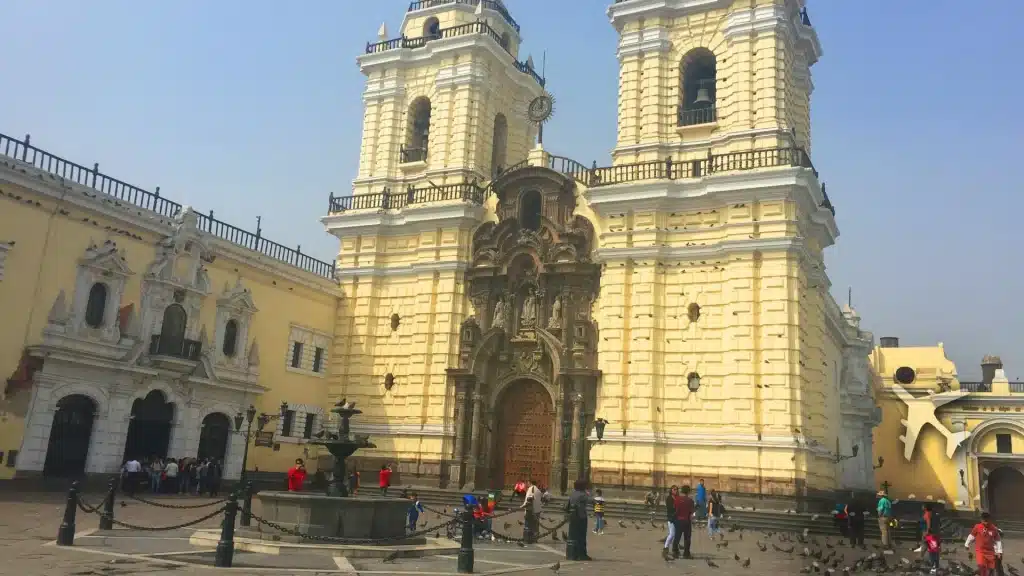
And unlike some of the more spectacular cathedrals around the world, San Francisco didn’t immediately strike me as something requiring an afternoon of architectural worship.
It’s beautiful.
It’s historic.
It’s important.
But Lima has a lot of churches.
At a certain point during international travel, churches start blending together.

This one has a giant altar.
That one has a slightly more giant altar.
This one has Jesus.
That one has Jesus with significantly more gold leaf.
Eventually you start requiring additional features.
San Francisco has one.
Thousands upon thousands of human skeletons.
Five stars.
APPARENTLY CLOSER TO GOD MEANT LITERALLY
The reason all those bodies ended up underneath San Francisco makes considerably more sense once you understand how people approached death during colonial Lima.
Burial beneath churches was considered desirable because it placed the deceased in consecrated ground.
The closer you were to the church, theoretically, the better.
Which eventually created a fairly predictable storage problem.
Because people kept dying.
For centuries, churches throughout Lima incorporated crypts and underground burial chambers. San Francisco became one of the city’s major burial sites, with people interred beneath the church and monastery until the practice ended in the early 19th century.

The commonly cited estimate is around 25,000 people buried beneath San Francisco, although estimates vary and parts of the underground complex remain uncertain.
Twenty-five thousand.
Under a church.
Because apparently eternal salvation came with subterranean parking.
And then everyone basically forgot they were down there.
GOD UPSTAIRS. EVERYONE ELSE DOWNSTAIRS.
The tour doesn’t immediately throw you into the corpse basement.
First, you get religion.
Lots of religion.

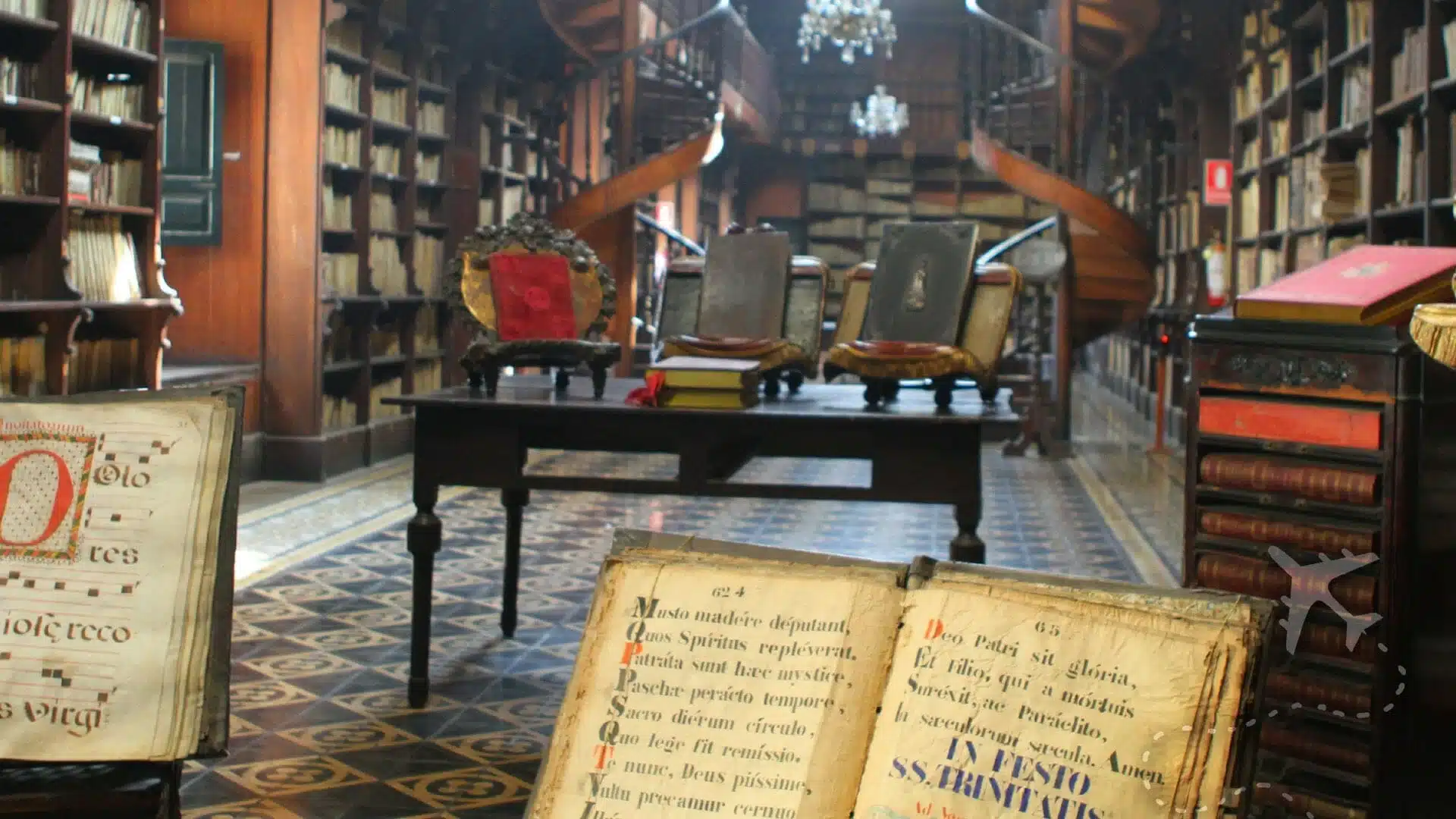
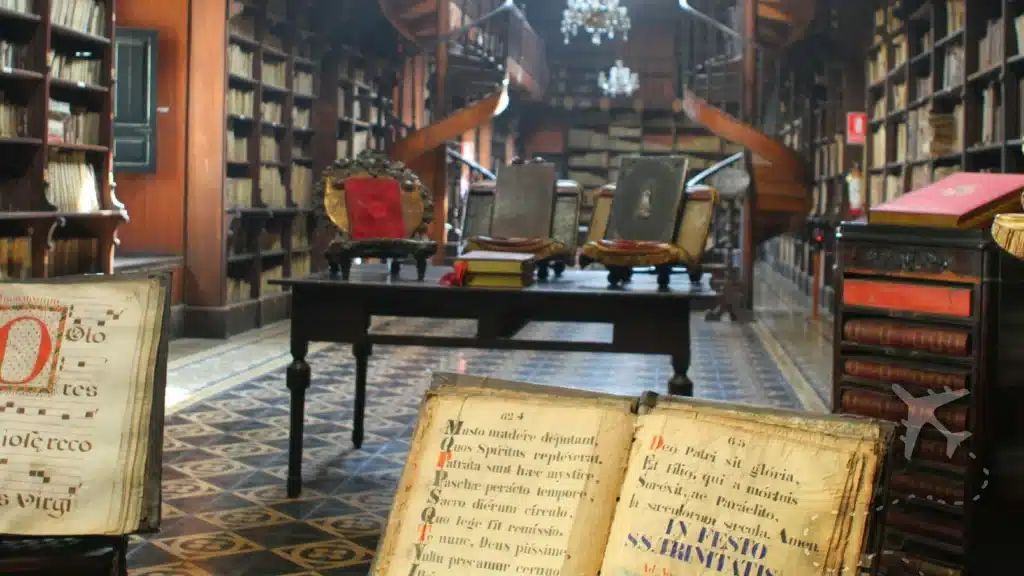
San Francisco contains beautiful courtyards, paintings, tilework, elaborate wooden architecture and a historic library containing thousands of old books.
The complex became one of colonial Lima’s most important religious and cultural institutions, and UNESCO considers San Francisco one of the most complete surviving examples of a colonial convent ensemble in Latin America.
Which is legitimately impressive.
But I’m standing there looking at priceless religious artwork while possessing one extremely distracting piece of information: There are 25,000 skeletons underneath us.

Show me the basement.
We can discuss seventeenth-century ecclesiastical architecture afterward.
Eventually, the tour begins descending.
The beautiful courtyards disappear.
The ceilings get lower.
The passages get narrower.
The air gets shittier.
And suddenly the Catholic Church’s historical approach to inventory management becomes extremely visible.
Bones.
Lots and lots and lots of bones.
HOLY SHIT. LITERALLY.
The first thing that hits you isn’t horror.
It’s quantity.

You intellectually understand that thousands of people were buried here.
Then you actually see what thousands of dead people looks like.
Skulls.
Femurs.
Fragments.
Bones stacked inside brick chambers.
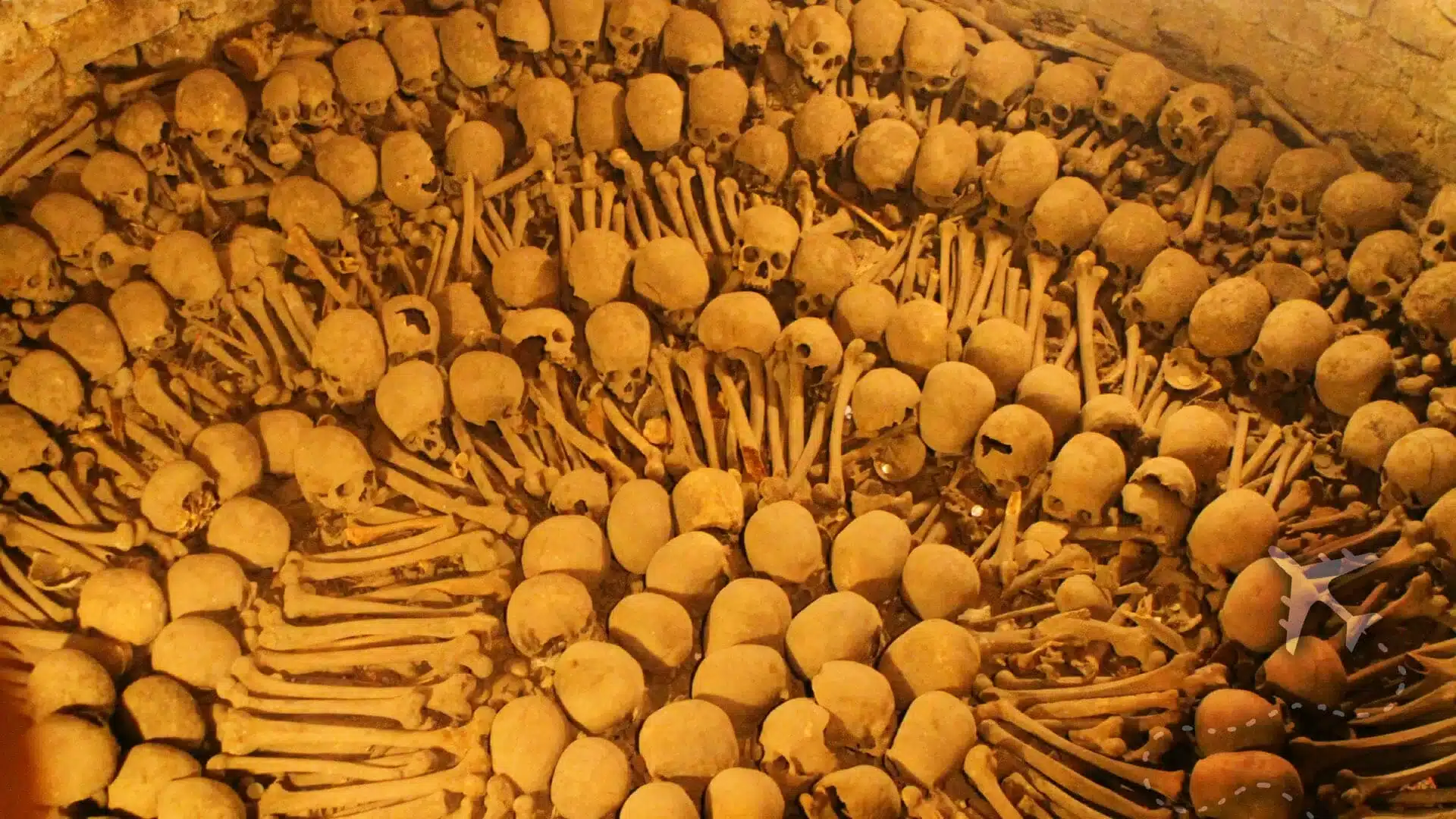
Bones arranged inside enormous circular pits.
Bones organized into geometric patterns with the kind of obsessive attention to detail normally reserved for landscaping and charcuterie boards.
At some point, somebody looked at thousands of human remains and apparently thought: You know what this needs? Symmetry.
And they weren’t just decorative props added later to make tourists uncomfortable.
These are actual human remains from people buried beneath San Francisco.
Actual people.
Actual skulls.
Actual femurs.
Actual lives reduced to a surprisingly well-organized underground filing system.
The bones visible today have been sorted and arranged, sometimes by type, creating the distinctive ossuaries that have made the Catacombs of Lima one of Peru’s best-known dark tourism destinations.
And it’s fucking fascinating.
THE DEAD HAVE EXCELLENT ORGANIZATIONAL SKILLS
One of the largest displays is a circular ossuary filled with bones arranged into concentric geometric patterns.
It’s simultaneously beautiful, disturbing and probably the weirdest thing you’ll see in Lima unless your evening plans go dramatically off the rails.
You stare down into this enormous pit filled with human remains and eventually your brain starts doing the uncomfortable math.
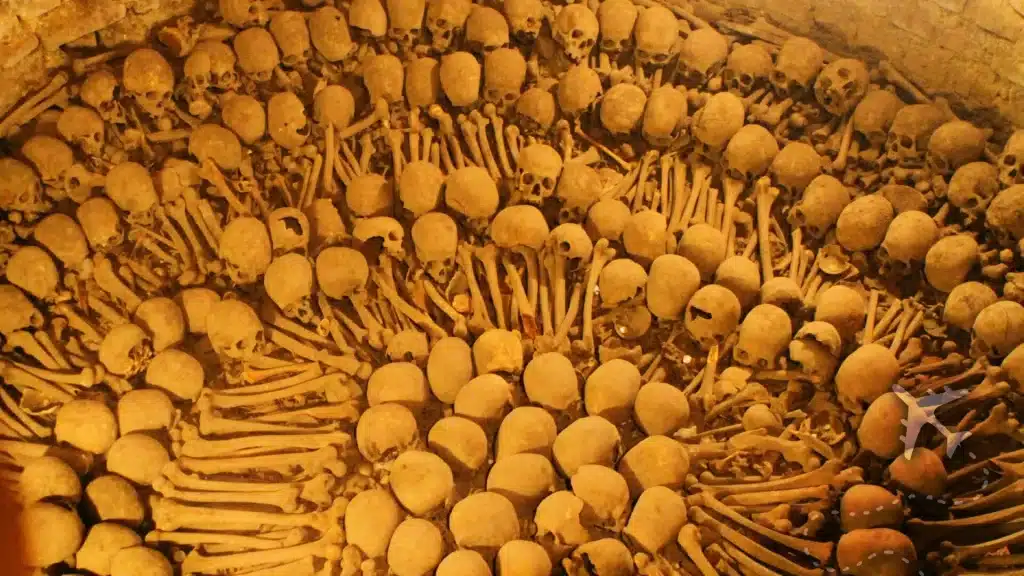
Every skull belonged to someone.
Every femur carried somebody around Lima.
These people had families.
Jobs.
Problems.
Enemies.
Somebody probably owed somebody else money.
Some undoubtedly spent an enormous amount of time worrying about their social status, reputation and worldly possessions.
Now Steve’s femur is next to Carlos’s femur in a decorative circle beneath a monastery while tourists stare at them.
There’s probably a religious lesson in there somewhere.
I wasn’t paying attention.
THIS IS WHY I LOVE DARK TOURISM
The dark tourism destinations that stick with me aren’t frightening because somebody installed spooky lighting and started playing creepy music.
They’re unsettling because they’re real.
That’s why San Francisco works.
Nobody jumps out from behind a wall.
There aren’t actors dressed as monks.
No animatronic skeleton suddenly screams.
Nobody needs to manufacture horror when the attraction already contains tens of thousands of actual dead people.

I’ve found the same thing exploring other dark places around the world.
At the ValuJet Flight 592 Memorial, there isn’t much there beyond a monument surrounded by the Everglades. The weight comes from knowing exactly why those names are carved into it.
And at Indonesia’s Lapindo Mud Volcano, the enormous empty landscape becomes disturbing only when you understand that neighborhoods and villages once existed beneath it.
San Francisco skips the imagination part.
The evidence is directly in front of you.
Here are the dead people.
Moving on.
LIMA’S HOLIEST STORAGE UNIT
The catacombs served as a cemetery through much of Lima’s colonial era, with their legal use generally ending around 1810 as burial practices changed and dedicated cemeteries became the preferred solution.
Which was probably overdue.
There are only so many bodies you can put underneath the neighborhood church before someone has to raise their hand and suggest that perhaps humanity should develop a more scalable solution.
Eventually the catacombs were closed.
The entrances disappeared from everyday life.
Lima continued developing above them.

And the dead just sort of…
stayed there.
The burial chambers were brought back into public awareness during twentieth-century restoration and archaeological work.
Imagine being involved in that project.
Monday morning: “We’re restoring an old monastery.”
Monday afternoon: “We have found several thousand people.”
Tuesday: “Several thousand appears to have been optimistic.”
THIS PLACE HAS SURVIVED SOME SHIT
The fact that San Francisco is still standing is impressive in its own right.
Lima has spent centuries periodically attempting to shake its own buildings apart.
Major earthquakes repeatedly damaged the city, including San Francisco itself. The church was rebuilt following severe seventeenth-century earthquake damage, and later earthquakes continued battering Lima.
Yet the complex survived.

UNESCO originally inscribed the Convent Ensemble of San Francisco in 1988, with the protected area expanded in 1991 into what is now the Historic Centre of Lima.
So the nondescript church I wandered into because I had nothing better to do wasn’t actually nondescript at all.
It’s part of a UNESCO World Heritage Site.
One of the most significant surviving colonial religious complexes in South America.
And home to one of the continent’s most remarkable underground burial sites.
Excellent research on my part.
I saw yellow building.
I entered yellow building.
This is basically how DESTINATIONS UNKNOWN works.
DON’T EXPECT A COMFORTABLE AFTERLIFE
Getting into the catacombs means descending into an environment built for the dead rather than modern tourists.
The ceilings are low.
The passages are narrow.
The floors aren’t always perfect.
The air becomes increasingly stagnant.
And everything feels very, very underground.

If you’re severely claustrophobic, this may be a problem.
If you have respiratory issues, the dusty and poorly ventilated underground environment deserves consideration.
And if mobility is difficult, stairs and uneven surfaces can make parts of the experience challenging.
This wasn’t built as a tourist attraction.
Nobody in colonial Lima was standing around saying: “Make the burial chamber wider. Tripadvisor are going to hate this.”
They were putting dead people underground.
Comfort wasn’t really part of the product roadmap.
THE BEST PART IS THAT I WASN’T LOOKING FOR IT
That’s what I remember most about the Catacombs of Lima.
I didn’t travel to Peru specifically to see them.
I didn’t spend six months researching burial practices in colonial South America.
I didn’t have some carefully constructed dark tourism itinerary.
I was walking around Lima.
I saw a church.
I went inside.
Then somebody essentially said: Would you like to see what we’re keeping downstairs?
Yes.
Yes, I fucking would.
And that’s how one of the most memorable places I visited in Lima began.
THE CATACOMBS OF LIMA ARE HIDING IN PLAIN SIGHT
That’s what makes San Francisco such a fantastic stop while exploring Lima.
You can walk there from Plaza Mayor de Lima without dedicating some elaborate expedition to it.
No four-wheel-drive vehicle.
No boat.
No hiking.
No questionable border crossing.
No 3:00 AM alarm.
You just walk through the historic center and enter a church.
Upstairs, you get centuries of Spanish colonial architecture, artwork, religion and history.
Downstairs, you get approximately 25,000 reminders that eventually none of that shit matters.
It’s beautiful.
It’s unsettling.
It’s historically significant.
It’s deeply weird.
And unlike many places that desperately advertise themselves as dark or creepy, San Francisco doesn’t need to try.
It just sits quietly in downtown Lima looking like another beautiful old church.
People walk past it every day.
Cars drive by.
Tourists head toward Plaza Mayor.
Mass continues.
Lima carries on.
And several meters underneath all of them are thousands upon thousands of human bones.
Waiting patiently.
For eternity.
Or until someone decides the femurs would look better in another circle.
Amen.


