

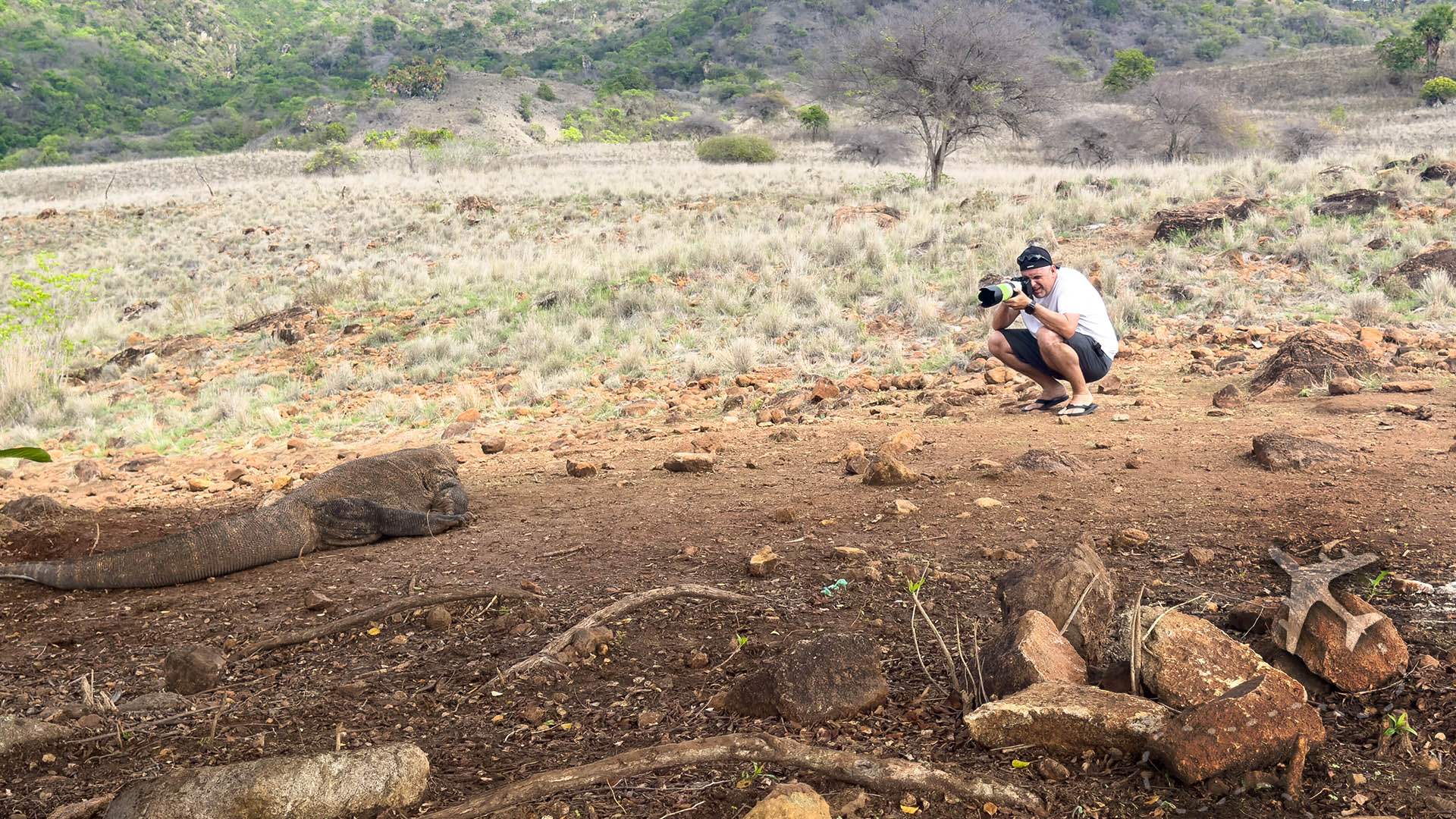

It’s commonplace to visit villages in rural Indonesia with stray dogs and even monkeys.
Komodo Village has Komodo dragons, because apparently normal neighborhood wildlife wasn’t interesting enough.
Welcome to Kampung Komodo, a small fishing village buried inside Indonesia’s Komodo National Park where people have spent generations sharing their backyard with the largest lizards on Earth.
And by “sharing,” I don’t mean the dragons live safely behind a fence somewhere nearby.
There is no fence.
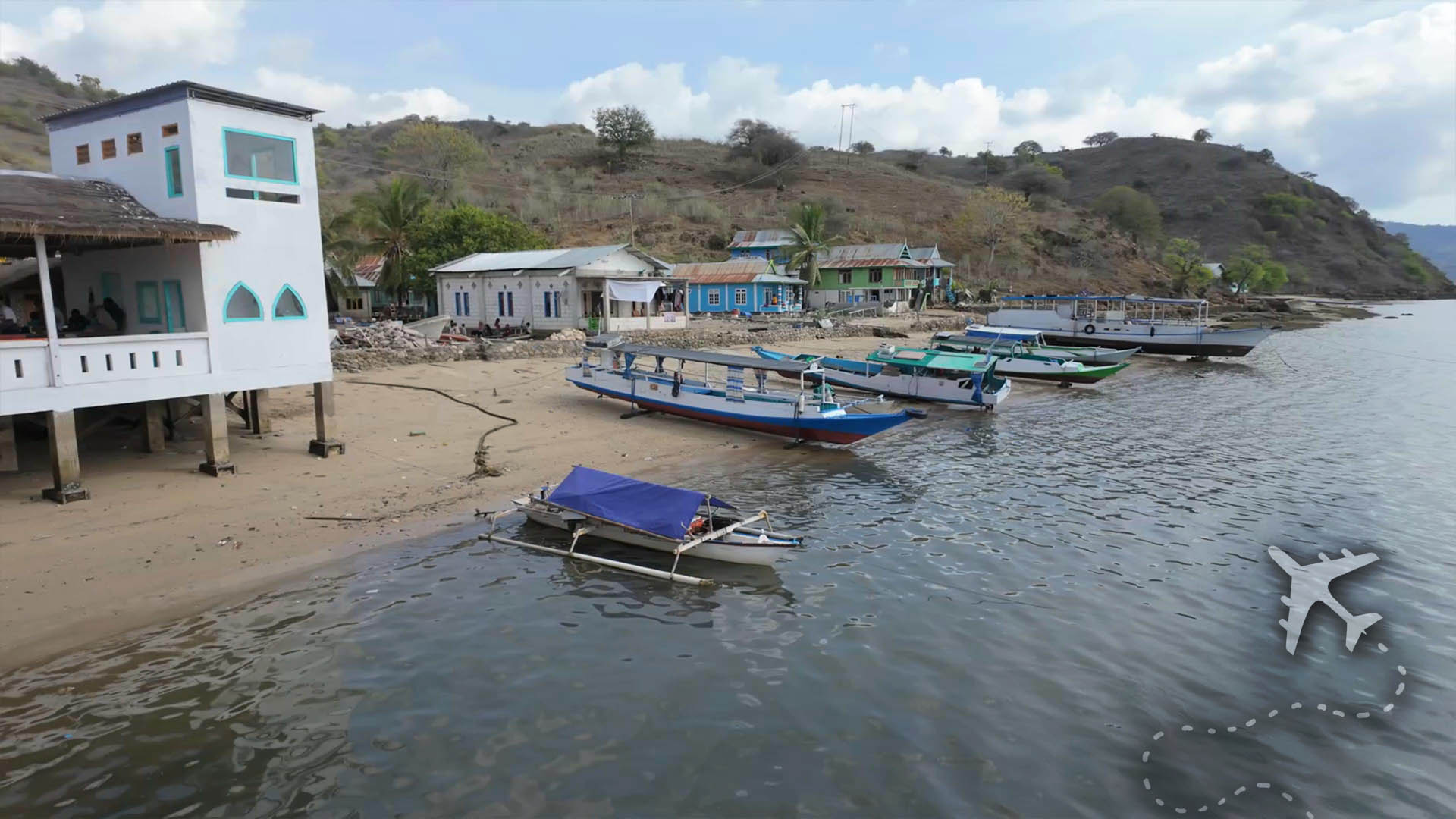
It’s a village with small houses, kids, fishing boats, goats and laundry hanging outside.
And occasionally a 150-pound prehistoric reptile wandering around looking like it has somewhere important to be.
DESTINATION: KOMODO VILLAGE
GPS COORDINATES
-8.5893, 119.4924
CLOSEST AIRPORT
CURRENT WEATHER
scattered clouds (75F / 24C)

AIR QUALITY INDEX (AQI)
Unhealthy (162)
THE NEIGHBORS HAVE TEETH
Komodo Village sits along the shoreline of Komodo Island, surrounded by the spectacular combination of volcanic mountains, dry savanna and absurdly blue water that makes this entire part of Indonesia look Photoshopped.
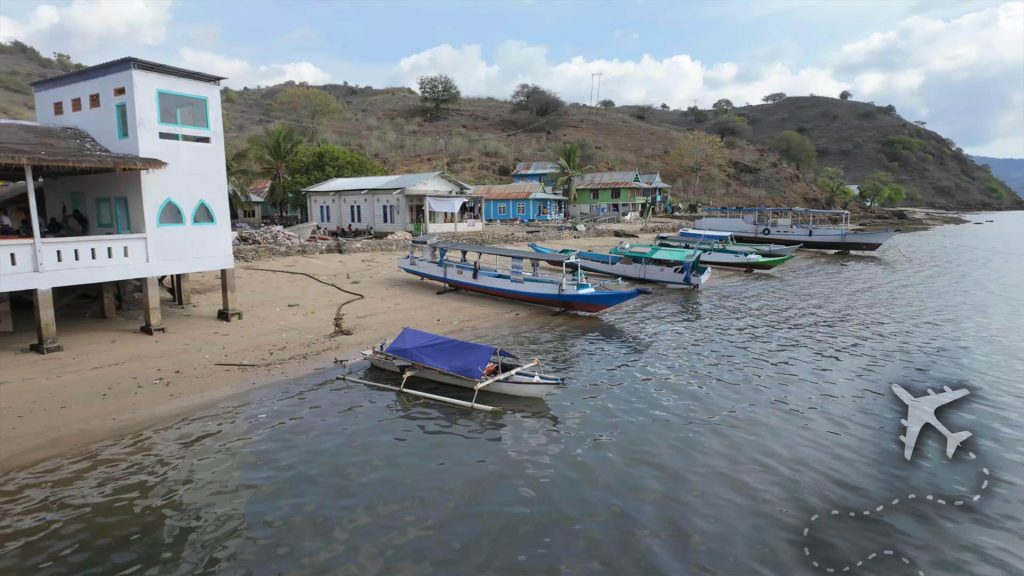
The village was here long before tourists started arriving with GoPros, selfie sticks and questionable wildlife instincts.
For generations, the people here have made their living primarily from the sea while sharing the island with Komodo dragons.
And their relationship with the dragons isn’t simply one of tolerance.
According to local legend, they’re family.
The story tells of a woman who gave birth to twins: a human boy and a dragon girl named Ora. They were separated, and years later the boy encountered a dragon while hunting and prepared to kill it. His mother stopped him and revealed that the dragon was his twin sister.
That story has been passed down for generations and created a relationship with the dragons that’s considerably more complicated than, “Holy shit, there’s a giant carnivorous lizard behind the house.”
To outsiders, they’re apex predators.
To the villagers, they’re relatives.
Relatives capable of eating a goat whole, but most families have at least one problematic cousin.
LIVING WITH SOMETHING THAT CAN EAT YOU
Komodo dragons aren’t particularly complicated animals.

They eat.
They sleep.
They occasionally fight.
Then they go back to sleep until it’s time to eat again.
Unfortunately, almost anything containing meat qualifies as food.
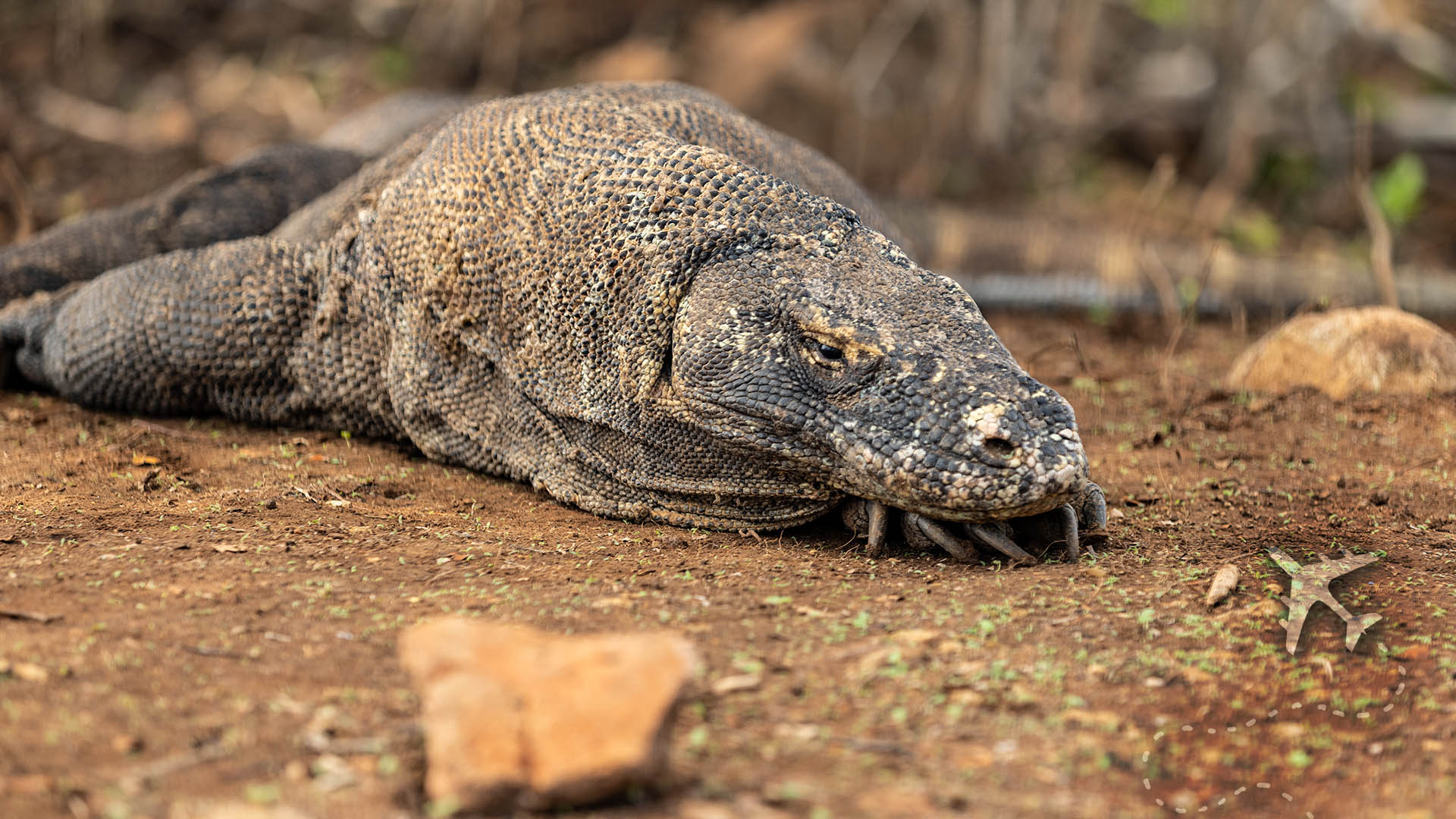
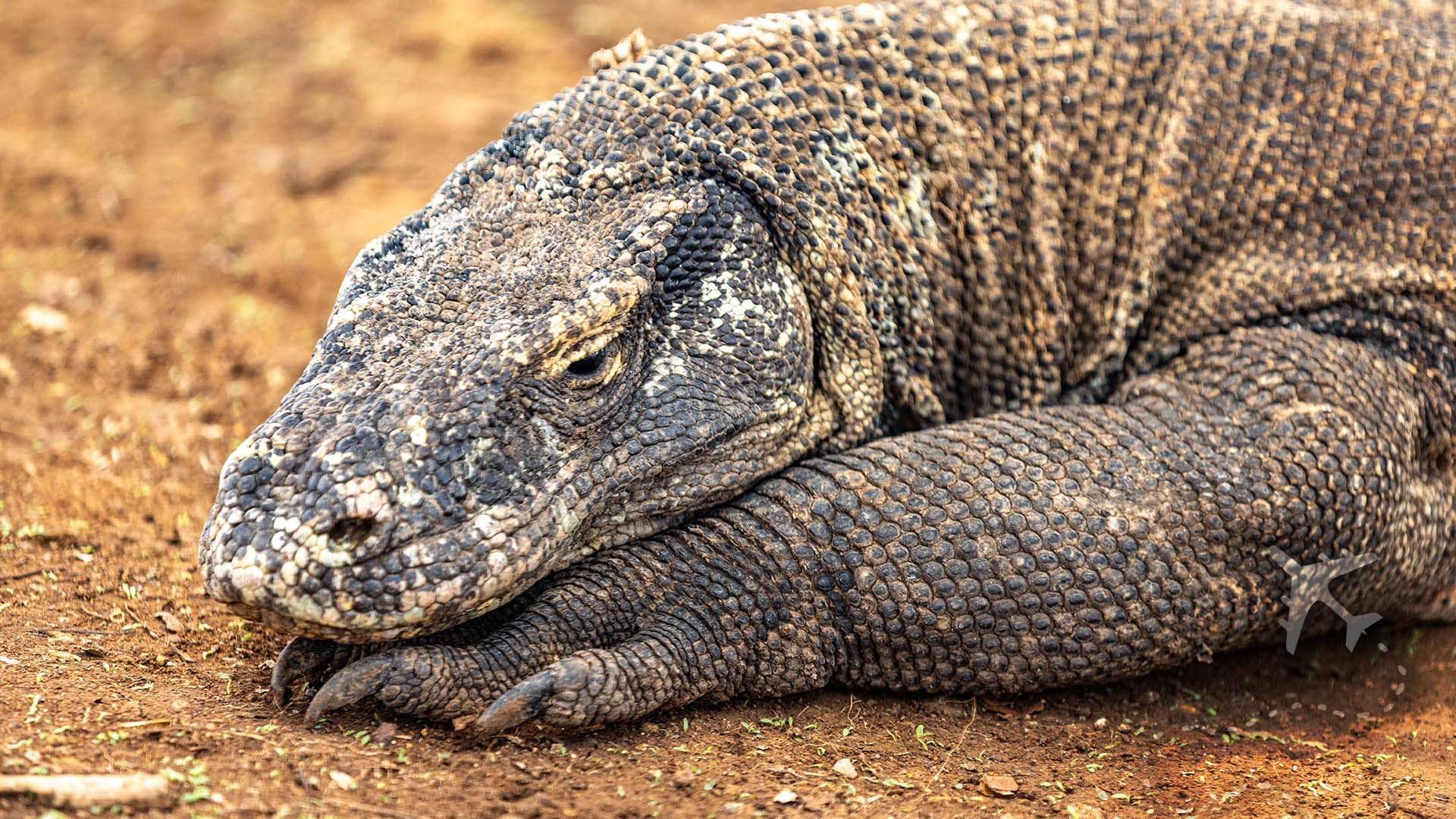
Large adults can reach around three meters long and weigh more than 70 kilograms, with exceptional specimens growing even larger. They’re powerful, surprisingly quick when motivated and equipped with serrated teeth and venom that helps cause massive blood loss and shock.
Basically, they’re what happens when evolution decides a normal lizard isn’t sufficiently terrifying.
The villagers have adapted.
Traditional houses are elevated on stilts. Livestock is protected where possible. People give dragons space when they wander nearby.
Nobody screams because there’s a dragon outside.
Nobody calls animal control.
There is no animal control.
The dragon lives here too.
GETTING TO KOMODO VILLAGE
Unless your transportation situation is considerably more impressive than mine, you’ll probably start in Labuan Bajo, the gateway to Komodo National Park.
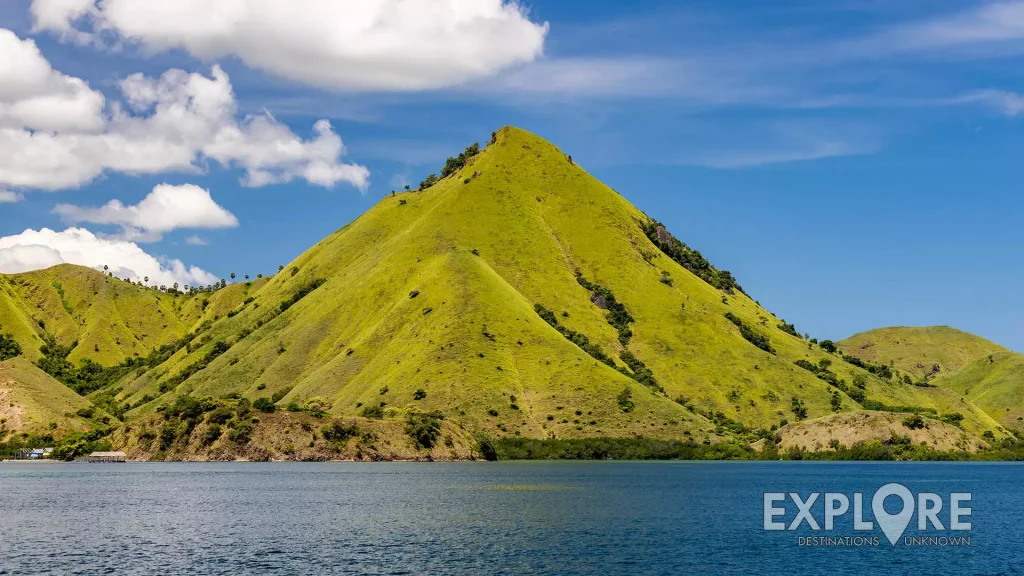
From there, boats head into the maze of volcanic islands scattered between Flores and Sumbawa.
The trip itself is spectacular.
Jagged mountains rise straight from turquoise water. Tiny beaches appear between otherwise empty islands. Fishing boats crawl across the horizon while every bend reveals another view that looks suspiciously like an Indonesian tourism advertisement.
Eventually, Komodo Village appears along the shoreline.
Wooden houses crowd toward the water. Colorful fishing boats sit offshore. Kids wander around while adults repair boats, sell handicrafts and generally continue with normal village life.
Somewhere behind them are dragons.
Which is exactly why I came back.
MY FIRST ATTEMPT DIDN’T GO EXACTLY TO PLAN
This was my second trip into Komodo National Park. Komodo Village was actually supposed to be part of my first trip.
“Supposed to be” being one of those phrases that frequently appears in my travels immediately before everything changes.
Instead, our boat unexpectedly diverted to Rinca Island.
Rinca was interesting. There were dragons. But the experience felt considerably more organized, with established trails, ranger facilities and dragons hanging around places where tourists reliably appear.
It felt like visiting the dragons.
I wanted to accidentally wander into their neighborhood.
So I returned to Komodo National Park specifically for Komodo Village.
This time, the boat actually went there.
Already an improvement.
LET’S WALK THROUGH THE BUSH LOOKING FOR APEX PREDATORS
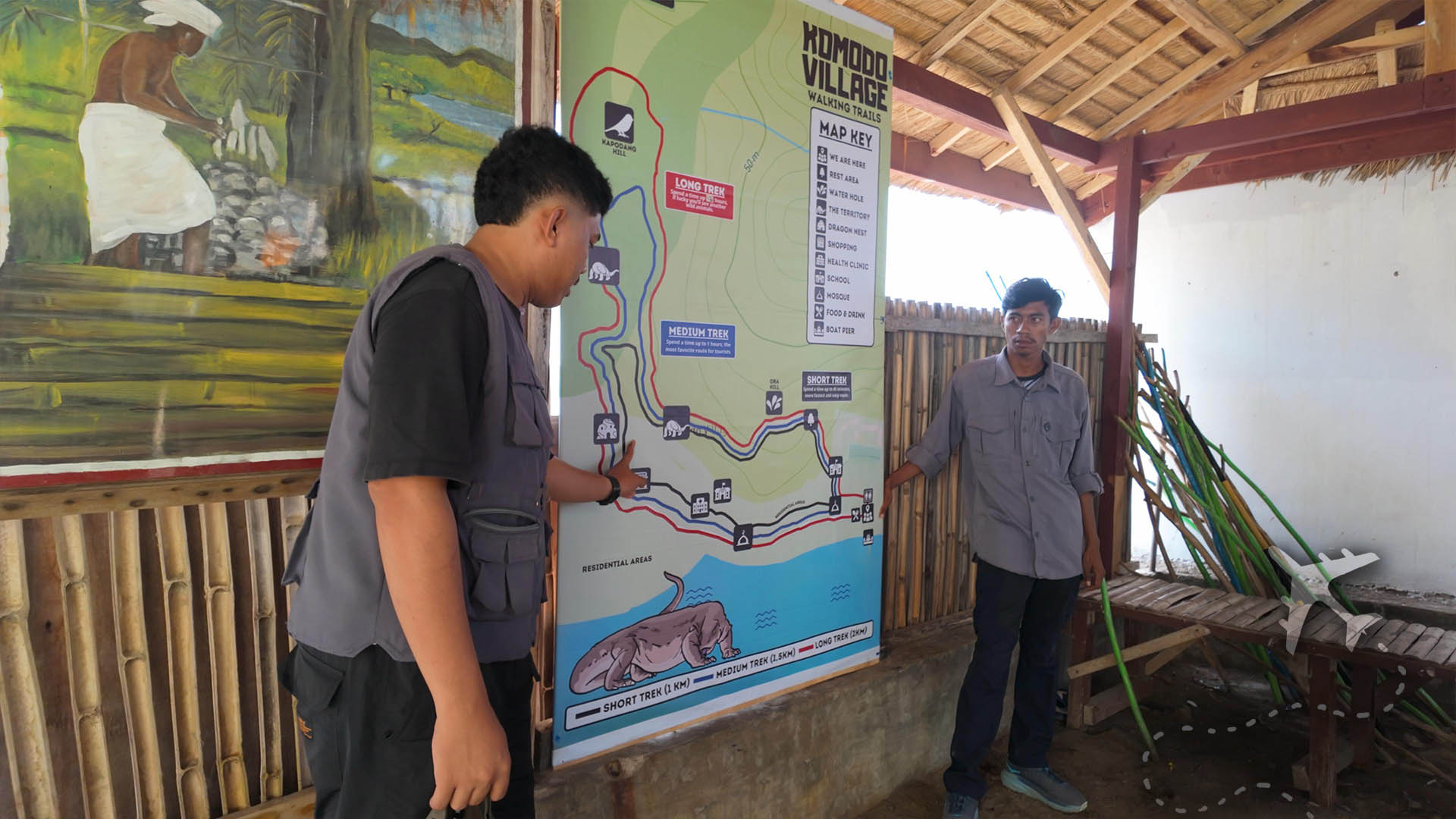
Local guides offer several trekking routes through the landscape behind the village.
There is “no guarantee” you’ll see a Komodo dragon.
These are wild animals, and apparently nobody has explained the tour schedule to them.
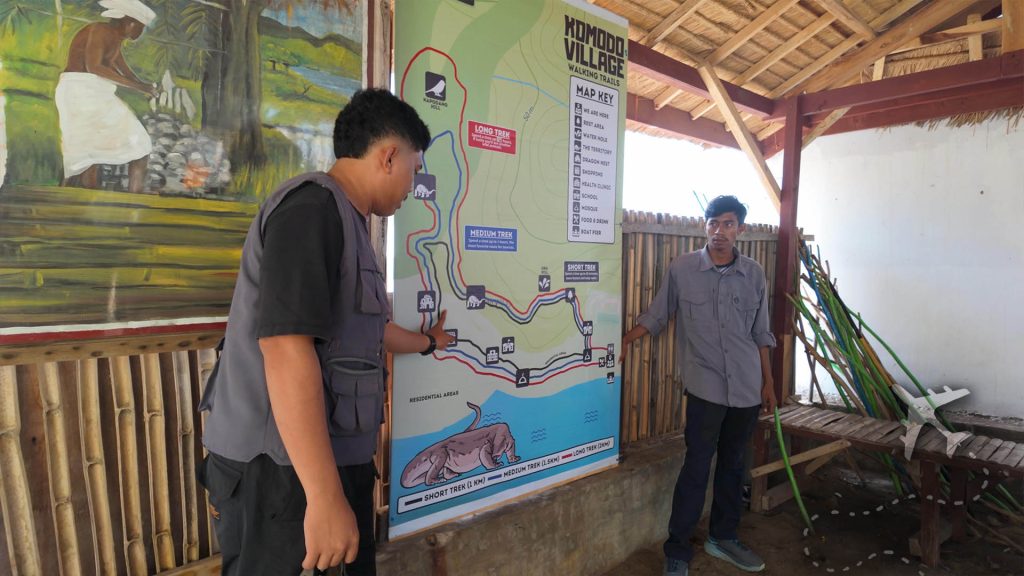
We chose a roughly 90-minute trek and disappeared into the dry brush behind the boat docks.
You’d think finding an enormous lizard would be relatively easy.
It isn’t.
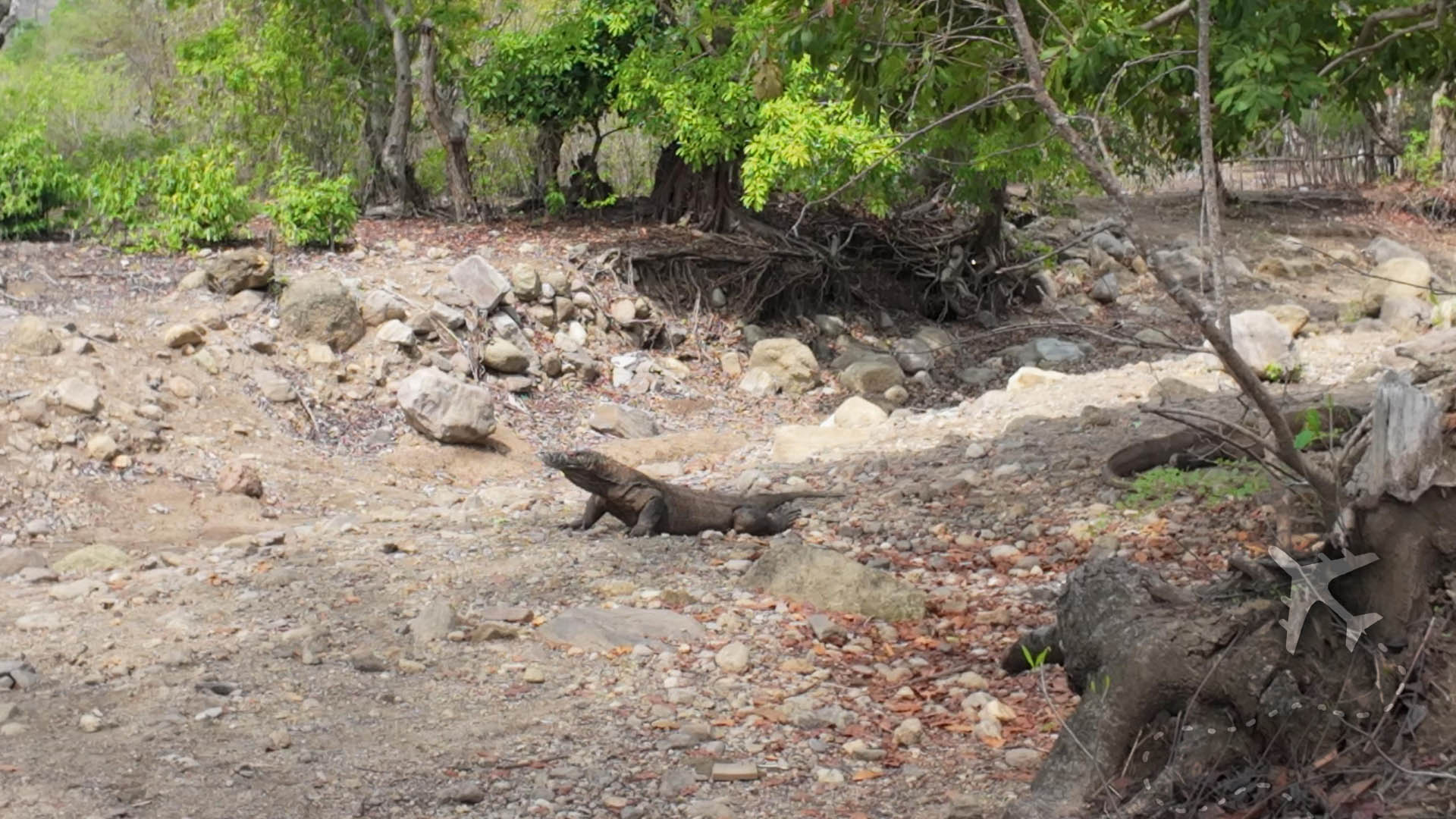
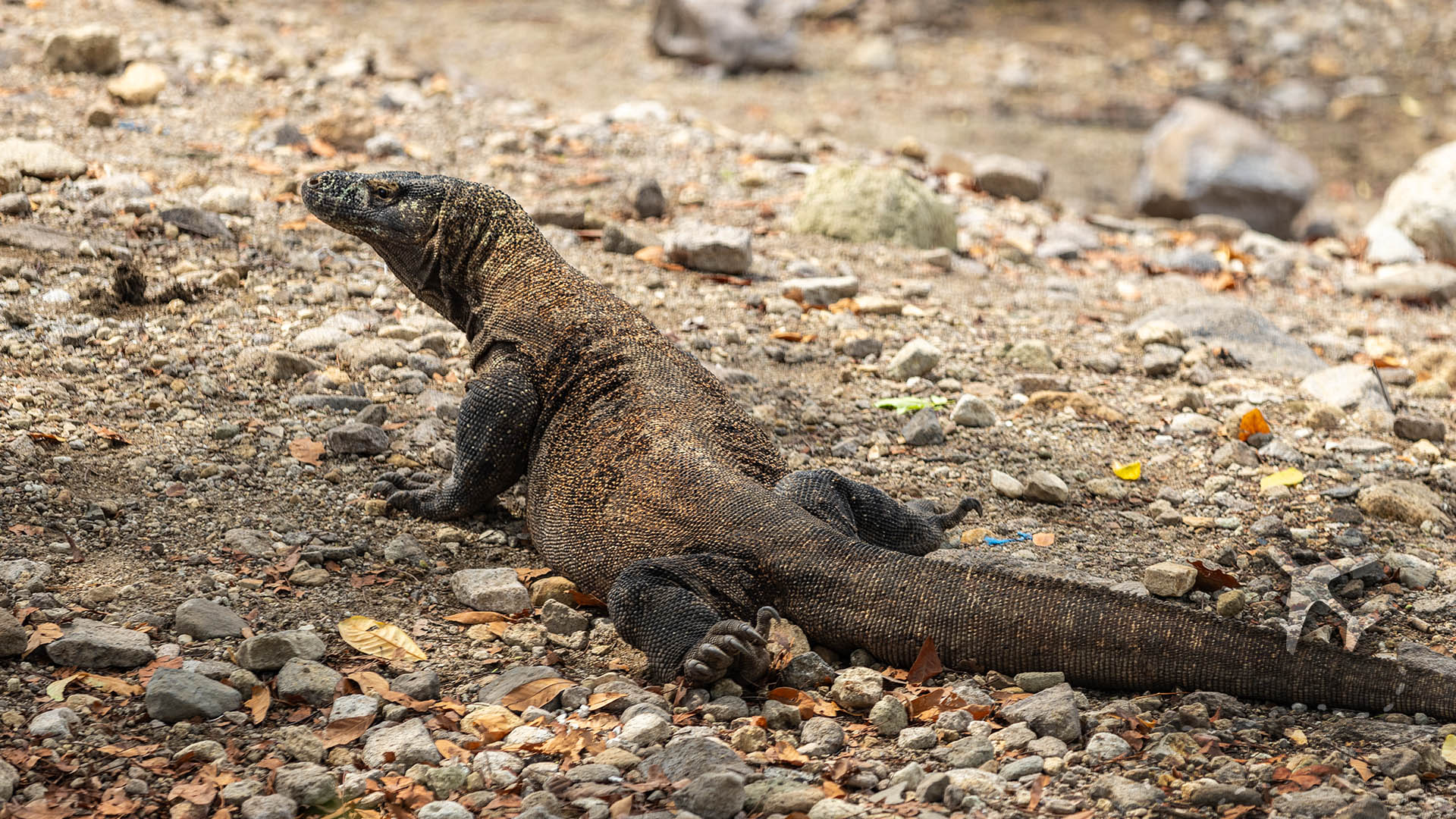
The landscape is basically Komodo dragon camouflage.
Brown dirt. Brown grass. Dead leaves. Gray rocks. More brown grass.
Then your guide points toward what you’ve been assuming was a fallen log.
The log has eyes.
We found one dragon.
Then another.
Then another.
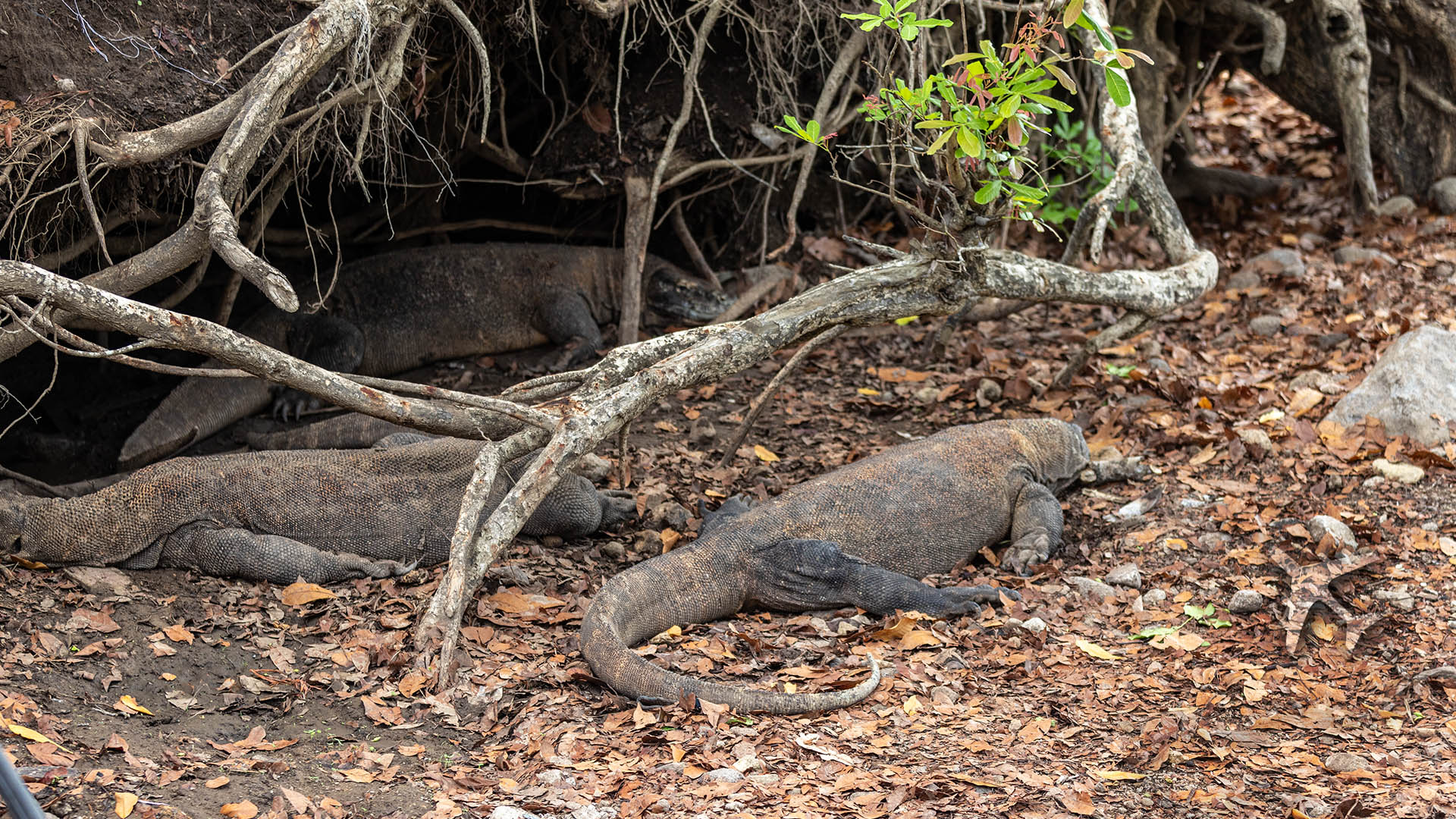
By the end of the hike, we’d encountered 12 Komodo dragons.
Twelve.
Some were asleep beneath trees. Others slowly wandered through the brush. Several were so well camouflaged that I didn’t see them until the guide pointed directly at them.
Every large one looked entirely capable of eating someone on the tour.
Fortunately, they seemed considerably more interested in sleeping.
YOUR PROFESSIONAL DRAGON DEFENSE SYSTEM IS A STICK
This remains one of my favorite details about visiting Komodo National Park.
You’re hiking through remote wilderness looking for an apex predator equipped with serrated teeth, venom and enough strength to take down prey considerably larger than you.
Naturally, your guide comes heavily armed.
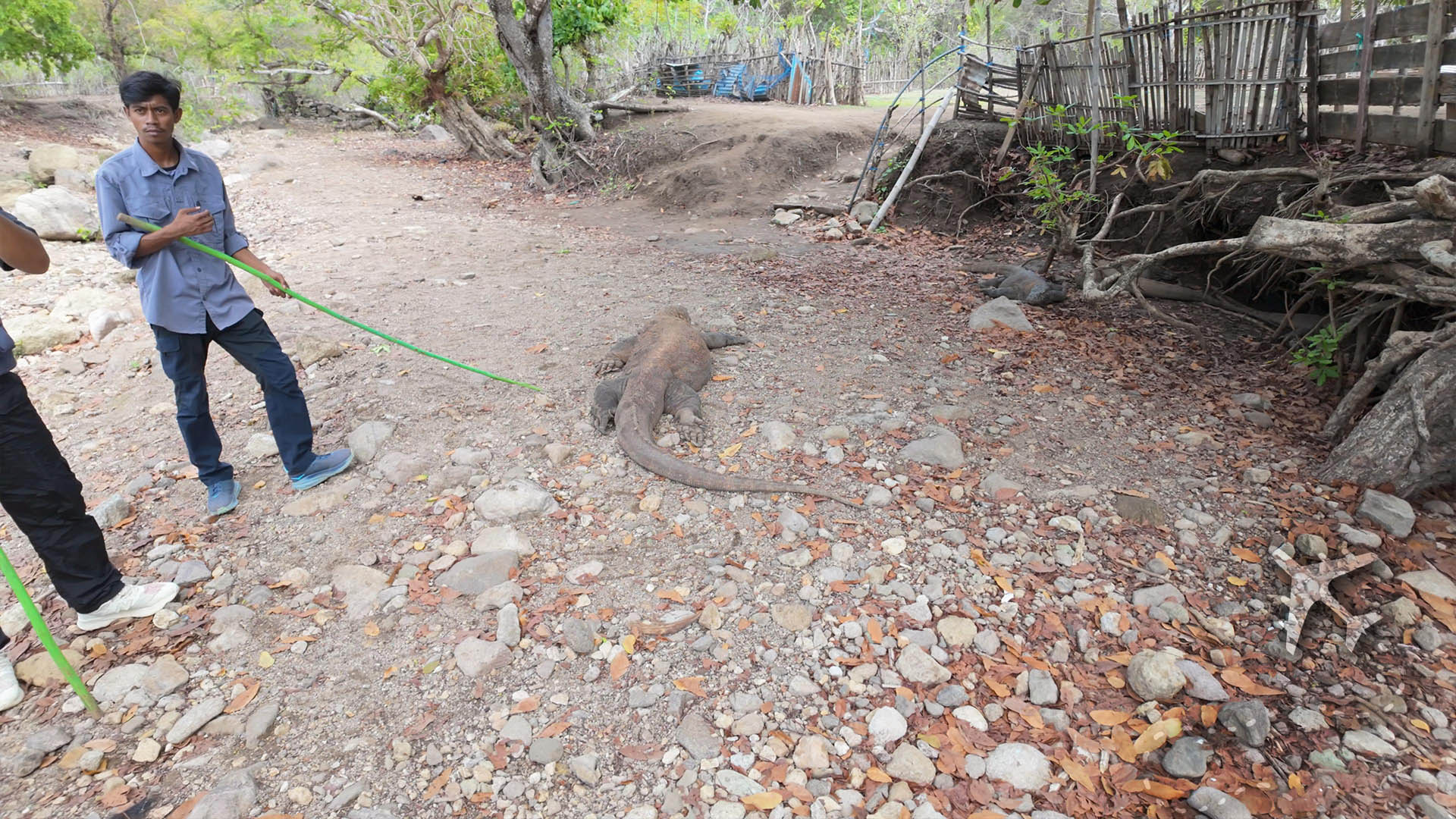
With a stick.
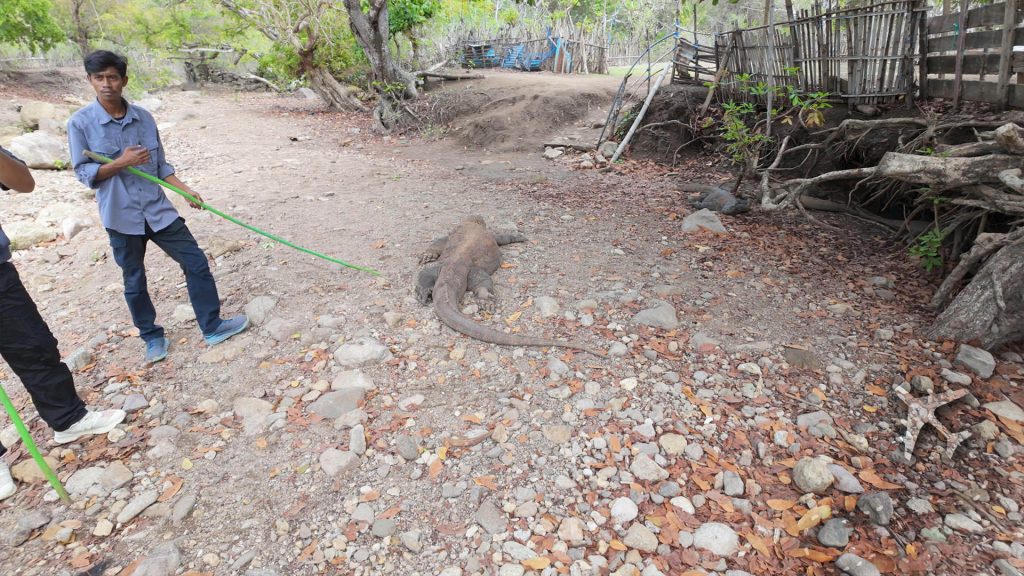
Fine. Technically it’s a long wooden pole with a fork at the end.
Still a stick.
The guides understand dragon behavior incredibly well and use the pole to maintain distance or redirect an animal if necessary.
More importantly, they know how to recognize when a dragon stops behaving like a lazy oversized lizard and starts becoming interested in something.
Possibly you.
So when your guide says stop, stop.
When he says move, move.
And when he tells you that getting closer for a selfie is a bad idea, perhaps resist the urge to conduct your own independent wildlife research.
MOST KOMODO DRAGONS ARE INCREDIBLY LAZY
Despite their reputation, almost every dragon we encountered was doing absolutely nothing.
Which, frankly, I respect.
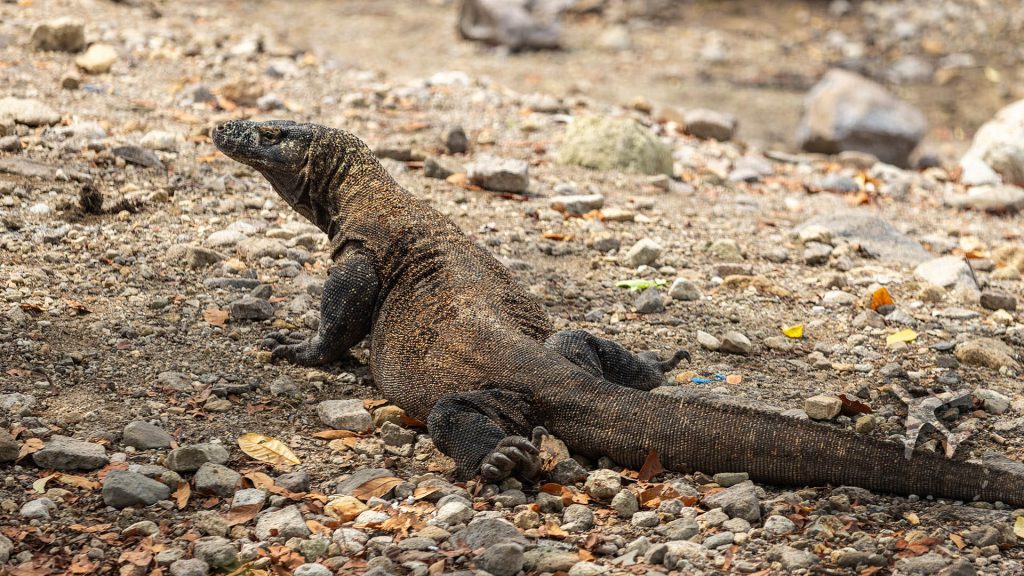
They lie beneath trees conserving energy, occasionally lifting their heads to check whether lunch has wandered past.
Then they go back to sleep.
This makes them look harmless.
They aren’t.
A sleeping Komodo dragon hasn’t become domesticated.
It isn’t enjoying your company.
It hasn’t agreed to participate in your vacation photos.
It’s simply a predator currently operating in power-saving mode.
And Komodo dragons can move surprisingly fast over short distances when something gives them a reason.
Stay with your guide. Keep your distance. Move slowly.
And watch where you’re walking.
The dragon everyone is photographing probably isn’t the one you need to worry about.
It’s the giant brown “log” beside the trail that nobody noticed.
GETTING BITTEN WOULD REALLY SCREW UP YOUR VACATION
For years, the popular explanation was that Komodo dragons killed prey because their mouths contained a horrifying cocktail of bacteria.
Which was already unpleasant enough.
Then researchers discovered venom.
Excellent.
Komodo Dragon venom interferes with blood clotting and contributes to shock and rapid blood loss.
Combine that with serrated teeth designed to rip flesh and you have an injury that requires immediate medical attention.
There’s just one minor logistical problem. You’re on a remote Indonesian island!
So perhaps avoid testing this personally. Thankfully, human attacks are uncommon, but they have happened. Fortunately, preventing one requires a surprisingly advanced survival strategy:
- Don’t do stupid shit around Komodo dragons.
- Stay with the guide.
- Don’t approach them.
- Don’t block their path.
- Don’t wander through the brush alone.
- And don’t assume the dragon that’s been sleeping for twenty minutes has entered into some sort of legally binding agreement to remain there.
KOMODO NATIONAL PARK IS RIDICULOUS EVEN WITHOUT THE DRAGONS
The dragons get the headlines, but the surrounding national park is spectacular enough that they’d almost be unnecessary.
Almost.
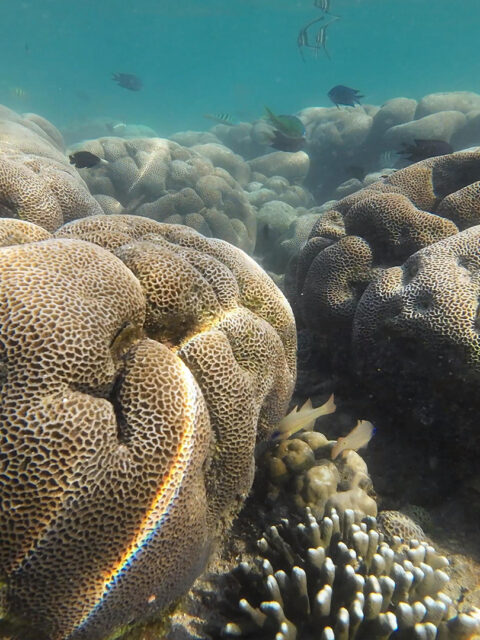
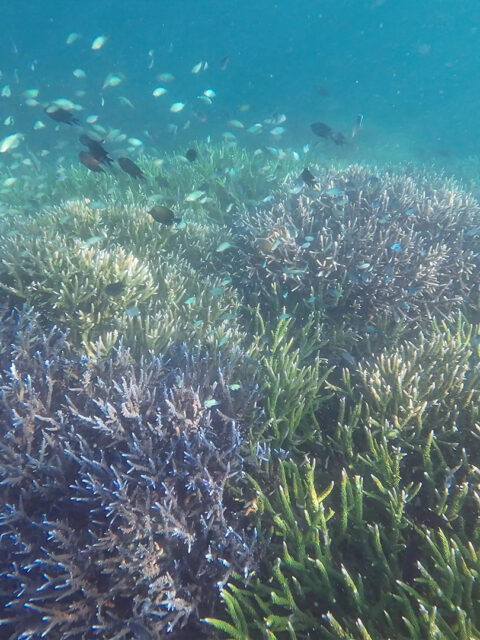
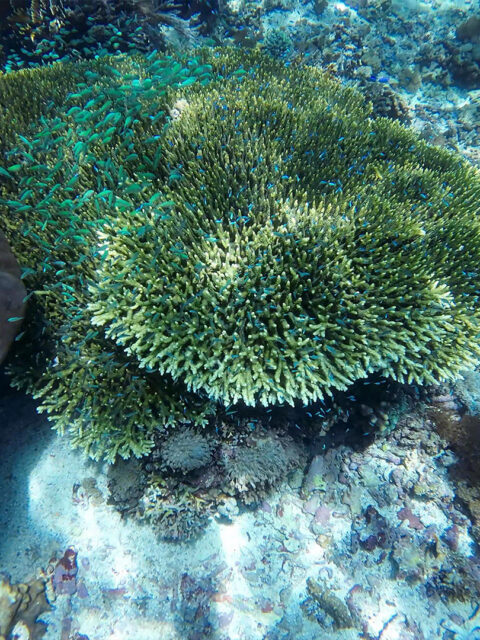
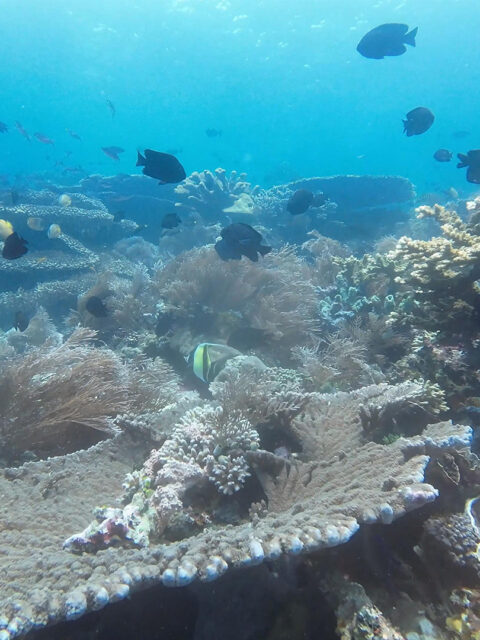
Nearby Pink Beach combines turquoise water with genuinely pinkish sand and excellent snorkeling just offshore.
Then there’s Padar Island, where a short, brutally hot climb leads to one of Indonesia’s most recognizable views: jagged mountains dividing several enormous sweeping bays.
Add manta rays, coral reefs, empty beaches and island after island of volcanic scenery and you begin to understand why Komodo National Park deserves more than a rushed day trip.
But Komodo Village was the part I specifically came back to see.
KOMODO VILLAGE UNCENSORED
If your only objective is to get a photograph of a Komodo dragon, there are easier and more predictable places to do it.
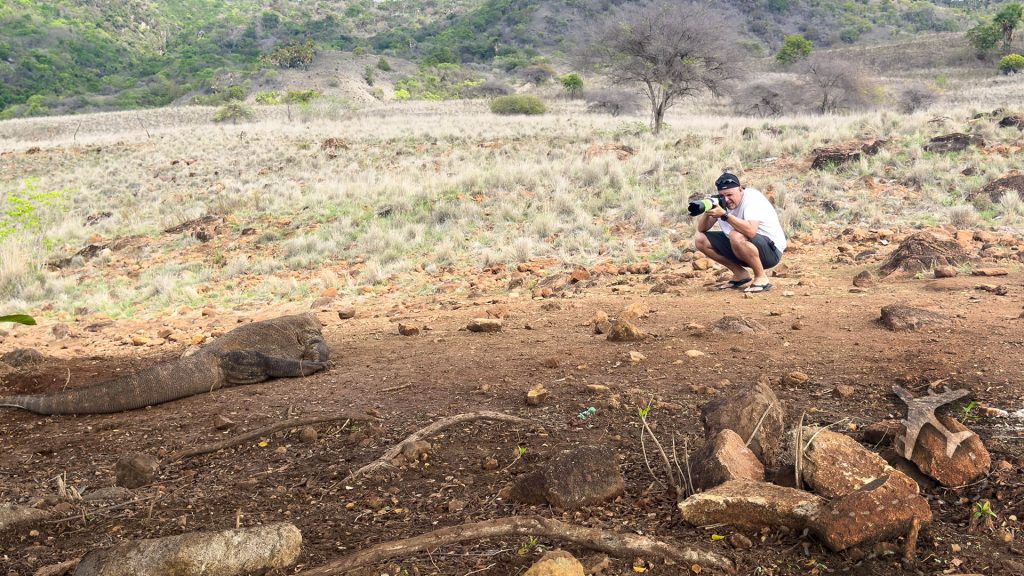
That’s not why Komodo Village is special.
People actually live here.
Families have spent generations fishing these waters, raising children and building homes while enormous carnivorous reptiles wander around the exact same landscape.
There’s something wonderfully absurd about standing ten meters from a Komodo dragon, watching it disappear into the brush, then walking a few minutes back toward a village filled with houses, boats and kids playing outside.
No giant fence separates the two worlds.
There aren’t really two worlds.
That’s the point.
I came back because I wanted to see Komodo dragons somewhere that didn’t feel like a wildlife attraction designed around tourists.
Instead, I spent 90 minutes hiking behind an actual Indonesian village and found twelve enormous dragons scattered through the bush.
No cages.
No feeding show.
No guarantee we’d find anything.
Just people living their lives while prehistoric-looking predators wander around outside.
It’s beautiful.
It’s slightly insane.





SIMPLY AMAZING! The best of travels for you in the new year!