


There are waterfalls you visit because they’re pretty.
There are waterfalls you visit because somebody on Instagram stood in front of one wearing a flowing red dress and convinced you that your life would remain tragically incomplete without recreating the exact same photograph.
And then there’s Tumpak Sewu Waterfall, where Indonesia apparently decided one waterfall wasn’t enough and dumped an entire collection of them over the side of a jungle-covered cliff.
Located in East Java near Lumajang, Tumpak Sewu is easily one of the most spectacular waterfalls I’ve seen anywhere in Indonesia.
Actually, forget Indonesia. It’s one of the most spectacular waterfalls I’ve seen anywhere in the world.
The name Tumpak Sewu roughly translates to “a thousand waterfalls,” which sounds suspiciously like tourism marketing until you stand at the viewpoint and realize they may actually be underselling the place.
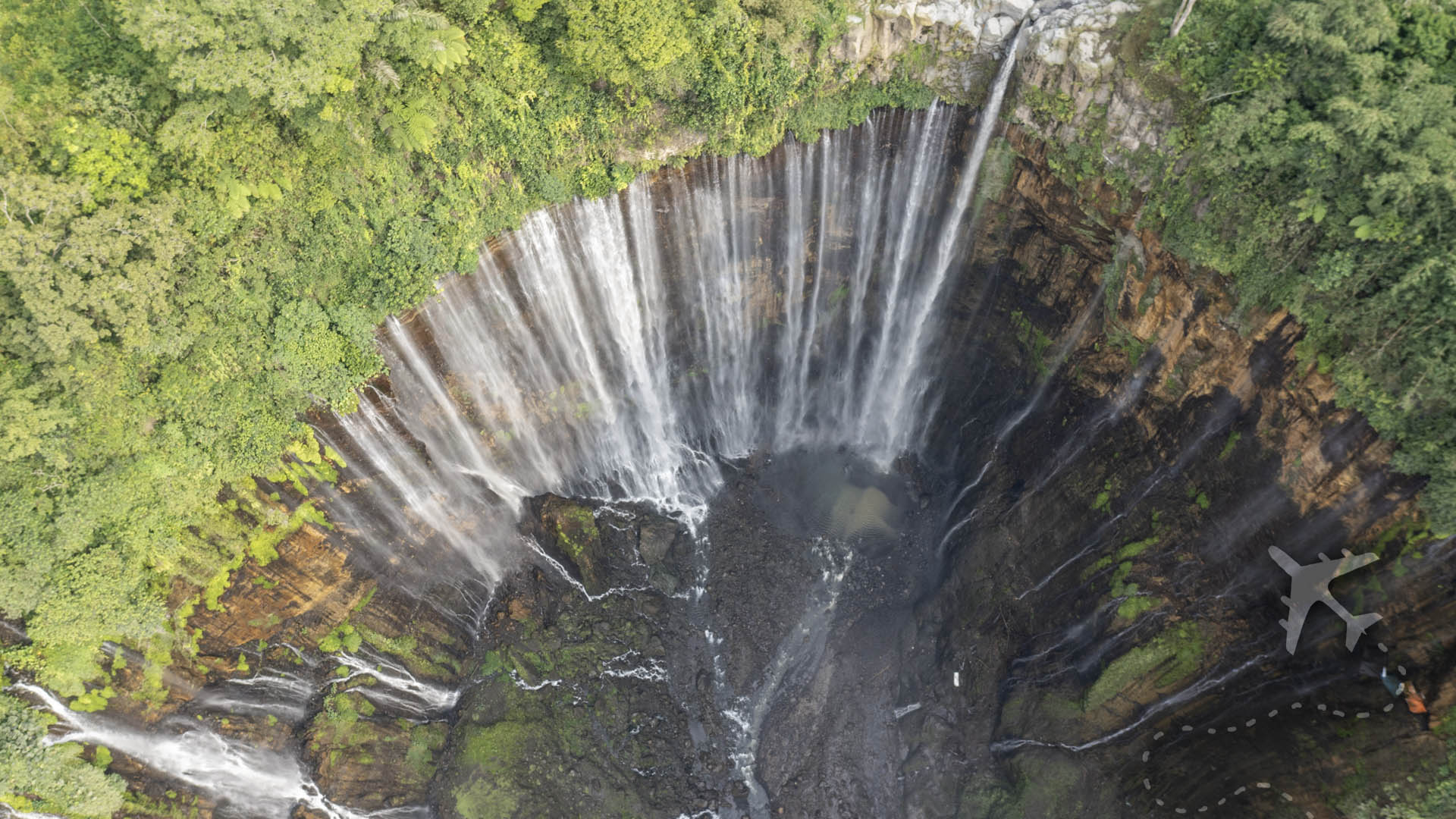
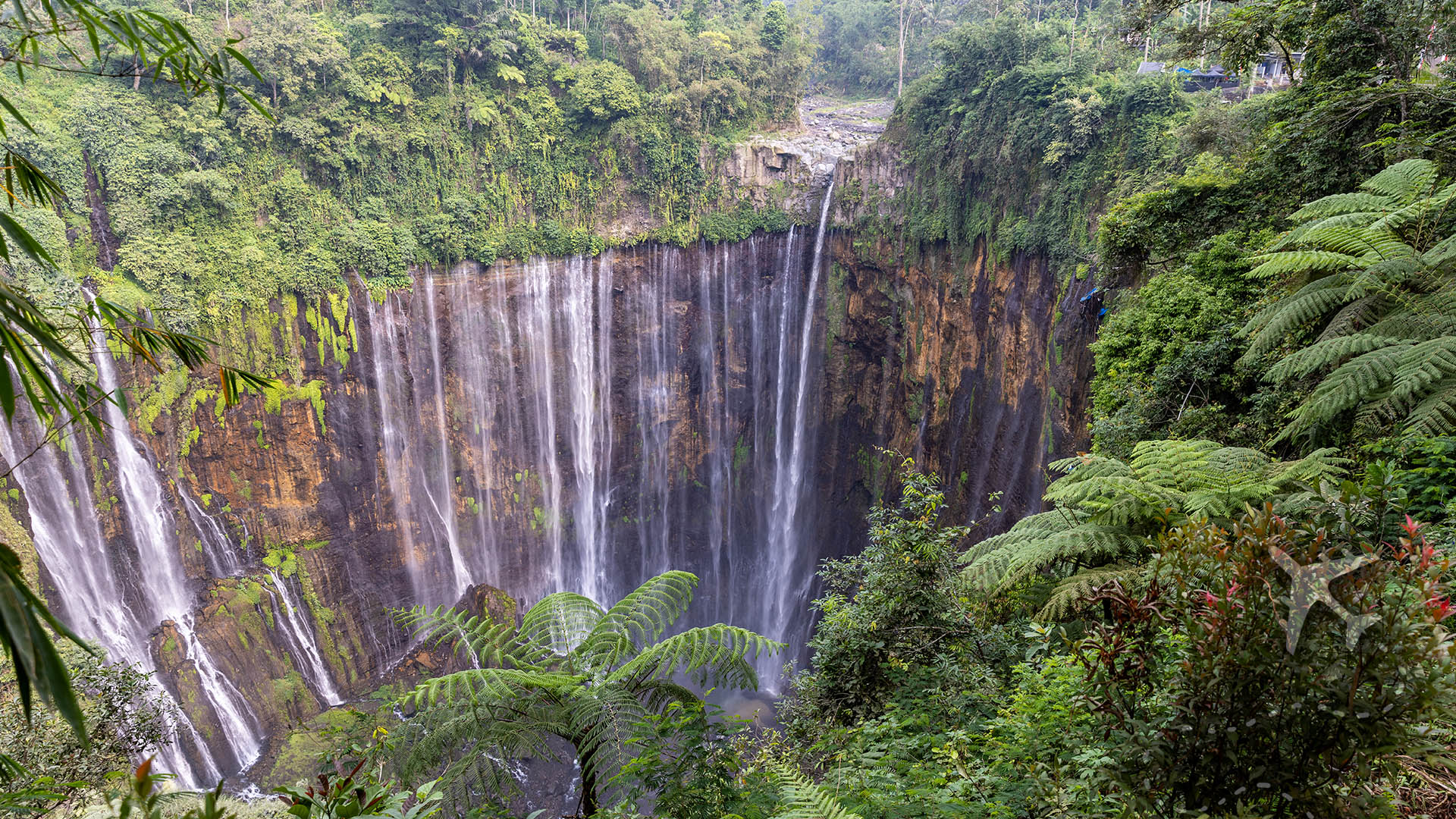
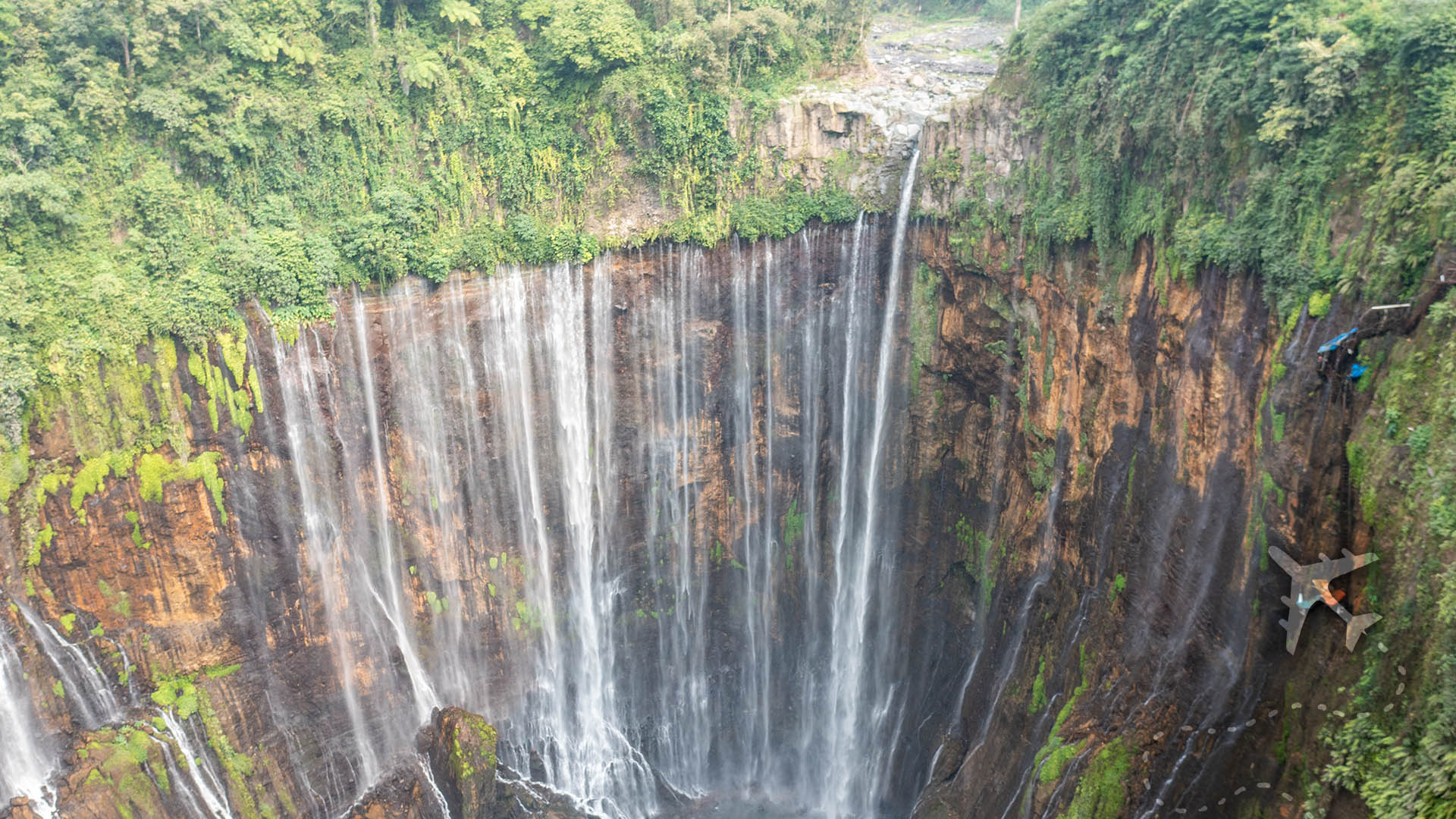
Hundreds of individual streams pour over a massive semicircular cliff covered in impossibly green vegetation, crashing into a jungle canyon filled with mist.
And on a clear morning, Mount Semeru, the highest volcano on Java, can rise behind the entire spectacle.
Because apparently a thousand waterfalls weren’t dramatic enough.
Indonesia needed to put an active volcano behind them.
Destination: Tumpak Sewu Waterfall
GPS COORDINATES
-8.2301, 112.9178
CLOSEST AIRPORT
CURRENT WEATHER
overcast clouds (68F / 20C)

AIR QUALITY INDEX (AQI)
Moderate (54)
EAST JAVA HAS A WATERFALL PROBLEM
If you spend enough time traveling around East Java, you eventually realize the Indonesians have been hoarding waterfalls.
I’ve visited Madakaripura Waterfall, where you walk through a narrow canyon while water pours down from cliffs on practically every side. The place feels less like visiting a waterfall and more like accidentally entering Mother Nature’s industrial pressure washer.
Then there’s Cikaracak Waterfall, another jungle waterfall that requires considerably more effort than pulling into a parking lot, taking three photographs and buying a refrigerator magnet.
But Tumpak Sewu hits differently.
Madakaripura surrounds you.
Cikaracak makes you work for it.
Tumpak Sewu simply overwhelms you.
There isn’t one neat stream of water politely falling from a cliff.
The entire fucking cliff is the waterfall.
GETTING TO TUMPAK SEWU
Tumpak Sewu is buried in the countryside of East Java, with Malang serving as one of the most practical starting points. Malang also makes a useful base for exploring Bromo Tengger Semeru National Park and Madakaripura if you’re planning a larger East Java adventure.
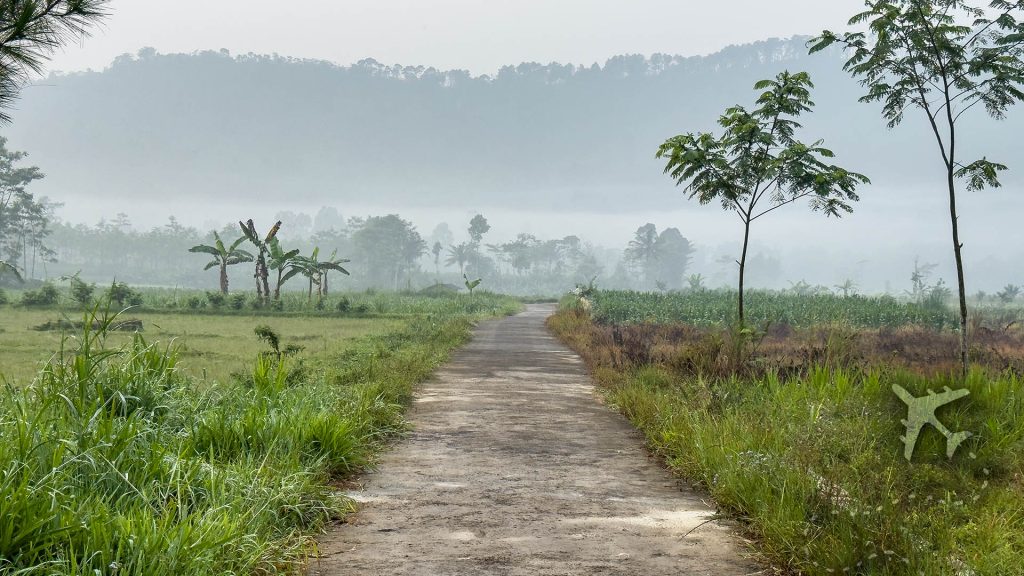
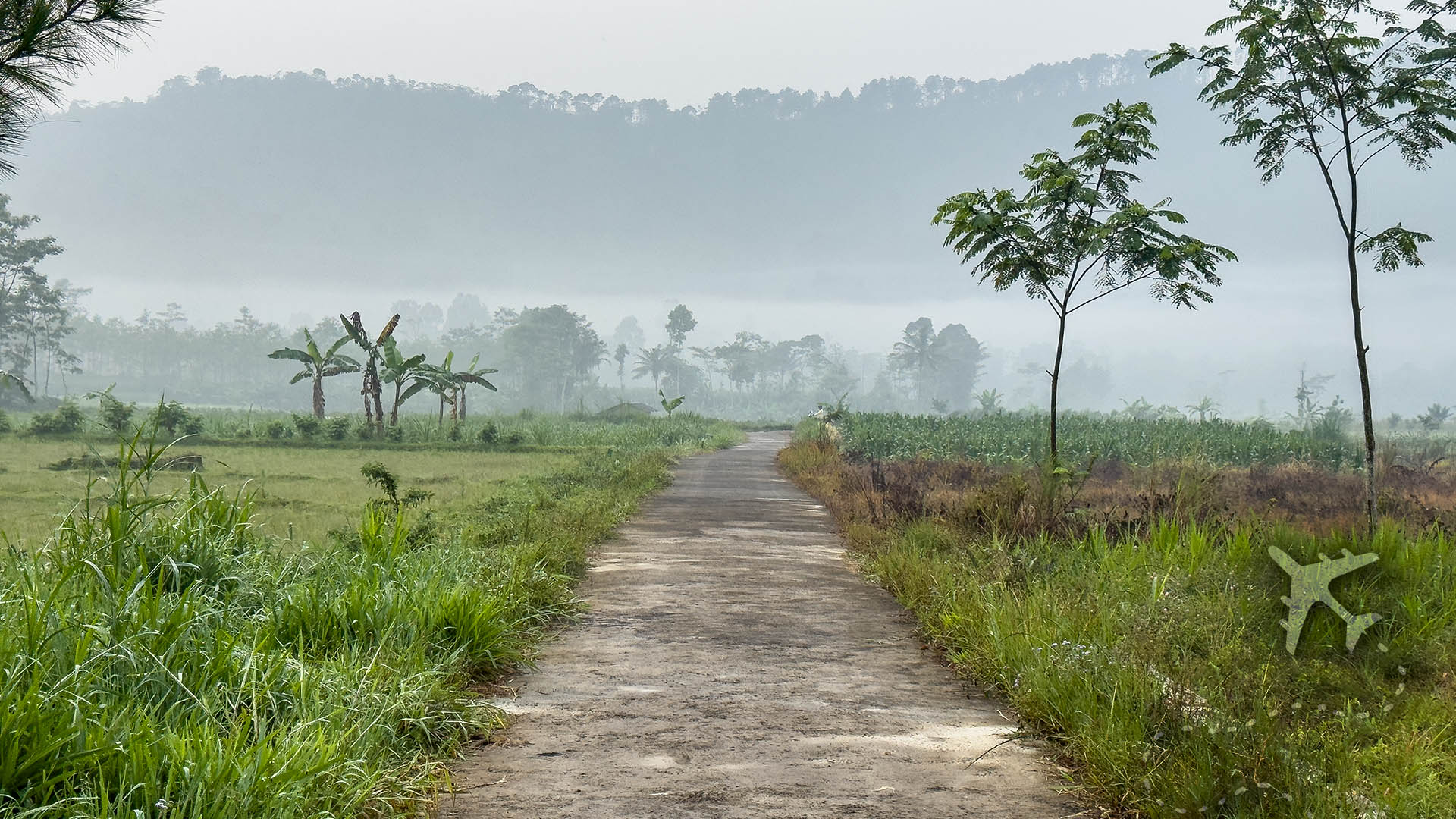
The drive takes you through villages, rice terraces and increasingly rural landscapes as Java gradually sheds the traffic and concrete.
Eventually Mount Semeru begins appearing on the horizon.
At 3,676 meters, Semeru is Java’s highest volcano and one of Indonesia’s most active. If the weather cooperates, you might even catch one of its periodic eruptions sending ash above the summit.
Volcano.
Rice fields.
Jungle.
Massive waterfall.
Indonesia apparently purchased the premium scenery package.
FIRST, THE EASY PART
From the entrance, it’s a relatively short walk to the panoramic viewpoint.
And then the jungle opens.
Holy shit.
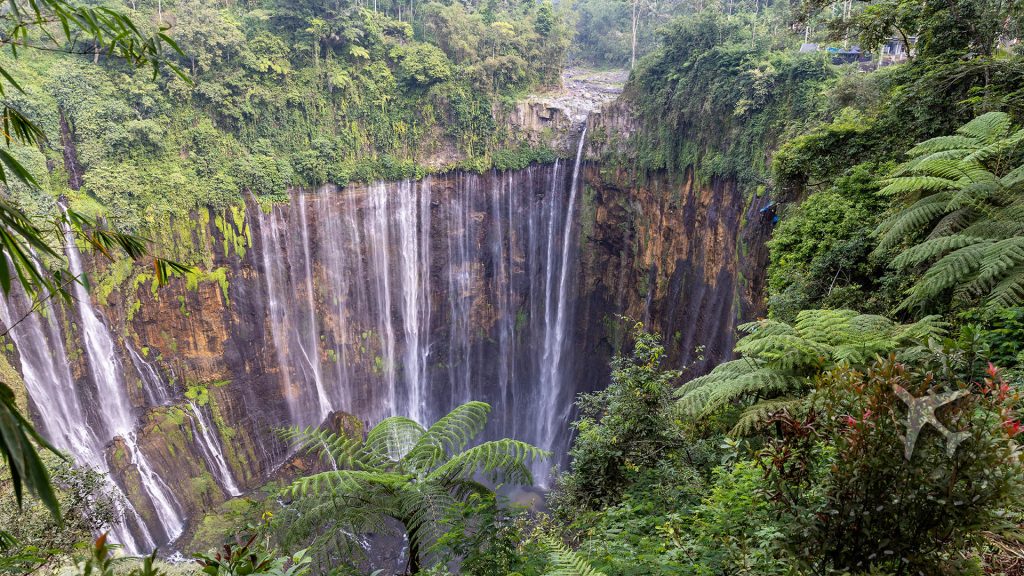
The entire waterfall suddenly appears below you.
The canyon forms an enormous natural amphitheater with hundreds of streams cascading through dense vegetation. Mist rises from the bottom while jungle clings to virtually every available surface.
If you’re lucky enough to arrive early on a clear morning, Semeru appears perfectly behind the falls. Or so I’m told. I apparently booked the clouds-and-disappointment package (sigh).
This is the photograph you’ve probably seen online.
You could stop here.
Take some photos. Admire the scenery. Return to the parking lot with clean shoes and functioning quadriceps.
That’s the intelligent option.
Unfortunately, the best view is at the bottom.
And that’s where the shenanigans begin.
45 MINUTES DOWN
Calling the descent a “hike” is like calling falling down the stairs “an aggressive shortcut.”
The trail drops rapidly into the canyon through a collection of steep stairs, bamboo ladders, rocks, streams, ropes and other assorted objects that somebody that would keep the tourism death toll low’ish.
The deeper you descend, the wetter everything gets.
Eventually water is running across sections of the route while you’re gripping ropes, negotiating slippery rocks and wondering whether the guy who installed that bamboo railing had any formal engineering qualifications whatsoever.
The descent takes roughly 45 minutes, depending on conditions, crowds and how committed you are to preserving your ankles.
Wear shoes with actual traction.
Bring something waterproof for your camera gear.
And forget about staying dry.
You’re visiting a thousand waterfalls.
Manage your expectations.
AND THEN YOU SEE IT FROM BELOW
Eventually the trail dumps you onto the canyon floor.
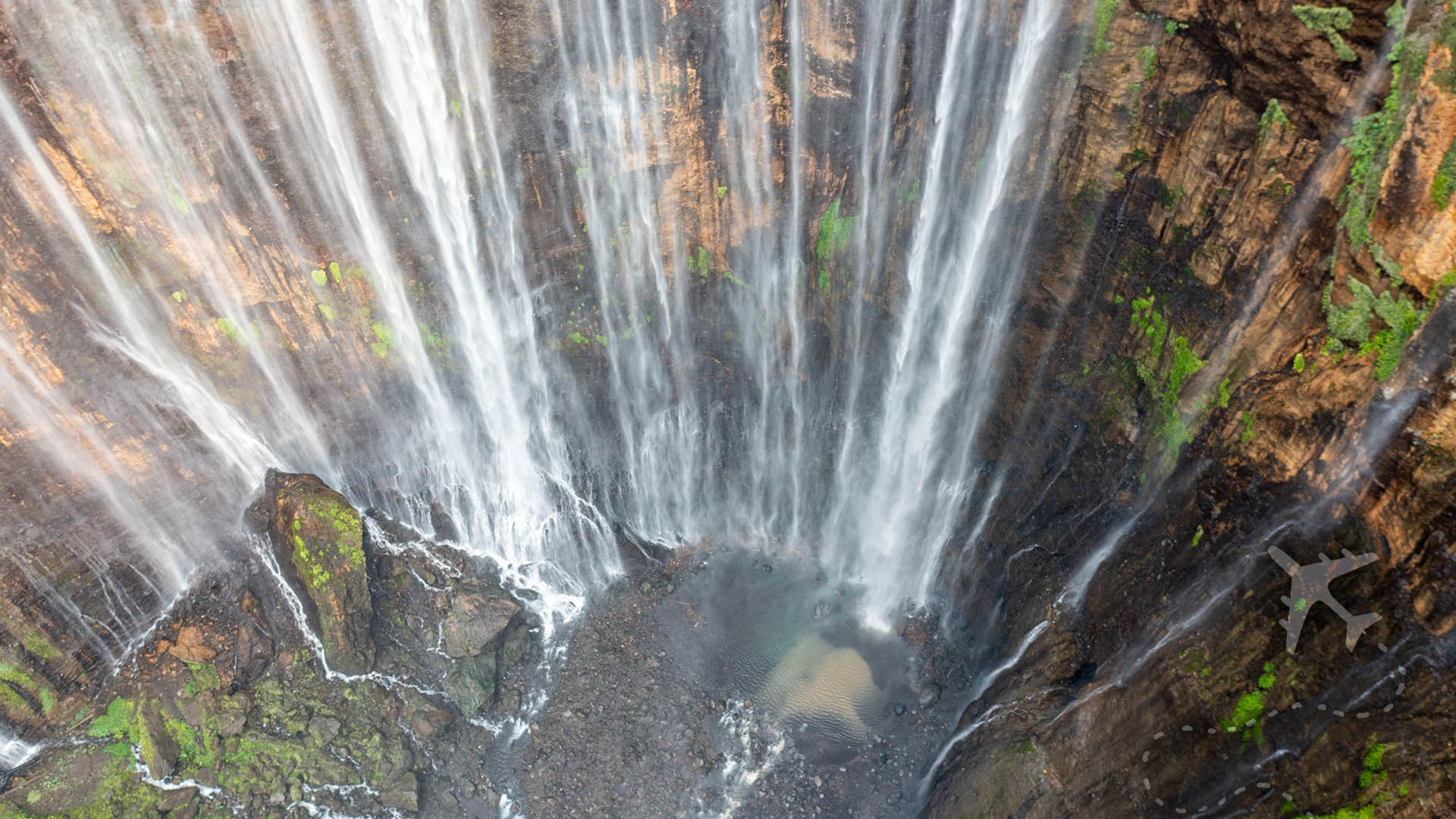
This is where Tumpak Sewu goes from impressive to completely ridiculous.
From above, the waterfall looks enormous.
From below, it feels impossible.
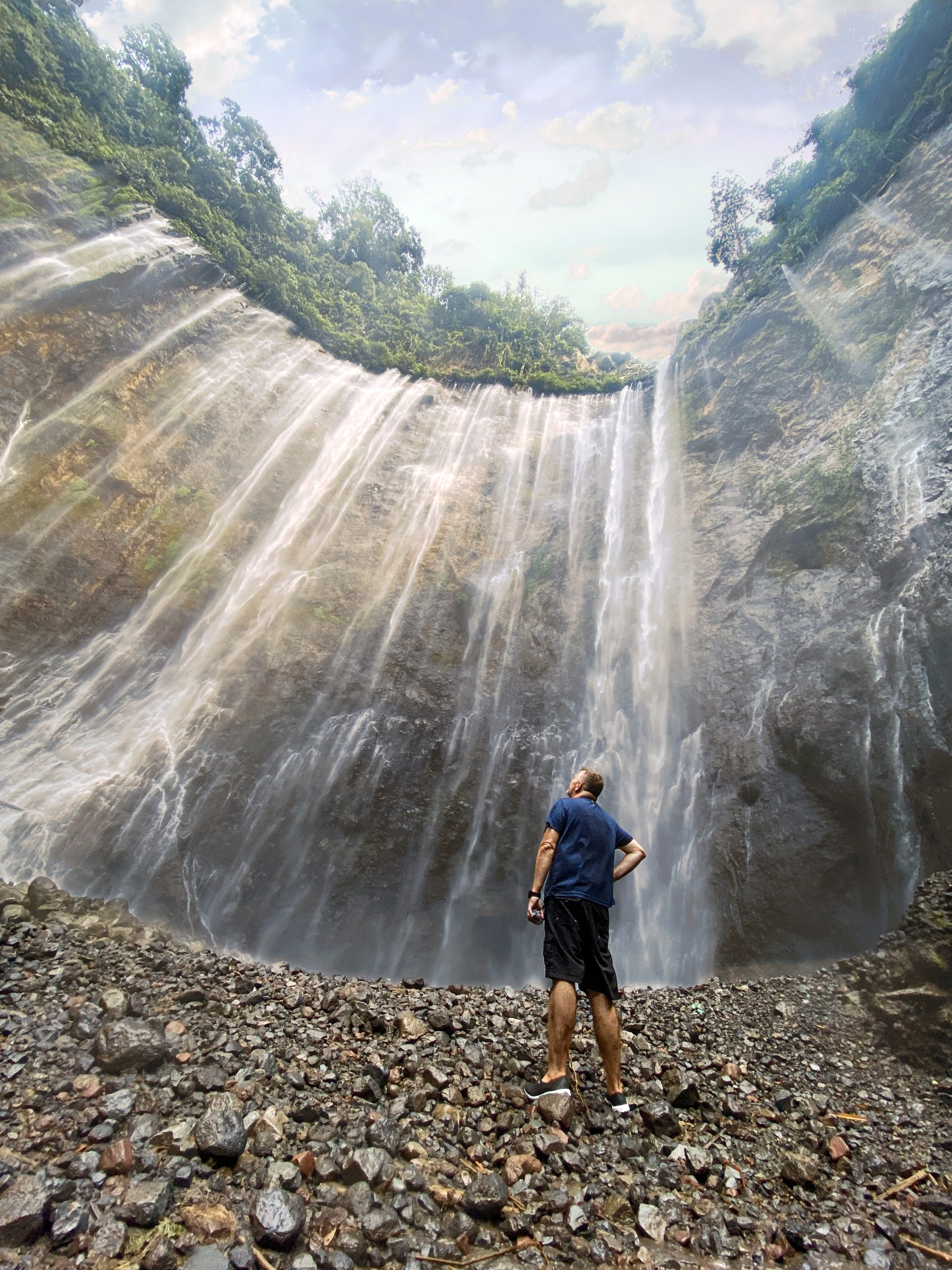
You scramble across rocks toward the center of the canyon while the waterfall gradually wraps around you. The sound gets louder, the mist gets heavier, and eventually you look up and realize water is falling from practically everywhere.
Not one waterfall.
Not five.
Not twenty.
An entire curved wall of jungle appears to be leaking.
Individual streams plunge from the cliffs and explode against rocks below, filling the canyon with mist.
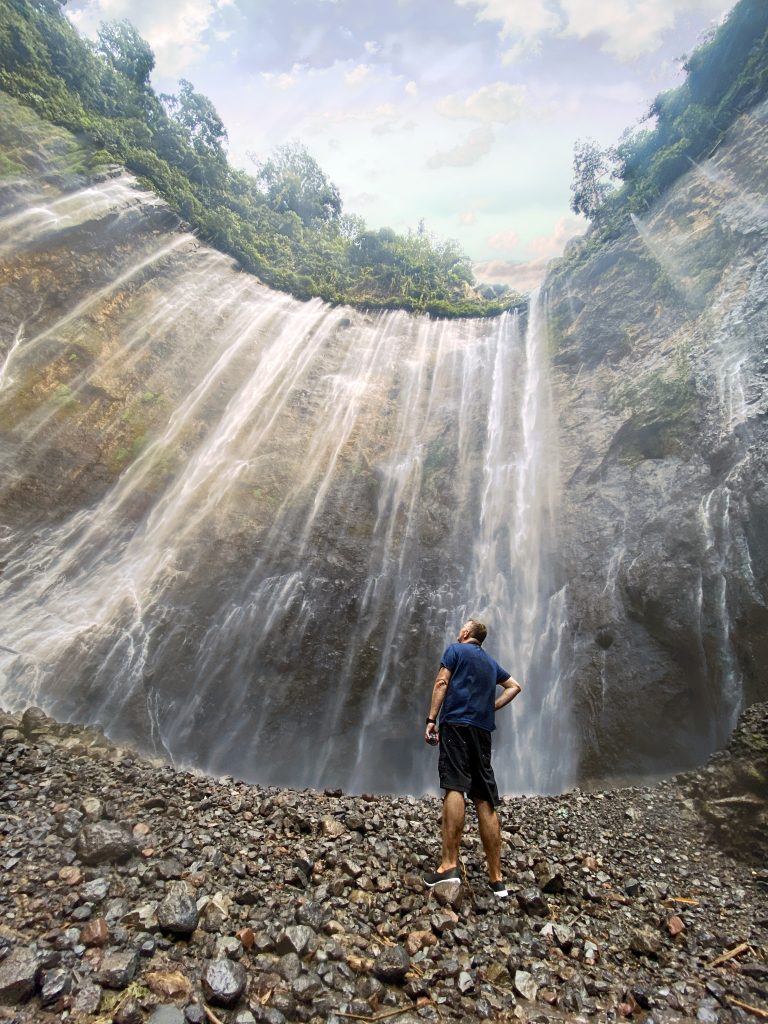
People standing beneath it look microscopic. Which, naturally, means this is exactly where you pose for a completely spontaneous and definitely-not-planned photo of yourself looking adventurous.
Suddenly “A Thousand Waterfalls” doesn’t sound like marketing bullshit anymore.
If anything, somebody may have rounded down.
GET YOUR PHOTOS FOR THE ‘GRAM
Photographically, the bottom is spectacular.
Wide-angle lenses are practically mandatory because you’re trying to squeeze an enormous semicircular waterfall, jungle-covered cliffs and the canyon into a single frame.
You’ll inevitably find the obligatory rock.
You’ll stand on it.
You’ll pose.
You’ll take approximately 700 versions of the same photograph because one of them might make you look adventurous instead of exhausted.
Congratulations.
Instagram has been satisfied.
Now there’s just one tiny logistical problem nobody seems particularly interested in mentioning when they post those beautiful Tumpak Sewu photographs online.
You have to climb back out.
OH RIGHT. YOU HAVE TO GO BACK UP
Remember that 45-minute descent?
All those stairs?
The bamboo ladders?
The ropes?
The slippery rocks?
The streams?
Gravity was helping you.
Now gravity has switched teams.
The climb back to the top takes approximately 1½ to 2 hours, and “grueling” is a fairly diplomatic description of what happens next.
You’re now climbing the same steep route you descended, except you’re wet, tired and carrying camera equipment while your legs begin filing formal complaints with management.
Those sketchy bamboo ladders that seemed amusing on the way down?
They’re considerably less charming when you’re climbing them upward after spending an hour scrambling around the canyon.
Every time the trail appears to level out, another staircase materializes from the jungle.
Then another.
And another.
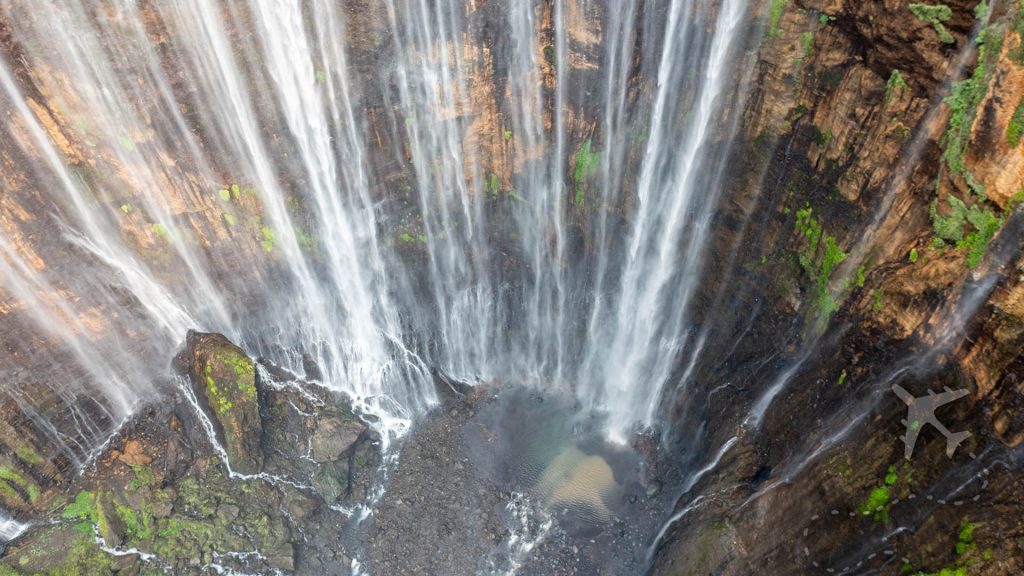
Eventually you stop wondering how much farther it is and simply accept that the jungle owns you now.
Meanwhile, local guides casually pass you carrying supplies in sandals, providing another useful reminder that while round is technically a shape, that’s apparently not what anyone means when they say you’re in shape.
The photographs online rarely show this part.
Strange.
Nobody posts the picture of themselves 90 minutes later, drenched in sweat, clinging to a bamboo railing and questioning every decision that led them to East Java.
That’s the real Tumpak Sewu experience.
PHOTOGRAPHING TUMPAK SEWU
The panoramic viewpoint provides the classic wide shot and your best chance of photographing Tumpak Sewu with Semeru looming behind it. Get there early for softer light and clearer skies before clouds start their daily campaign against photographers.
The descent provides tighter compositions through the jungle, with sections of the waterfall framed between vegetation and canyon walls.
But the bottom is where the scale becomes apparent.
Bring a wide-angle lens and plenty of lens cloths because mist gets everywhere.
Your lens will get wet.
You’ll clean it.
It will immediately get wet again.
Repeat until you stop caring.
DON’T SCREW AROUND WITH THE WEATHER
Tumpak Sewu is spectacular, but this is still an active natural drainage system fed by the Glidik River in steep volcanic terrain.
Heavy rain upstream can dramatically change conditions inside the canyon.
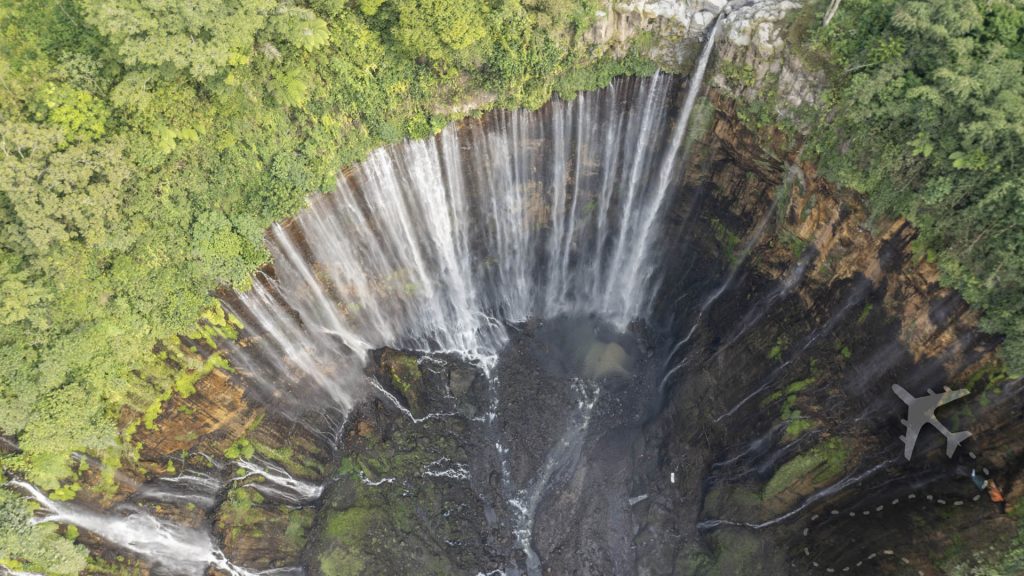
Flash flooding is not something you want to experience firsthand while standing at the bottom of a giant natural funnel.
The dry season, generally April through October, typically provides more manageable conditions, but always check locally before descending.
If guides tell you conditions aren’t safe, listen to them.
There will always be another Instagram photograph.
There may not necessarily be another you.
TUMPAK SEWU UNCENSORED
I’ve seen plenty of spectacular waterfalls.
Madakaripura surrounds you with water inside a narrow canyon. Cikaracak rewards you with the kind of jungle adventure that reminds you some places still require actual effort to reach.
Tumpak Sewu operates on another level.
Standing at the viewpoint, you’re looking into an enormous green amphitheater filled with hundreds of waterfalls.
Standing at the bottom, you’re inside it.
Water crashes around you. Mist hangs in the air. Jungle climbs vertically toward the sky. And somewhere beyond all of it sits one of Java’s most active volcanoes.
Then, after taking enough photographs to keep Instagram occupied for the foreseeable future, you turn around and realize you’ve got another two hours of uphill suffering before anyone hands you a cold drink.
And somehow, even knowing that, I’d still climb down again.
Because Tumpak Sewu isn’t merely another pretty waterfall.
It’s Indonesia showing off, then making you climb 1,000 goddamn stairs to earn the photograph.


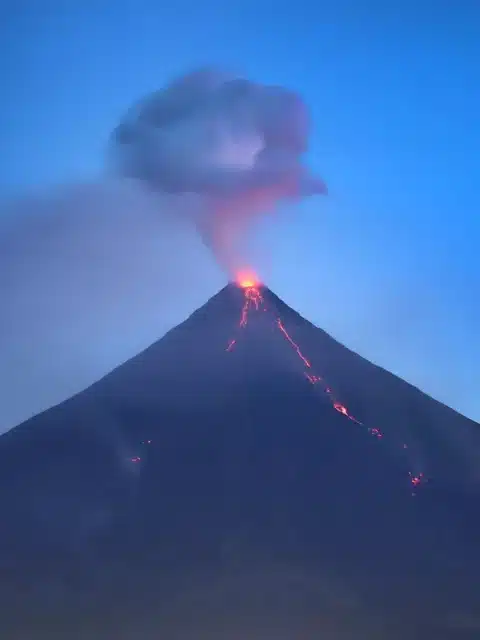

Just WOW!