







Some places die slowly.
Others disappear so completely that they almost become myth.
Then there’s Centralia, Pennsylvania.
I’ve explored radioactive exclusion zones, volcanic disaster zones, and villages that were wiped off the face of the Earth. But nothing quite prepares you for driving into a town that technically doesn’t exist anymore. There are no abandoned skyscrapers. No rows of decaying houses. No dramatic ruins frozen in time.
Because the town isn’t abandoned.
It’s gone.
The streets still snake through the Pennsylvania hills. Sidewalks lead to empty fields. Driveways end in patches of grass where family homes once stood. You stand there staring at a perfectly ordinary neighborhood… until you realize the neighborhood itself has been erased.
Not by war.
Not by flood.
Not by a volcano.
By a fire that started underground more than sixty years ago and simply refused to die.
DESTINATION: Centralia
GPS COORDINATES
40.8037, -76.3409
CLOSEST AIRPORT
CURRENT WEATHER
clear sky (57F / 14C)

AIR QUALITY INDEX (AQI)
Air-quality data is currently unavailable.
SURELY IT’LL BURN ITSELF OUT
In 1962, Centralia was just another hardworking anthracite mining town tucked into the hills of eastern Pennsylvania. Coal was life here. Nearly every family had ties to the mines, and nobody imagined the town itself would become one of America’s strangest disasters.
Then somebody lit a fire.
What began as a seemingly routine burn at the town landfill ignited an exposed coal seam beneath the surface. Once the flames reached the abandoned mine tunnels below Centralia, there was no putting them out.
Coal doesn’t burn like a campfire.
It burns relentlessly.
The underground maze of abandoned mines became a giant chimney system feeding oxygen to the flames while millions of tons of coal became fuel.
Engineers drilled.
They excavated.
They flooded tunnels.
They tried barriers.
Every solution failed.
The fire simply found another path.

Today it’s estimated that millions of tons of coal are still feeding the blaze beneath the mountains, and experts believe it could continue burning for another two centuries or more.
Imagine living in a town where the ground beneath your feet is literally on fire.
Because that’s exactly what happened.
The Day the Government said fuck it
For years, Centralia tried to pretend everything was normal.
Families still mowed their lawns.
Kids still rode bicycles.
People still opened businesses while toxic gases slowly seeped through the ground beneath them.
Then reality caught up.
Carbon monoxide began leaking into homes.
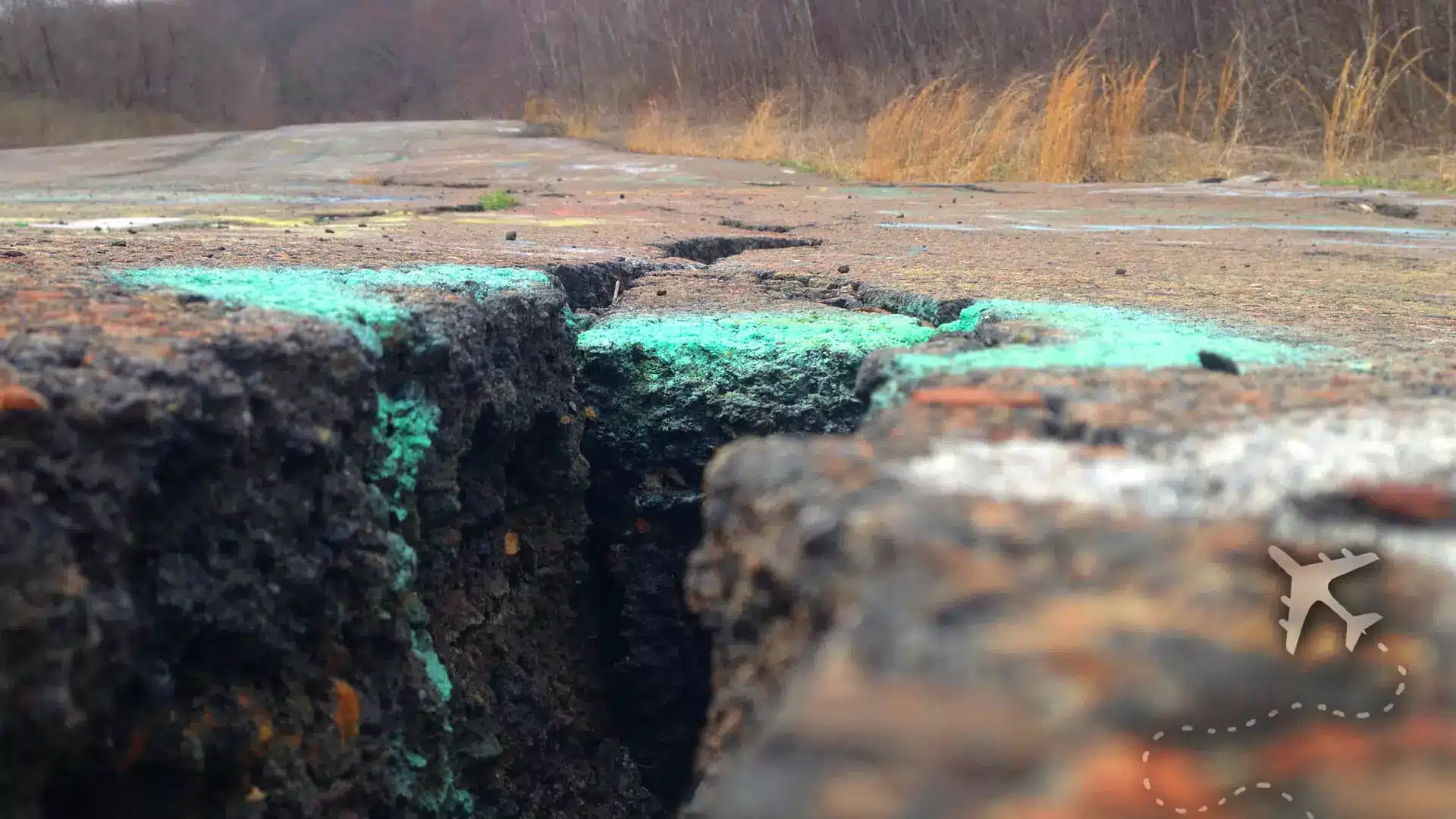
Roads buckled from the heat.
Steam escaped from cracks in the pavement.
A local gas station was forced to close after dangerous underground temperatures threatened its fuel tanks.
Then came the moment nobody could ignore.
In 1981, twelve-year-old Todd Domboski was playing in his grandmother’s yard when the ground suddenly opened beneath him. A sinkhole nearly 150 feet deep swallowed him almost instantly. Only the quick actions of his cousin pulling him free prevented the mine fire from claiming its first human victim.
That was the wake-up call.
The government finally admitted what everyone already knew.
Centralia couldn’t be saved.
Beginning in the 1980s, residents accepted buyouts and relocated. One by one, homes disappeared behind bulldozers. Churches vanished. Schools vanished. Businesses vanished.
By the early 1990s, Pennsylvania invoked eminent domain.
The town was condemned.
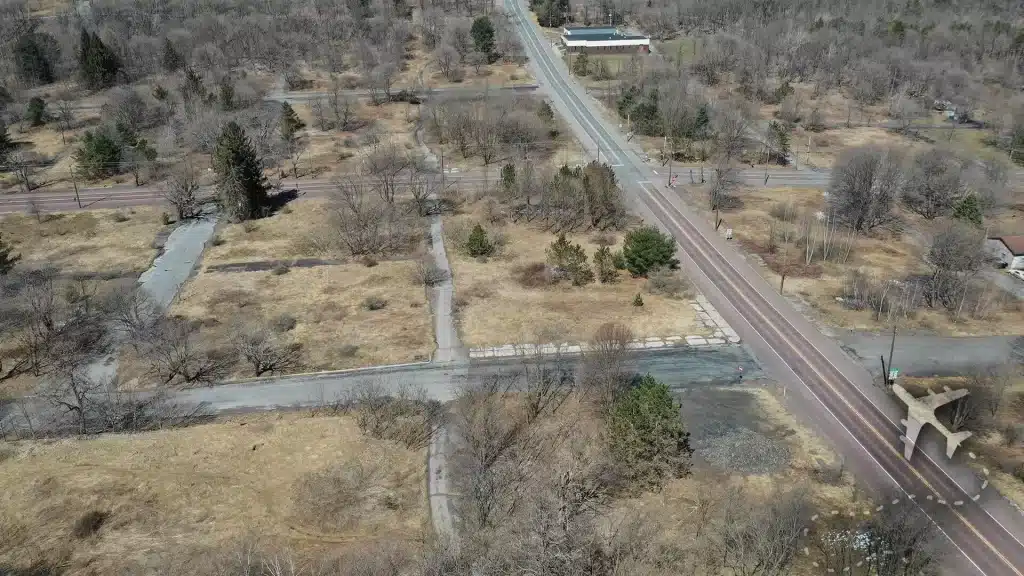
Eventually even the U.S. Postal Service deleted Centralia’s ZIP code.
Think about that for a second.
Entire towns have been abandoned before.
Very few have been officially erased.
CENTRALIA HAS LEFT THE CHAT
This is what makes Centralia unlike almost every other abandoned place I’ve explored.
Most ghost towns leave behind buildings.
Centralia leaves behind absence.
You drive through quiet forests only to notice fire hydrants with no houses.
Street signs leading nowhere.
Mailboxes without neighborhoods.
Perfectly intact sidewalks ending in open fields.
Nature hasn’t reclaimed Centralia.
The government deleted it.
It’s unsettling because your brain keeps expecting to find something.
Instead you find… nothing.
That somehow makes it even creepier.
Silent Hill Was Never Really Fiction
The first time I visited Centralia, I immediately understood why horror fans became obsessed with this place.
Fog rolls across empty hillsides.
Steam curls from the ground.
Roads disappear into forests where entire neighborhoods once stood.
The silence feels wrong.
If you’ve ever watched Silent Hill, you’ll instantly recognize the atmosphere.
Contrary to internet mythology, Centralia wasn’t a direct one-to-one recreation of Silent Hill’s fictional town, but it absolutely helped shape the visual identity that made the 2006 film so memorable. The endless underground fire, abandoned streets, drifting smoke, and feeling that the landscape itself is dying all echo what happened here.
Standing alone on one of Centralia’s empty roads, it’s easy to understand why so many people blur the line between fiction and reality.
You almost expect an air raid siren to start wailing.
ROUTE 61: CLOSED DUE TO MINOR UNDERGROUND APOCALYPSE
For years, there was one reason almost everyone came to Centralia.
Old Route 61.

Better known around the world as Graffiti Highway.
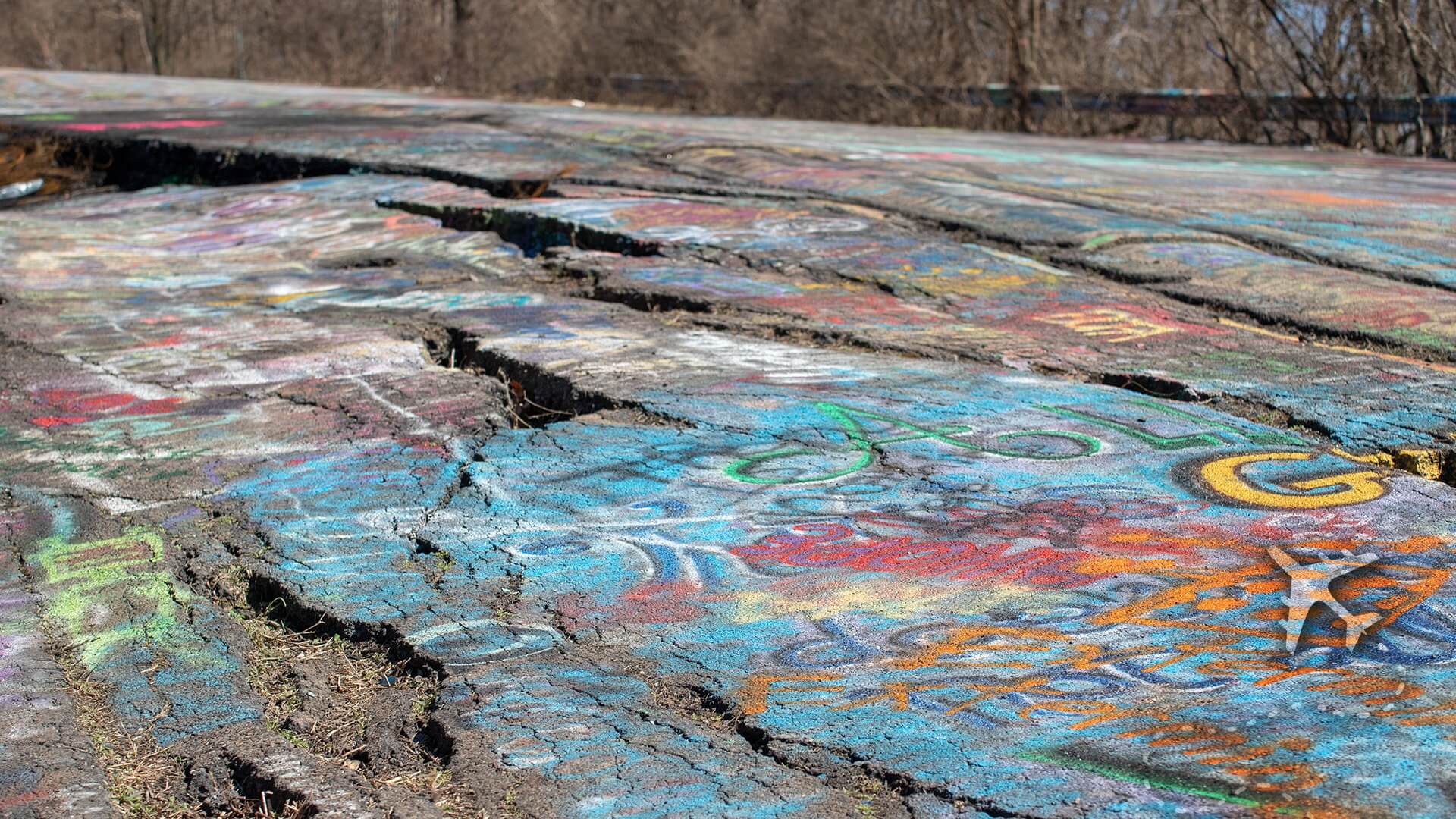
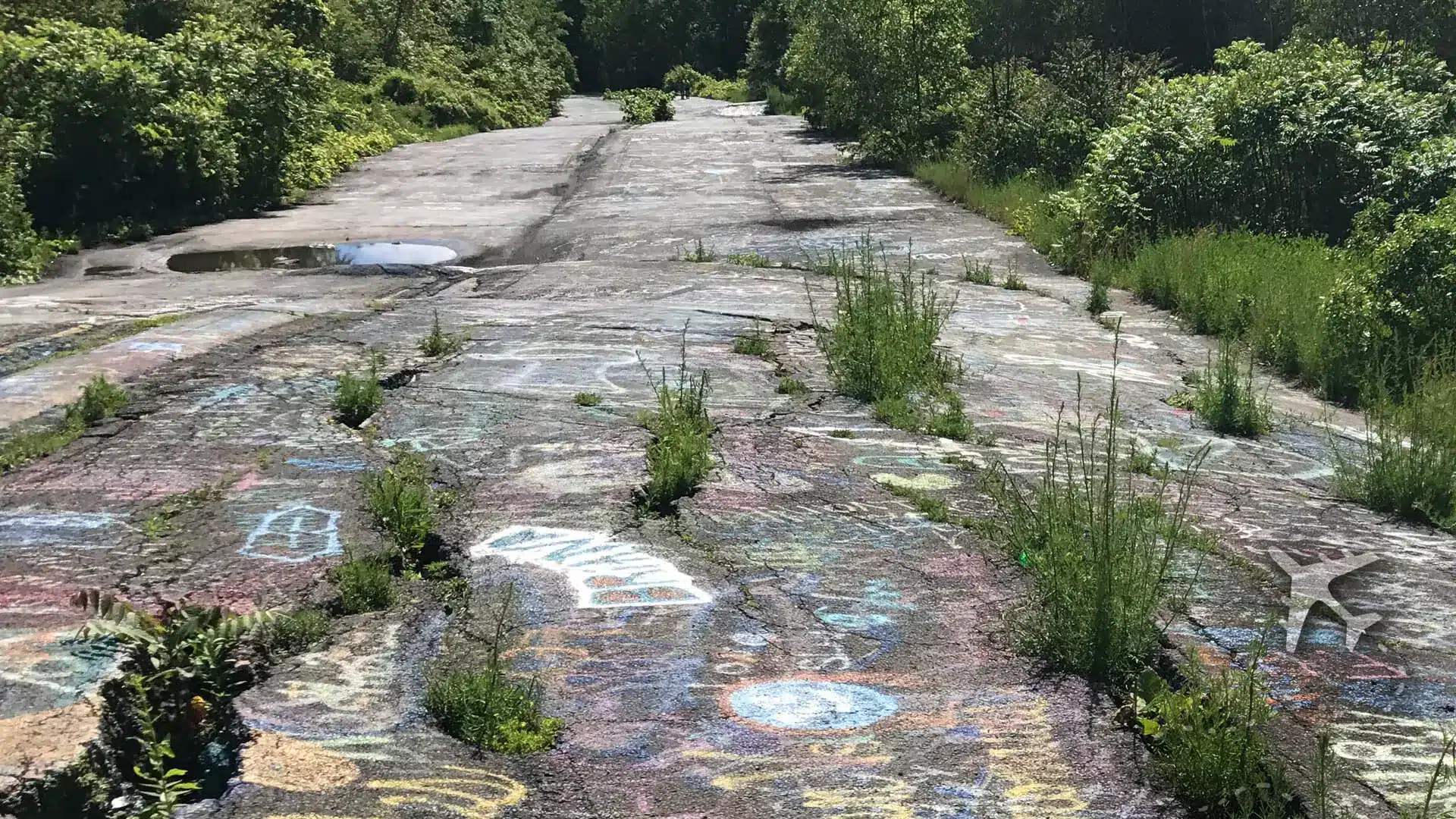
After the mine fire destabilized the ground beneath it, the original highway buckled, cracked, and slowly became unusable. The state rerouted traffic onto a new alignment, leaving the damaged stretch abandoned.
That abandoned road developed a life of its own.
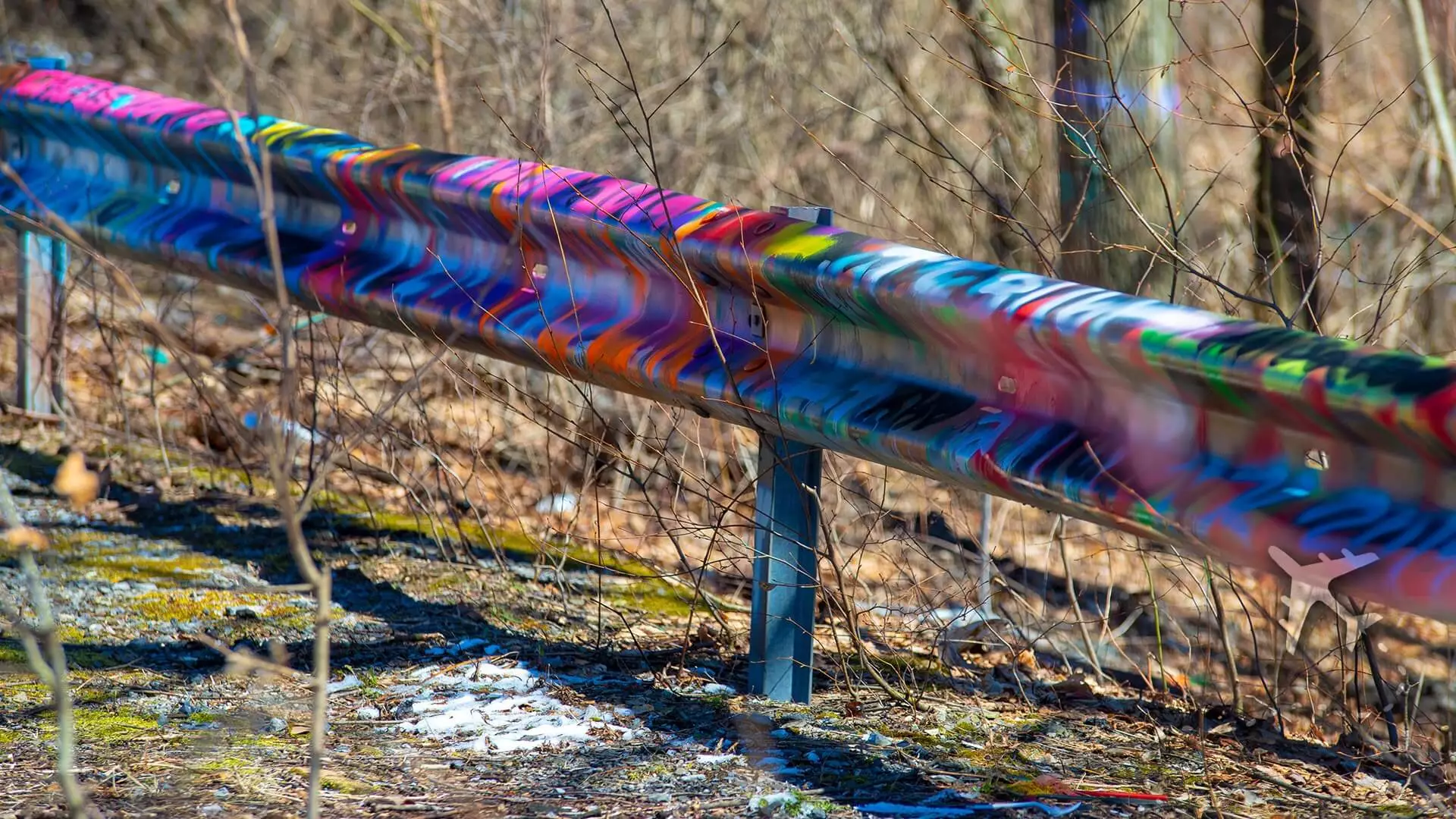
Artists covered every square inch with paint.
Names.
Murals.
Political statements.
Inside jokes.
Profanity.
And yes… approximately eight million spray-painted penises.

It became one of America’s greatest accidental outdoor art galleries.
People traveled from across the country just to walk it.
You could stand in the middle of a collapsing highway while steam escaped from cracks in the pavement beneath your feet. It felt post-apocalyptic in the best possible way.
The irony wasn’t lost on anyone.
The town had died.
The abandoned road became more famous than the town itself.
CAN’T FIX IT? BURY IT
As social media exploded, Centralia transformed from an obscure roadside curiosity into one of the most photographed abandoned places in America.
Drone videos.
Instagram influencers.
Urban explorers.
YouTubers.
Thousands upon thousands of visitors poured into a place that wasn’t designed to handle tourists anymore.
The attention became too much.
Trespassing increased.
Vandalism increased.
Trash accumulated.
Eventually the private property owner made a decision that shocked the urban exploration community.
They buried Graffiti Highway beneath truckloads of dirt.
Just like that, one of America’s most iconic dark tourism attractions disappeared.
People still ask me where to find Graffiti Highway.
You can’t.
It’s gone.
Another piece of Centralia erased from existence.
There’s something strangely fitting about that.
COME FOR THE DISASTER, STAY FOR THE NOTHING
Even without Graffiti Highway, people still come.
Not because there’s a lot to see.
Because of what happened here.
Centralia has become one of the defining destinations for dark tourism in the United States. It’s the kind of place that attracts people fascinated by abandoned cities, industrial disasters, forgotten history, and humanity’s spectacular ability to create problems it can’t fix.
If you’ve visited places like the abandoned neighborhoods surrounding the Chernobyl Exclusion Zone, the toxic mud villages buried by Indonesia’s Lapindo disaster, or the ghost towns left behind after volcanic eruptions, Centralia belongs on the same list.
It’s disaster tourism stripped to its absolute minimum.
No museums.
No visitor center.
No polished exhibits.
Just empty streets and an invisible fire still burning beneath your feet.
THE DEAD OUTNUMBER THE LIVING
One of the strangest places in Centralia is Odd Fellows Cemetery.
Surrounded by abandoned roads and empty land, the cemetery remains active today despite the town around it disappearing.

Generations of families are buried here.
Some headstones belong to people who watched Centralia grow.
Others belong to residents who refused to leave until the very end.
Walking through the cemetery feels oddly peaceful compared to the emptiness surrounding it.
It’s one of the few places that still reminds you this wasn’t simply a tourist attraction.
It was somebody’s hometown.
THE FIRE HAS NO PLANS TO LEAVE
The creepiest part about Centralia isn’t what happened sixty years ago.
It’s what hasn’t stopped happening.
The fire is still moving.
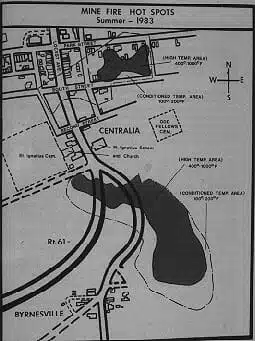
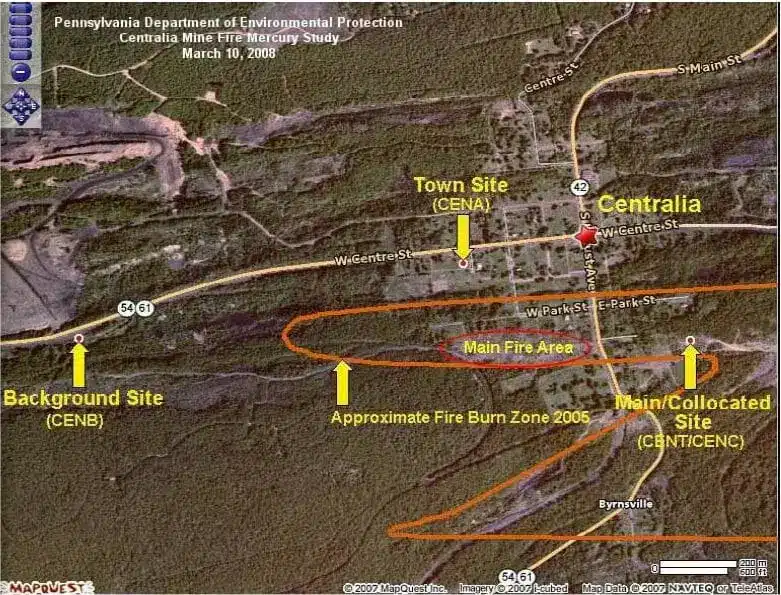
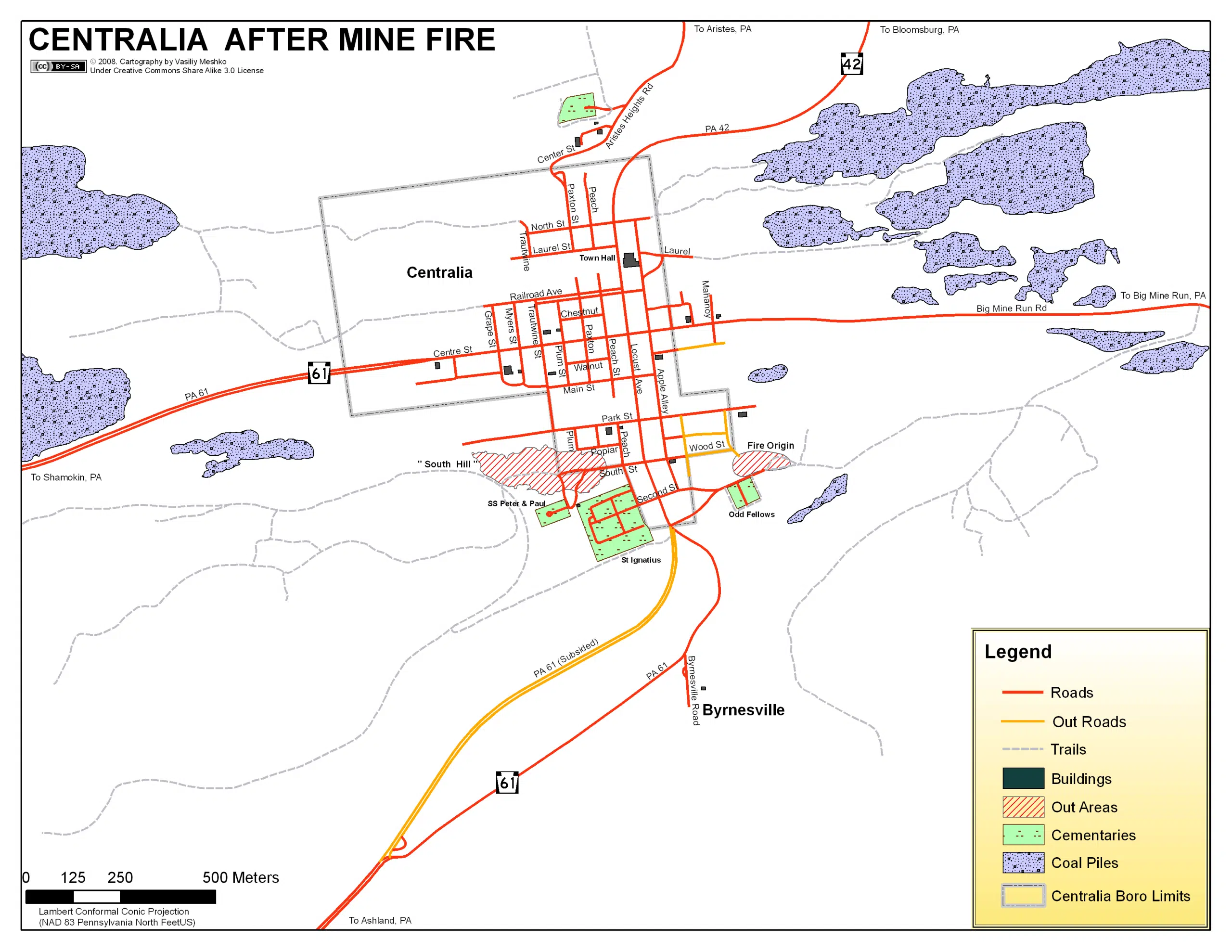
Still burning.
Still consuming coal deep beneath Pennsylvania.
Long after everyone reading this is gone, that fire will probably still be there, slowly working its way through the ancient coal seams beneath the mountains.
Centralia didn’t become a ghost town because people left.
It became a ghost town because the Earth underneath it declared war on the town above.
And the Earth won.
YOUR GUIDE TO VISITING ALMOST NOTHING
If you’re expecting abandoned buildings, you’ll leave disappointed.
If you’re expecting one of America’s strangest landscapes, you’ll leave fascinated.
Most visitors spend an hour or two exploring the remaining roads, visiting Odd Fellows Cemetery, searching for the surviving steam vents, and imagining what once stood where empty lots now stretch across the hillsides.
Respect private property.
Stay on public roads.
Don’t chase steam vents or wander onto unstable ground.
Remember that while Centralia has become famous for dark tourism, a handful of people still call this area home.
Treat it with the respect you’d give any community that suffered an unimaginable tragedy.
Because unlike most ghost towns…
Centralia wasn’t abandoned.
It was erased.
Centralia, PA had no influence on Silent Hill outside of the initial movie. The games were based in a New England town, heavily implied to be Maine.