
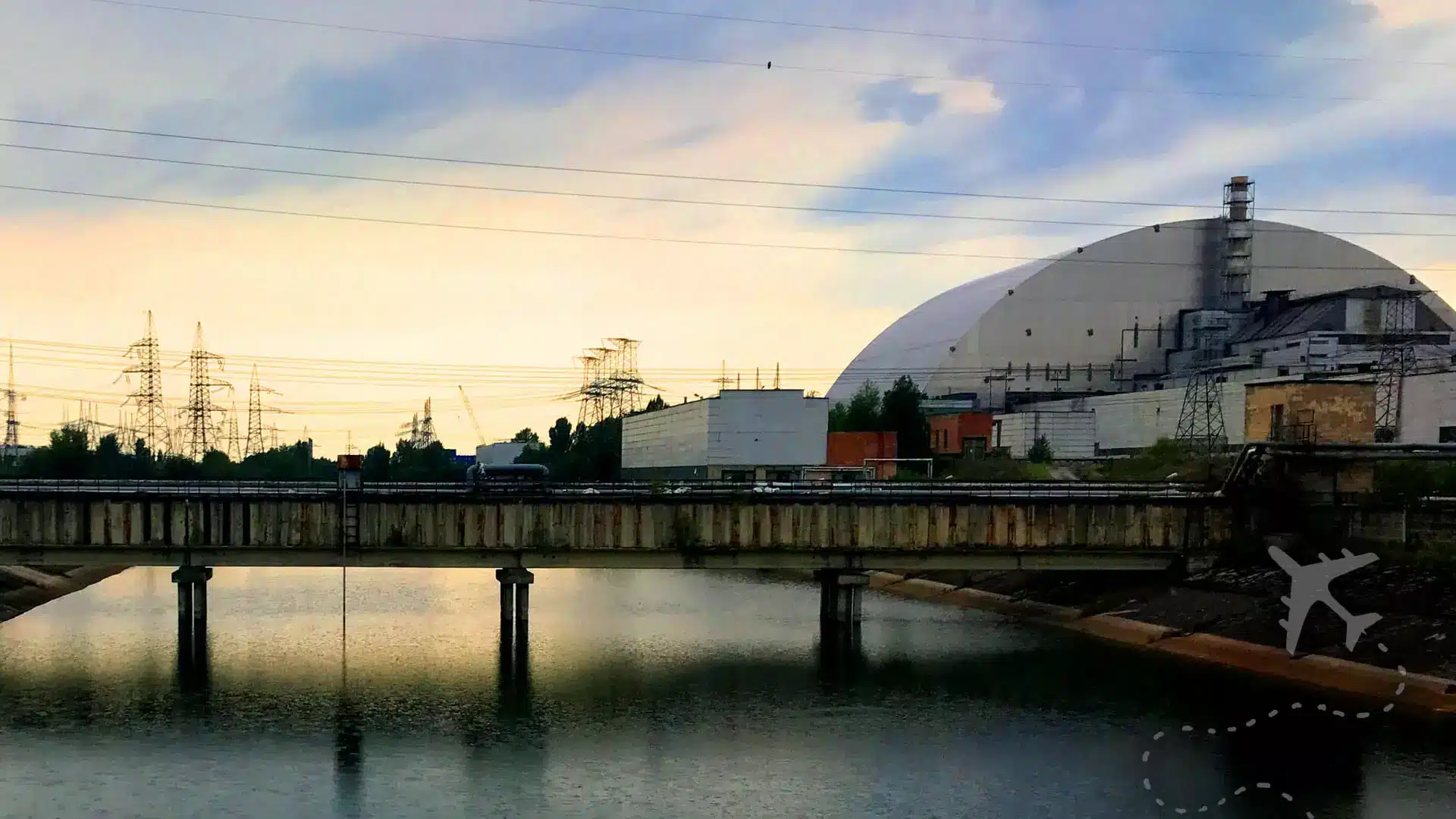

I had been fascinated by Chernobyl for years.
Not because I have some particular desire to expose myself to ionizing radiation. I generally prefer my DNA exactly where it is.
What fascinated me was how the fuck this happened.
Chernobyl wasn’t one gigantic mistake where somebody accidentally leaned against the nuclear apocalypse button.
It was a sequence.
A flawed reactor design. A late-night safety test. Operators trying to manage a reactor behaving in ways they didn’t completely understand. Safety systems being disabled or overridden. Decisions building on previous decisions. An organization operating inside a political system where admitting something had gone catastrophically wrong wasn’t exactly encouraged.
Then, at 1:23 AM on April 26, 1986, Reactor 4 at the Chernobyl Nuclear Power Plant exploded.
That got my attention.
So I read about it.
Then I read more about it.
Then I started watching documentaries, studying photographs and falling increasingly far down the radioactive rabbit hole of RBMK reactors, control rods, graphite, radioactive fallout and the extraordinary sequence of events that transformed a routine safety test into the worst nuclear power plant accident in history.
Fortunately, I had friends who were equally interested in this shit.
Normal friends hear: “We should take a vacation to Chernobyl.”
And respond with suggestions involving beaches, cocktails and significantly fewer radioactive isotopes.
My friends responded: “When are we going?”
Excellent.
I had found my people.
So in 2017, we went to Ukraine, entered the Chernobyl Exclusion Zone and headed toward one of the places I’d spent years reading about.
I came.
I saw.
And, despite what popular culture had prepared me to expect, I did not go home glowing.
DESTINATION: CHERNOBYL NUCLEAR POWER PLANT
GPS COORDINATES
51.3886, 30.0971
CLOSEST AIRPORT
CURRENT WEATHER
overcast clouds (55F / 13C)

AIR QUALITY INDEX (AQI)
Good (41)
I WANTED TO SEE REACTOR 4
There were plenty of things I wanted to see inside the Exclusion Zone, but the Chernobyl Nuclear Power Plant was different.
That was the reason all of this existed.
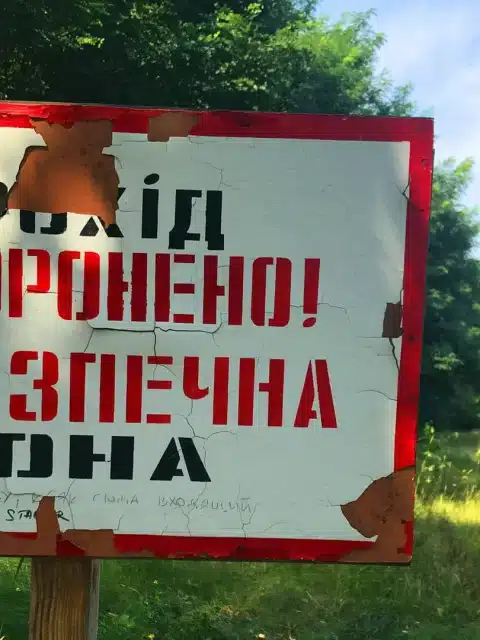
Pripyat was abandoned because of what happened there. The checkpoints existed because of what happened there. The radiation detectors, dosimeters, warning signs and enormous empty stretches of Ukraine existed in their strange 2017 form because of what happened inside one particular building.
Chernobyl Nuclear Power Plant Reactor 4.
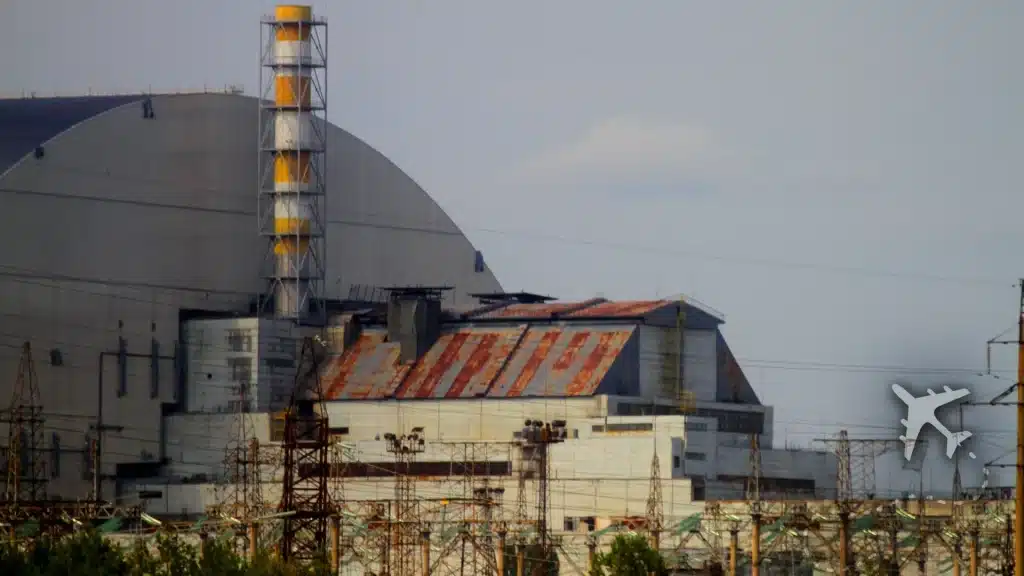
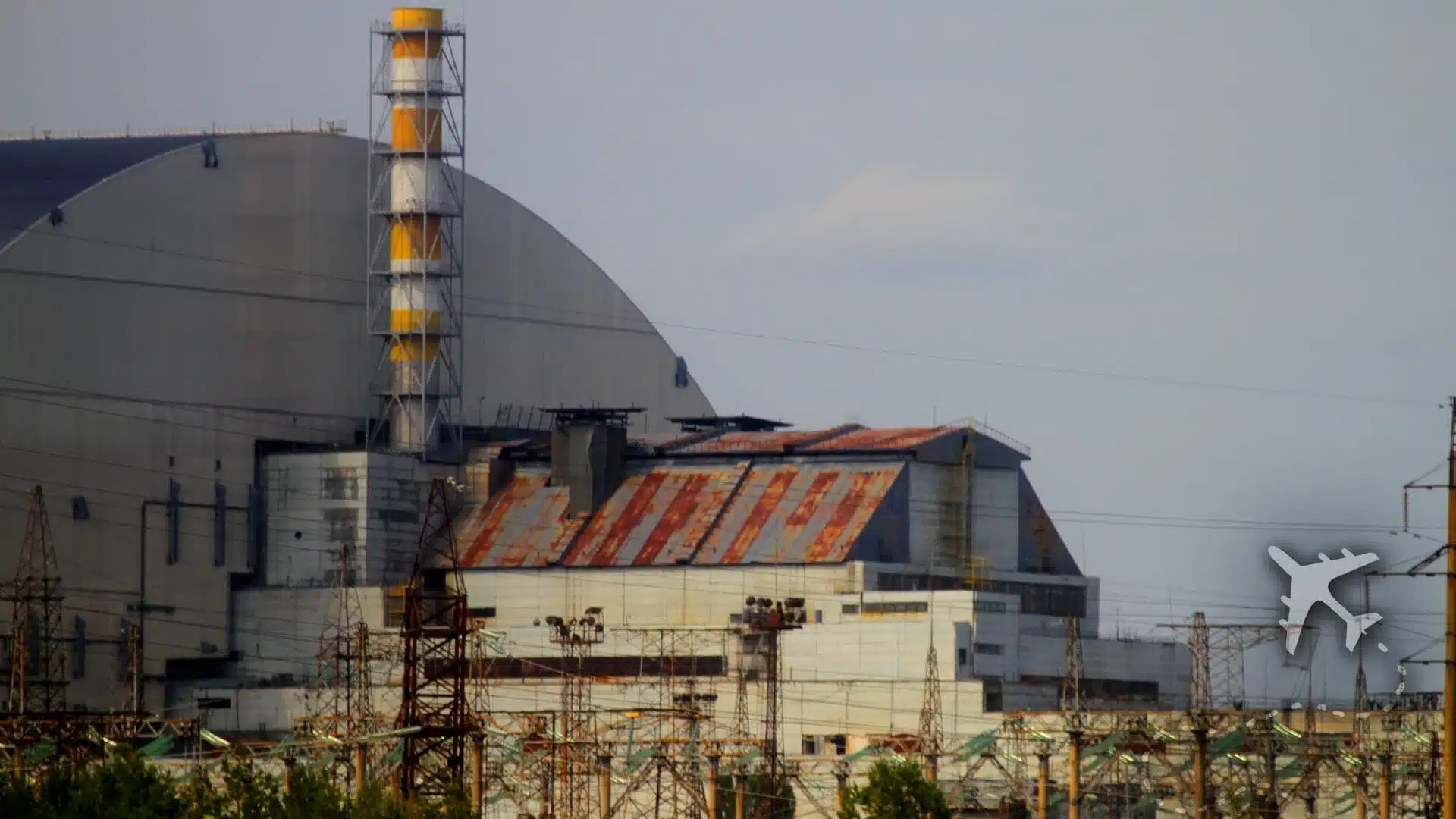
I had seen the photographs countless times.
The destroyed roof.
The twisted debris.
The exposed reactor building.
The hastily constructed sarcophagus.
Then, humanity decided to put a gigantic fucking building over it.
HUMANITY’S LARGEST “PLEASE DON’T DO THAT AGAIN” PROJECT
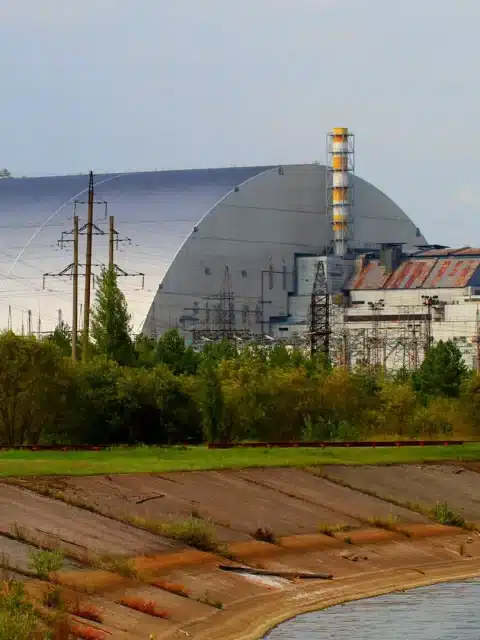
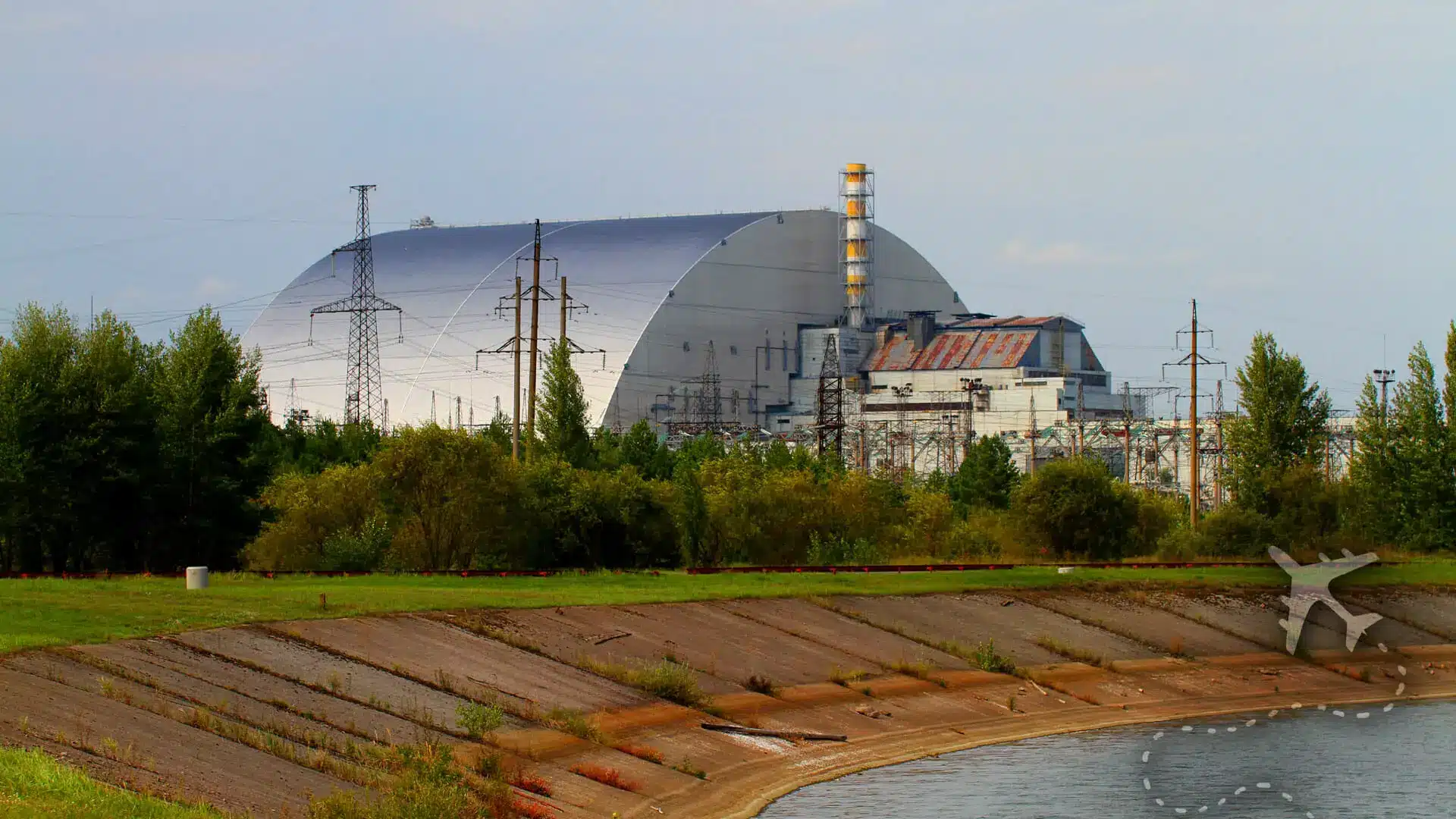
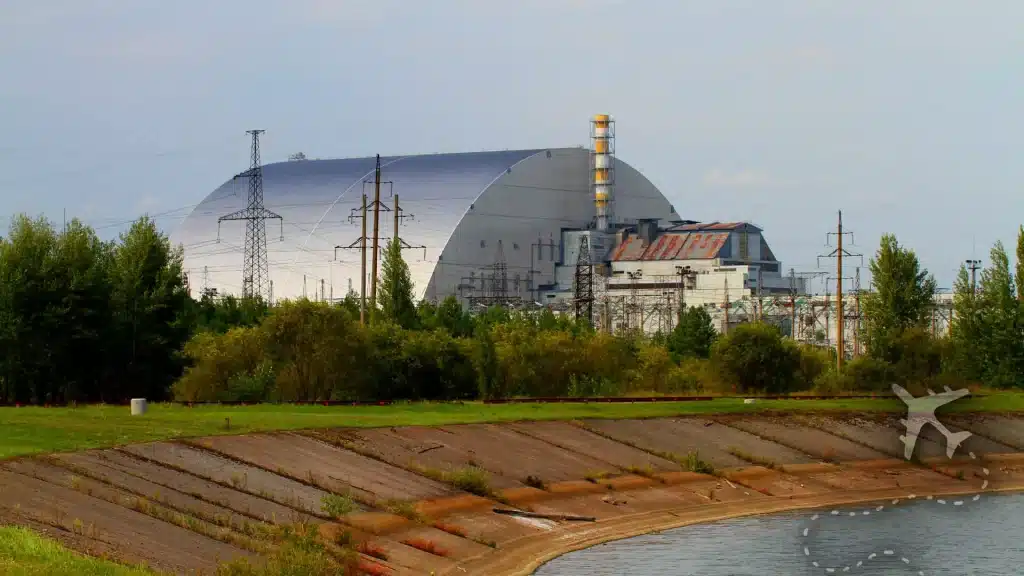
The New Safe Confinement structure had been slid over Reactor 4 in November 2016, less than a year before my visit.
And “big metal building” doesn’t really convey the scale of this thing.
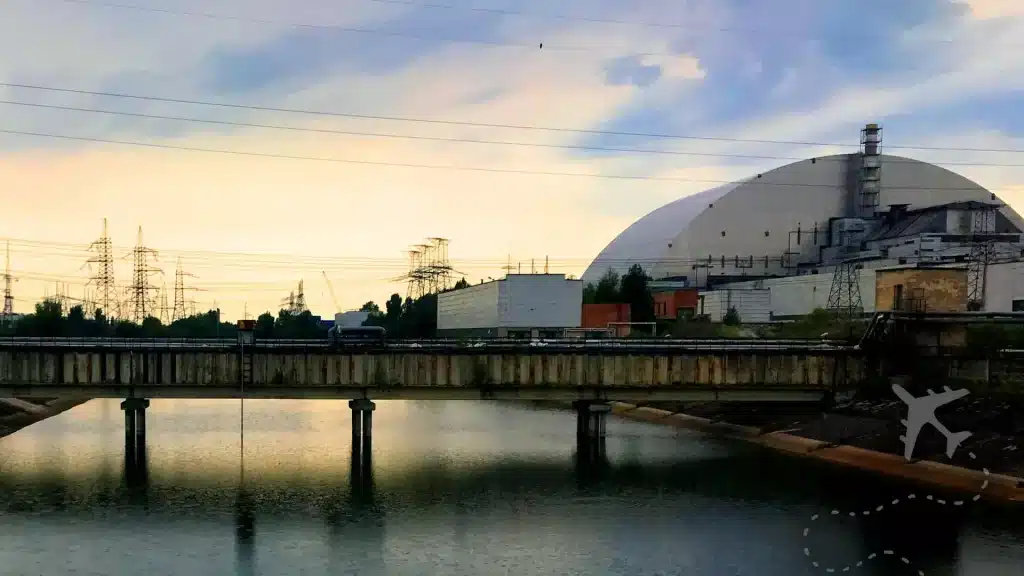
The arch spans about 257 meters, rises 108 meters and stretches 162 meters from end to end. Fully equipped, it weighed roughly 36,000 tonnes when it was moved into position. It was built away from Reactor 4 because, for reasons that should require absolutely no explanation, minimizing the amount of time construction workers spent beside the remains of an exploded nuclear reactor was considered desirable. Chornobyl Nuclear Power Plant
Then engineers slid the whole fucking thing into place.
That’s the part I love.
In 1986, Reactor 4 exploded.
The Soviets responded by rapidly constructing a concrete-and-steel shelter around the wreckage that became known as the Chernobyl sarcophagus.
Unfortunately, “we urgently built this around an intensely radioactive pile of nuclear wreckage in 1986” doesn’t exactly scream maintenance-free lifetime warranty.
The original shelter deteriorated.
So decades later, engineers essentially looked at the enormous structure covering the enormous nuclear disaster and decided: We’re going to need a bigger building.
And they built one.
The New Safe Confinement structure wasn’t simply another shell. It was designed to restrict radioactive releases, protect the damaged reactor and provide equipment that would eventually allow unstable parts of the old shelter to be dismantled remotely. Chornobyl Nuclear Power Plant
Which meant that when I arrived in September 2017, I was seeing Chernobyl during a very particular moment in its history.
The infamous Reactor 4 was now hidden behind a giant silver arch.
And I had traveled halfway around the world to photograph it.
THE MOST FAMOUS NUCLEAR REACTOR ON EARTH LOOKS LIKE A WAREHOUSE
I’m not sure exactly what I expected to feel when I finally saw Chernobyl Reactor 4.
Excitement didn’t seem appropriate.
Fear seemed unnecessarily dramatic.
Maybe awe?
Instead, my first reaction was basically: Huh. There it is.
Because visually, the Chernobyl Nuclear Power Plant is surprisingly underwhelming.
The New Safe Confinement structure looks like how you imagine an industrial Amazon warehouse holding all the shit you always buy.
A very expensive warehouse.
A highly engineered warehouse.
A warehouse containing the remains of a nuclear reactor whose explosion released radioactive material across enormous areas of Europe.
But still.
A warehouse.

Unfortunately, we weren’t touring anything inside.
There would be no wandering through Reactor 4.
Nobody was going to hand me a flashlight and casually point toward the basement.
Our access around the power plant was controlled, and what I could actually do was stand outside, look at the New Safe Confinement and photograph the building from approved areas.
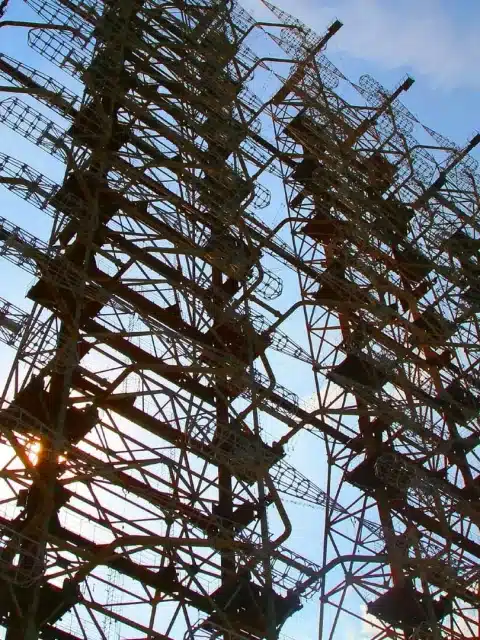
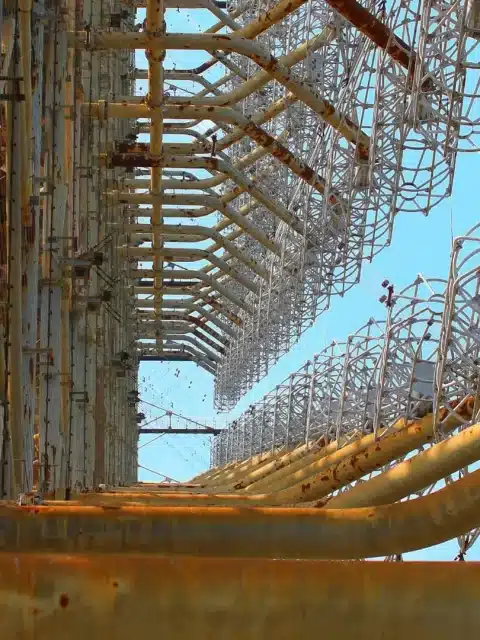
From a pure sightseeing perspective, my nearby visit to the enormous abandoned Duga radar was dramatically more impressive.
Duga looks fucking insane.
Reactor 4 looks like Amazon’s radioactive distribution center.
But I hadn’t traveled there because Reactor 4 was beautiful.
I went because I knew what was underneath it.
And that’s when seeing it became something entirely different.
THIS WAS THE FUCKING BUILDING
Standing there stripped away something that photographs and documentaries never quite managed to do.
This wasn’t a photograph of Chernobyl anymore.
This was Chernobyl.
Somewhere underneath that enormous silver arch was the remains of Reactor 4.
This was where the operators conducted the test I’d read about countless times.
This was where an unstable reactor was pushed into conditions it absolutely did not appreciate.

This was where the shutdown button was pressed.
This was where power surged catastrophically.
This was where the reactor exploded.
And this was where, in the minutes and hours afterward, people began walking toward a disaster they couldn’t see and didn’t fully understand.
That last part has always bothered me.
Because radiation doesn’t provide much theatrical assistance.
CHERNOBYL DOESN’T SMELL RADIOACTIVE
Apparently a surprising number of people search Google wanting to know what Chernobyl smells like.
I can answer that one.
Chernobyl smells like…
Ukraine.
Trees.
Old buildings.
Dirt.
Vegetation.

Occasionally whatever was nearby.
What it did not smell like was radiation.
Because radiation doesn’t have a convenient warning smell.
It doesn’t glow green.
It doesn’t make the air shimmer.
There isn’t an ominous HBO soundtrack that slowly gets louder as your exposure increases.
And unfortunately, your body doesn’t display a little radiation meter in the corner of your vision.
That’s rather the fucking problem.
Standing near the Chernobyl Nuclear Power Plant in 2017 felt remarkably normal.
I knew radioactive material existed around me.
I knew some areas of the Exclusion Zone remained significantly more contaminated than others.
But my senses couldn’t identify any of it.
My brain kept expecting the location of the world’s most infamous nuclear accident to somehow feel radioactive.
It didn’t.
And that was far more unsettling than glowing green fog would have been.
THE DISASTER MAKES MORE SENSE WHEN YOU’RE STANDING THERE
I knew the basic story long before I arrived.
In the early hours of April 26, 1986, operators were conducting a test on Reactor 4.
And yes, the Chernobyl disaster started during a safety test, because apparently history occasionally hires comedy writers.
The test itself was intended to answer a legitimate engineering question involving whether the spinning turbine could temporarily provide enough electricity to critical equipment during the gap between losing external power and emergency generators coming online.
Then things went spectacularly wrong.
The reactor ended up operating in an unstable condition. A combination of decisions made that night and serious characteristics of the RBMK reactor design created increasingly dangerous circumstances.

Eventually an emergency shutdown was initiated.
Instead of shutting down nicely and allowing everyone to finish their shift with an interesting story for the break room, Reactor 4 experienced a massive power surge.
Explosions tore the reactor apart.
The building was opened to the atmosphere.
Graphite and radioactive material were scattered around the site.
Fires started.
And the nuclear reactor core, which everyone generally agrees belongs inside the nuclear reactor, was exposed.
This was not ideal.
But what makes Chernobyl so terrifying isn’t simply that Reactor 4 exploded.
It’s that the explosion started another sequence of events in which people had to prevent an already catastrophic situation from becoming substantially worse.
THEN PEOPLE HAD TO WALK TOWARD IT
This is the part of Chernobyl that makes the sarcasm stop working.
Firefighters responded.
Plant workers remained at the site.
Military personnel arrived.
Scientists, engineers, miners, helicopter crews and eventually hundreds of thousands of people participated in the enormous effort to contain the disaster and clean up radioactive contamination.
They became collectively known as the Chernobyl liquidators.

Some worked in radiation fields dangerous enough that machinery couldn’t reliably perform the job.
So humans did it.
Think about that while standing safely outside Reactor 4 thirty-one years later.
I was worried about following instructions, staying in approved areas and making sure I didn’t accidentally bring contaminated dirt home on my shoes.
People in 1986 were climbing onto roofs and dealing with pieces of the fucking reactor.
Some knew the risks.
Some didn’t fully understand them.
Some were working against the clock because the alternative was potentially allowing the disaster to become even worse.
The original sarcophagus was eventually built around the destroyed Unit 4 under extraordinary conditions.
Was it perfect?
Absolutely not.
But neither was the situation.
The objective wasn’t architectural elegance.
The objective was essentially: Cover this fucking thing. Now.
And they did.
WHILE ALL OF THIS WAS HAPPENING, PRIPYAT WAS STILL THERE
The strangest part is how close everything is.
Pripyat wasn’t some distant city that happened to be affected by Chernobyl.
It was right there beside the power plant.
Nearly 50,000 people had built lives around this facility.
Families.
Schools.
Apartment buildings.
Stores.
Parks.
A hospital.
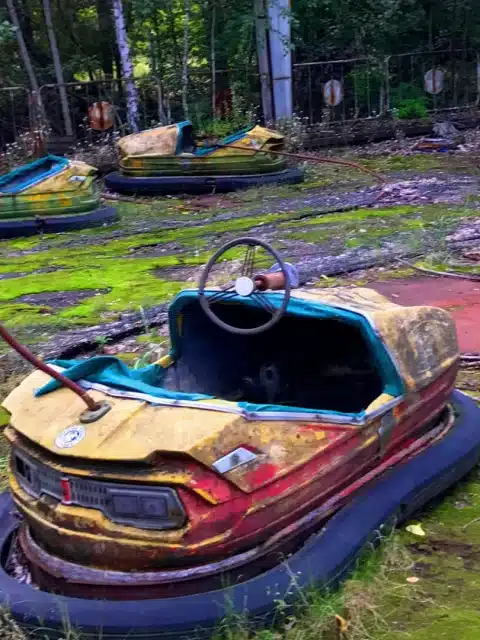
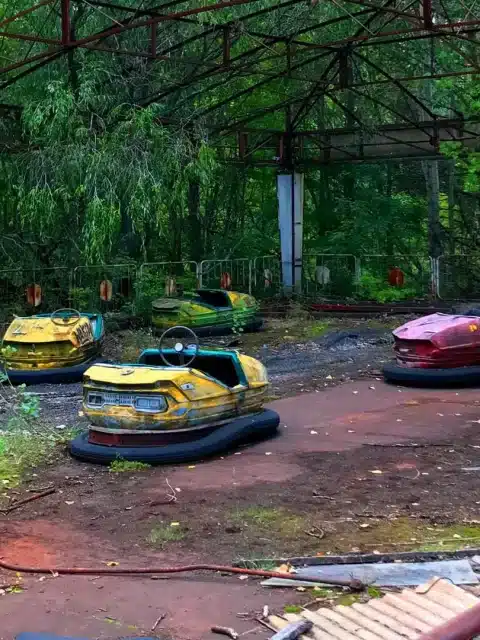
And, of course, the amusement park that would eventually become one of the most photographed symbols of the disaster.

The city wasn’t immediately evacuated after the explosion.
Residents continued living their lives while something profoundly dangerous unfolded just a few kilometers away.
Eventually the buses arrived.
People were told to bring essentials because they would supposedly be returning.
They didn’t.
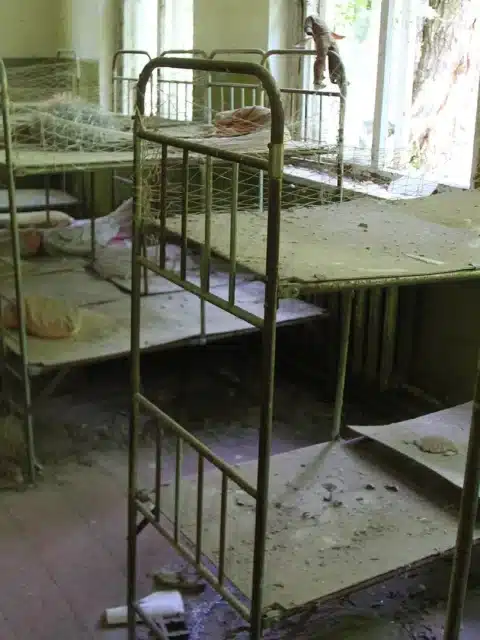
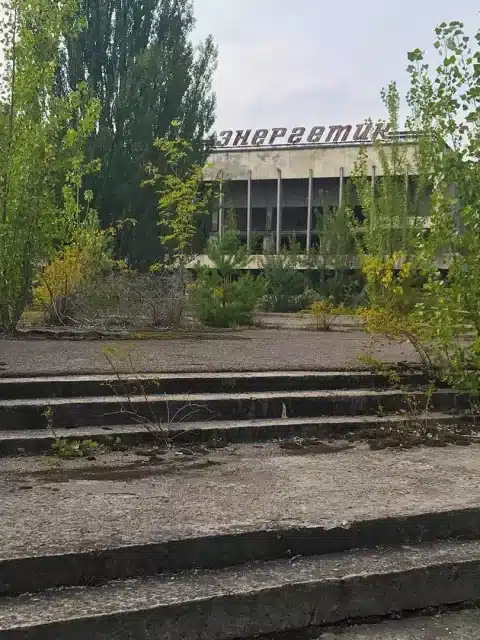
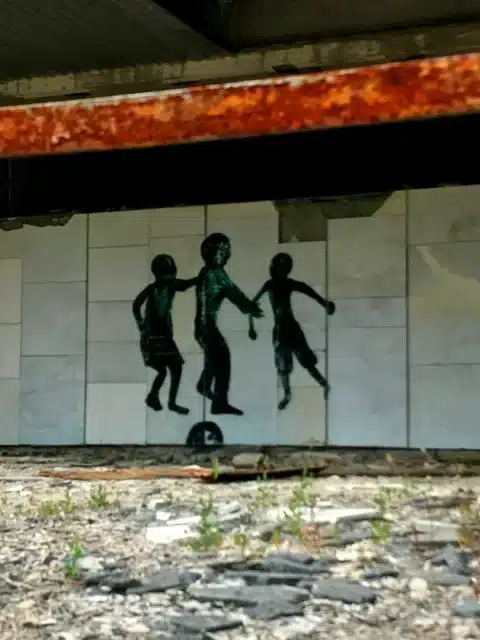
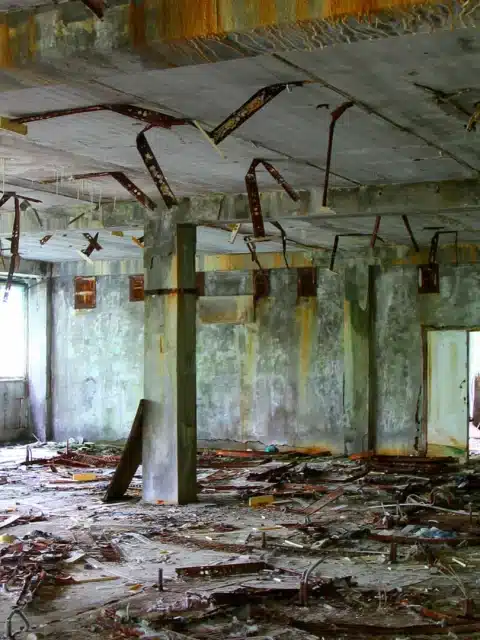
Walking through Pripyat in 2017 made the Chernobyl Nuclear Power Plant feel less like an engineering disaster and more like a human one.
The reactor explains what happened.
Pripyat shows you what it did.
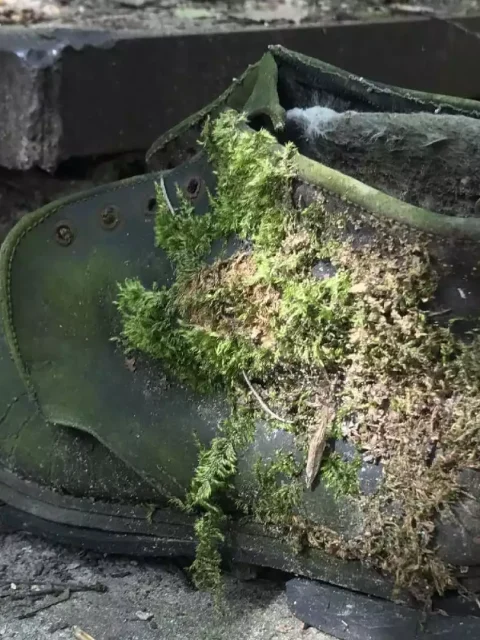
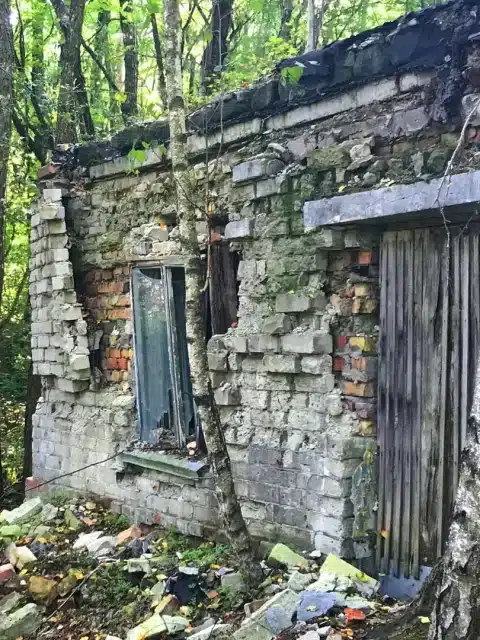
Decades later, nature was steadily consuming everything humans had left behind.
Apartments disappeared behind trees.
Buildings deteriorated.
Roads became forests.
It was simultaneously fascinating and deeply fucking sad.
SO WAS CHERNOBYL SAFE WHEN I VISITED?
I obviously survived.
So we’ve established a minimum baseline.
But saying “Chernobyl was safe” would be misleading.
Chernobyl was still radioactive when I visited in September 2017.
It remains radioactive.
What made an organized visit possible was knowing where the radiation was and controlling where visitors went.

Contamination isn’t spread evenly across the Exclusion Zone.
There were places where radiation readings were relatively unremarkable and other locations where our dosimeters became considerably more enthusiastic.
Our guides knew the routes.
We stayed in permitted areas.
We wore appropriate clothing.
We went through radiation monitoring.
And despite an apparently irresistible human urge to touch interesting things, I made a concerted effort not to roll around in suspicious moss.
The important distinction is this: The radiation didn’t disappear.
People got much better at understanding where it was.
That made controlled tourism possible during the period when I visited.
It did not transform the Chernobyl Exclusion Zone into Disney World with Geiger counters.
THIS IS WHY I LOVE DARK TOURISM
Calling Chernobyl a tourist attraction has always felt strange.
But it’s exactly the kind of place that explains why I’m fascinated by dark tourism.
I’m not interested because terrible things happened.
I’m interested in how they happened.
Places like Chernobyl turn history into something physical.
You can read thousands of pages about organizational failure, engineering decisions, human error and disaster response.
Then you stand in front of the actual building.

Suddenly all of that abstraction disappears.
I’ve felt the same thing visiting Three Mile Island, where another sequence of equipment problems, confusing information and human decisions produced America’s most infamous commercial nuclear accident.
Three Mile Island didn’t become Chernobyl.
Thankfully.
But both stories reinforce something I’ve come to believe after visiting far too many places where humanity nearly fucked itself: Catastrophes rarely begin with one gigantic stupid decision.
They’re sequences.
One problem creates another.
One assumption survives longer than it should.
Someone doesn’t have the right information.
Someone else thinks they do.
A safeguard fails.
Another safeguard gets bypassed.
The situation gets a little worse.
Then a little worse.
And eventually everybody is staring at the smoking remains of Reactor 4 wondering how the fuck they got there.
THEN HBO SHOWED UP AND EVERYONE SUDDENLY GAVE A SHIT
I visited in September 2017.
Then, in 2019, HBO released Chernobyl.
Holy. Fucking. Shit.
Suddenly everyone was interested in Chernobyl.
People knew Anatoly Dyatlov.
People knew Valery Legasov.
People who previously couldn’t identify an RBMK reactor if one landed on their house were discussing positive void coefficients.
“Not great, not terrible” entered the cultural vocabulary.
Graphite became exciting.
And Chernobyl went from something I’d spent years nerding out about to one of the most talked-about historical disasters on television.
It was surreal.
I’d stood there.
I’d photographed Reactor 4.

I’d walked through Pripyat.
I’d seen the power plant and the newly installed New Safe Confinement structure with my own eyes.
And now millions of people were falling down exactly the same rabbit hole that had convinced my friends and me that Chernobyl sounded like a perfectly reasonable vacation destination.
For once, my questionable travel decisions had gone mainstream.
I didn’t like it.
NEW SAFE CONFINEMENT IS BORING BECAUSE IT WORKED
Looking back at my photographs from Reactor 4, they’re not among the most visually dramatic photographs I’ve ever taken.
There’s no exposed reactor.
No smoking crater.
No terrifying pile of glowing nuclear material.
There’s a giant silver arch.
That’s the photograph.
But now I appreciate that boring photograph much more.
Because making Chernobyl boring required an extraordinary amount of human effort.
The New Safe Confinement was one of the largest movable structures ever constructed. Its purpose wasn’t simply to cover Reactor 4, but to create an environment where the deteriorating original shelter could eventually be dismantled and radioactive material managed with remotely operated equipment.
By the time I stood there, the arch had already dramatically changed conditions around the old shelter. ChNPP reported reductions in gamma radiation around the former construction zone as well as substantial reductions in contaminated water and radioactive aerosol releases after the arch covered the shelter.
That’s an astonishing engineering accomplishment.
It just doesn’t look particularly exciting in photographs.
And that’s precisely the point.
I CAME. I SAW. I DIDN’T GLOW.
I’d spent years wanting to see the Chernobyl Nuclear Power Plant.
When I finally did, I couldn’t see Reactor 4.
Not really.
I saw the enormous structure humanity had built around the structure humanity had previously built around the nuclear reactor humanity had blown up.
It should have been disappointing.
Instead, standing there was humbling.
Underneath that silver arch was the place I’d read about for years.
The explosions happened there.
People died there.
Hundreds of thousands of others participated in the response to what happened there.
A nearby city was emptied because of what happened there.
Radioactive contamination spread across national borders because of what happened there.
And generations of engineers would spend decades dealing with what remained.
Then there was me.
Standing safely outside with a camera.
No sirens.
No smoke.
No visible radiation.
No dramatic soundtrack.
Just a gigantic silver building sitting quietly over one of humanity’s greatest technological fuckups.
I took my photographs.
I stared at it for a while.
And eventually we left.
I came.
I saw.
I didn’t go home glowing.
Considering what happened to the people who stood in that same place in April 1986, I was perfectly happy with boring.