

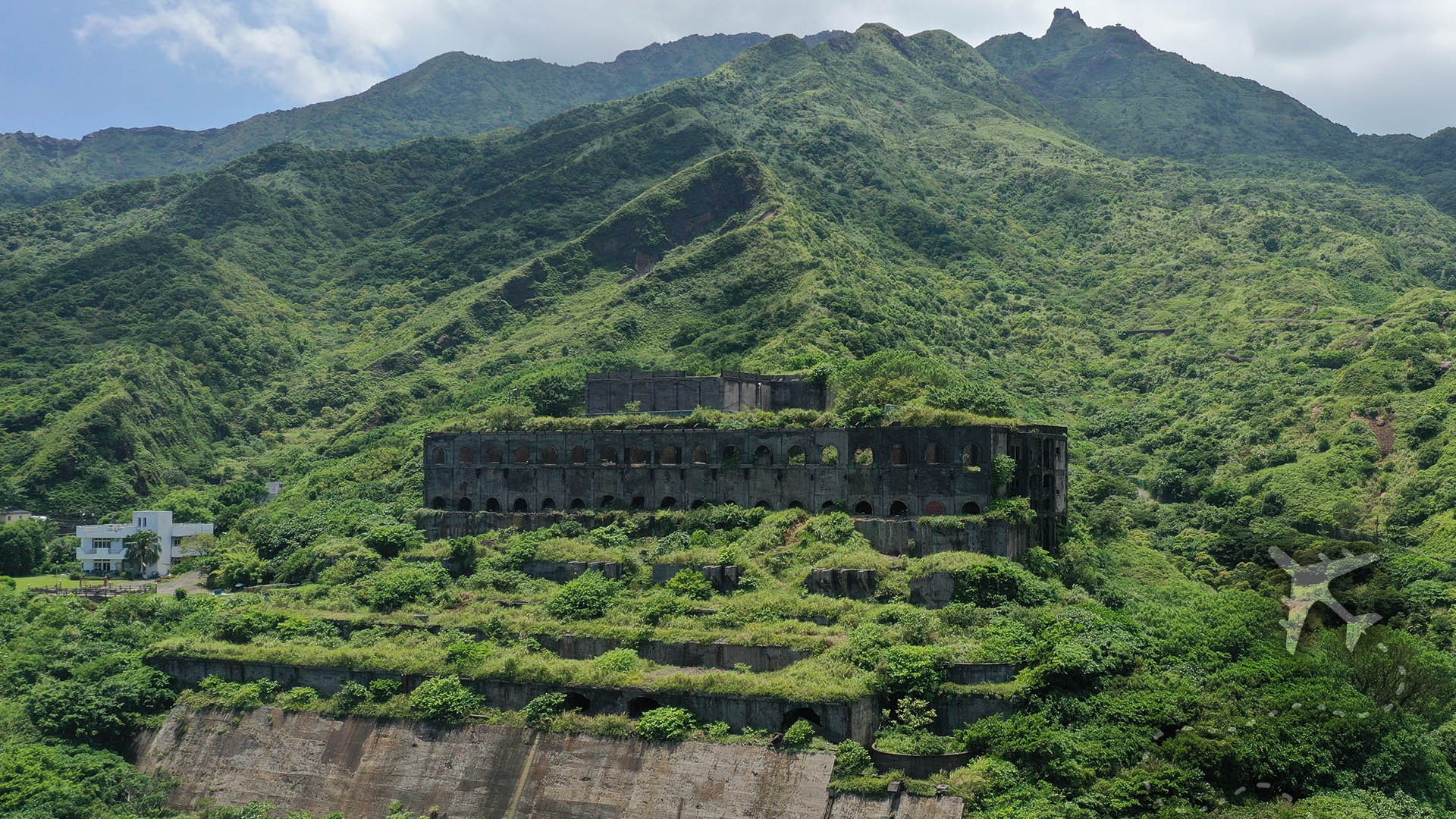

I wasn’t driving around northern Taiwan specifically looking for an enormous abandoned industrial complex.
But then I saw one.
And plans changed.
Built directly into the mountains above Taiwan’s northeastern coast, the abandoned Shuinandong Refinery looks like someone attempted to construct an evil villain headquarters, ran out of funding halfway through and then decided the jungle could have it.
Concrete terraces climb the mountainside. Giant openings stare toward the Pacific. Vegetation crawls across walls that haven’t had a productive Tuesday in decades.
Naturally, I wanted to photograph the shit out of it.
I have a fairly predictable weakness for abandoned places, especially the enormous ones where humanity clearly invested ridiculous amounts of money, concrete and engineering into something everyone assumed would operate forever.
Then forever lasted about fifty years.
Shuinandong was exactly my kind of roadside distraction.
DESTINATION: Shuinandong Refinery
GPS COORDINATES
25.1185, 121.8646
CLOSEST AIRPORT
CURRENT WEATHER
light rain (73F / 23C)

AIR QUALITY INDEX (AQI)
Good (41)
THIS SEEMS LIKE A REASONABLE PLACE FOR AN INDUSTRIAL COMPLEX
The story starts with gold.
Mining around nearby Jinguashi and Jiufen exploded during Taiwan’s Japanese colonial period, and by the early 20th century the mountains around here were being aggressively excavated for gold and copper.
In 1933, the Japanese Mining Company expanded operations around Shuinandong and constructed the massive processing and smelting complex you see today.
And massive is the appropriate word.
The facility was built directly into the steep mountainside, allowing ore to move through different stages of processing using gravity. From below, the resulting maze of concrete levels looks less like a factory and more like an industrial civilization someone misplaced.
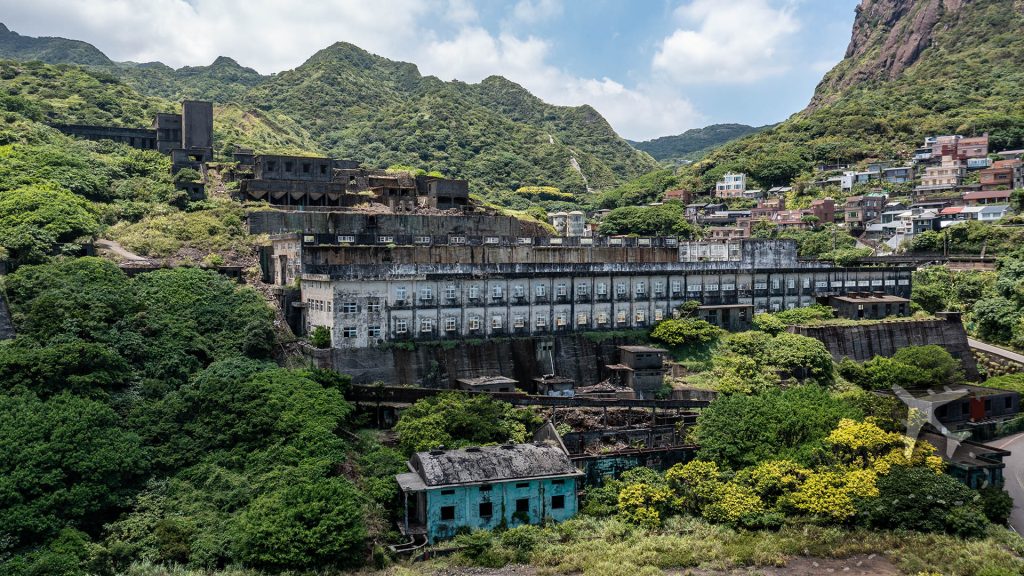
Locals eventually started calling it the Remains of the Thirteen Levels.
Which is slightly problematic because depending on exactly what you’re counting, the complex apparently has more than thirteen levels.
Excellent.
We’ve made it two paragraphs into the engineering portion of the story and already lost track of the floors.
The mining operation wasn’t some obscure industrial experiment, either. Production of gold and copper in the area surged during the 1930s, peaking around 1938.
For a while, these mountains were extremely valuable.
Which generally means humans immediately began removing as much of them as economically possible.
THEN WE RAN OUT OF MOUNTAIN
Mining continued under different ownership after World War II, with copper becoming increasingly important as the operation evolved.
But mining has one relatively significant business-model flaw:
Eventually you run out of shit worth mining.
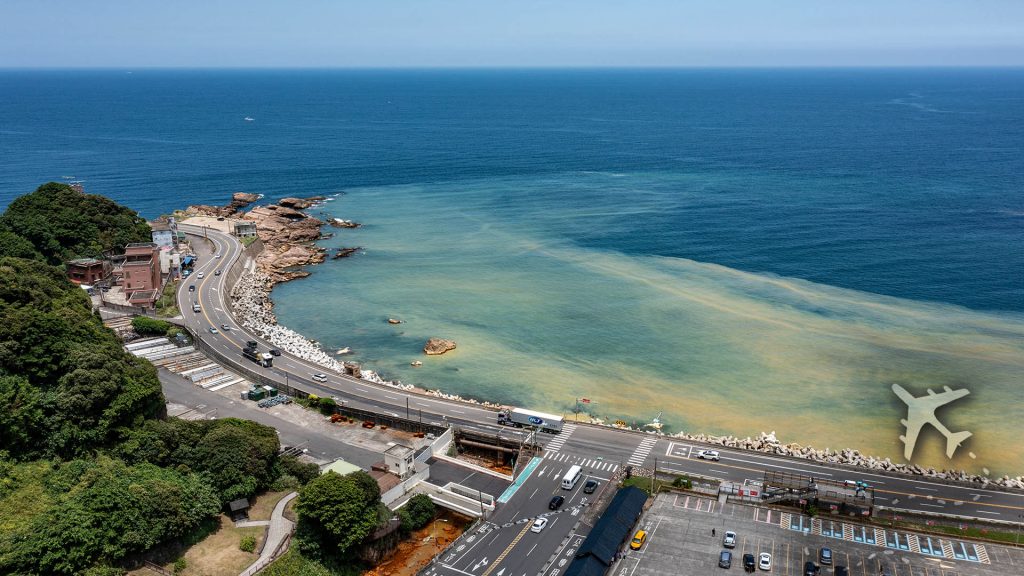
By the 1970s and 1980s, the economics were becoming increasingly ugly. Ore deposits weren’t what they once were, extraction became more expensive and international copper prices weren’t exactly helping.
The operation slowly stopped making financial sense.
Taiwan Metal Mining Corporation eventually collapsed under its debts in 1987, and mining operations around Jinguashi finally ended around 1990.
Which left everyone with another small logistical question: What exactly do we do with the enormous industrial fortress attached to the mountain?
Apparently the answer was: Not much.
INDUSTRIAL REAL ESTATE: SLIGHT FIXER-UPPER
Decades later, the remains of Shuinandong are still plastered across the hillside.
And they’re fucking magnificent.
Not beautiful in the traditional Taiwanese-tourism sense. Nobody is confusing this with a temple, botanical garden or perfectly photogenic street filled with lanterns.
This is industrial decay.
Huge concrete walls.
Empty openings.
Rust.
Collapsed sections.
Vegetation slowly swallowing whatever humans stopped maintaining.
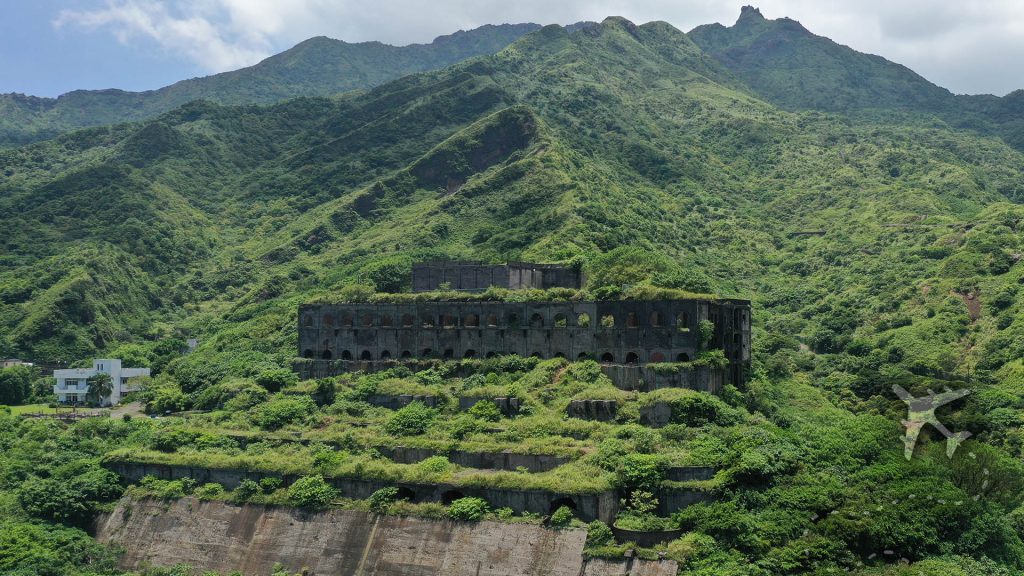
The entire structure rises from the greenery like somebody uncovered the ruins of an industrial civilization that disappeared three hundred years ago.
Except people were working here within living memory.
That’s what I love about places like this.
I’ve experienced the same feeling wandering through Pripyat inside the Chernobyl Exclusion Zone, where apartment blocks, schools and infrastructure were simply surrendered to time after the nuclear disaster.
The circumstances couldn’t be more different, but the visual result triggers the same thought:
We built all of this because we were absolutely certain we’d need it forever.
Narrator: We did not.
I CAME HERE FOR THE CONCRETE
There’s plenty of mining history around Shuinandong, but I’m not going to pretend that’s what originally made me stop.
I saw the ruins.
I had cameras.
The decision-making process was not complicated.
From the surrounding roads and overlooks, the refinery is ridiculous to photograph because there isn’t really one building.
There’s an entire mountainside of abandoned infrastructure.

The terraces stack vertically across the slope while mountains rise behind them and the Pacific sits below. Depending on the weather, you can get brilliant sunlight cutting across the concrete or the wonderfully miserable northern Taiwan fog that makes the entire place look approximately seventeen minutes away from the zombie apocalypse.
Both work.
Actually, the shitty weather might be better.
Some places need sunshine.
Shuinandong needs ominous clouds and questionable visibility.
TAIWAN’S INDUSTRIAL COLOSSEUM
The scale is what really makes this place work.
I’ve visited plenty of abandoned buildings where the attraction is essentially one decaying structure surrounded by weeds.
Shuinandong feels different.
It’s layered.
The factory follows the mountain instead of sitting on it, creating this bizarre cascade of concrete platforms, arches and industrial structures stretching across the hillside.
That’s also why photographs don’t quite communicate the scale properly.
You need roads, cars or vegetation in the frame before your brain starts realizing:
Oh. That motherfucker is enormous.
It reminded me of the Buckner Building in Whittier, Alaska, another enormous abandoned structure where somebody once looked at an absurd quantity of concrete and confidently thought, yes, this seems permanent.
Nature continues to disagree.
Slowly.
Patiently.
One crack at a time.
ABANDONMENT ALWAYS WINS THE PHOTOGRAPHY CONTEST
There’s a reason I keep ending up at places like this.
Perfectly maintained historic buildings tell you what something was supposed to look like.
Abandoned buildings show you what happens afterward.
Paint disappears.
Steel rusts.
Concrete fractures.
Plants begin growing through places where plants were specifically not included in the architectural drawings.
Eventually the structure becomes something completely different from what its designers intended.
That’s exactly what makes Shuinandong so photogenic.

It wasn’t designed to look haunting.
It wasn’t constructed as some massive piece of brutalist artwork overlooking the Pacific.
It was a factory.
People came here to work.
Ore came here to be processed.
Equipment ran.
Money was made.
Then the economics changed, the mining stopped and an enormous piece of industrial infrastructure became obsolete.
Now photographers show up because the obsolete version looks considerably cooler.
Capitalism is weird.
COME FOR JIUFEN, STAY FOR THE INDUSTRIAL DECAY
Shuinandong is only a short drive from Jiufen Old Street, which makes the contrast between the two places pretty fucking spectacular.
Jiufen is people, food, shops and seventeen million tourists slowly blocking a narrow alley while deciding whether they need another bag of something they can’t pronounce.
Shuinandong is concrete, mountains and the remains of an industrial empire nobody needed anymore.
For decades, people ripped gold and copper from these mountains and built an enormous processing complex to keep the whole operation moving. Then the ore became harder to extract, the economics went to shit and the machinery eventually stopped.
Unlike Centralia, Pennsylvania, humanity didn’t accidentally set the ground on fire first. Shuinandong simply stopped being useful.
The workers left.
Nature stayed.
And frankly, nature has done a pretty badass job with the renovations.
SHUINANDONG REFINERY UNCENSORED
I stopped because I saw an enormous abandoned refinery hanging off a Taiwanese mountainside and immediately thought:
Well, apparently we’re doing this now.
There isn’t an elaborate attraction here. No polished museum experience. No reason to dedicate an entire day to it.
It’s enormous, abandoned and looks fucking incredible through a camera.
More importantly, it wasn’t built to become some photogenic industrial ruin. It was built to make money processing gold and copper until geology and economics eventually killed the party.
The miners disappeared. The machinery stopped. The concrete stayed.
And nature has been patiently filing the demolition permit ever since.

