


Airports are fascinating places.
They’re one of the few environments where otherwise functional humans can pass through security and immediately lose every ounce of common sense they’ve accumulated since birth.
People stop dead on moving walkways. Families hold emergency strategy meetings at the top of escalators. Someone is inevitably shocked that TSA still has the same rules from their last 47 flights. Then everyone pays $11 for a latte and crowds the gate clutching a Zone 7 boarding pass while aggressively attempting to board with Zone 1, because apparently airports disable basic math.
Airports are magnificent human shitshows.
And then, in 2020, it all stopped.
COVID-19 accomplished something decades of airport planners, airline executives and basic human decency never could: It made airports quiet.
Flights vanished. Borders closed. Terminals emptied. Airlines went from figuring out how many more seats they could cram into an A320 to figuring out what the hell to do with hundreds of multimillion-dollar airplanes when nobody on Earth was going anywhere.
Turns out there’s a place for that.
The desert.
DESTINATION: PINAL AIRPARK
CURRENT WEATHER
broken clouds (59F / 15C)

AIR QUALITY INDEX (AQI)
Good (25)
CONGRATULATIONS, YOUR 747 NOW LIVES IN ARIZONA
When COVID absolutely body-slammed global air travel in 2020, airlines suddenly had aircraft they didn’t need and nowhere to put them.
You can’t exactly park a Boeing 777 behind the maintenance hangar and throw a tarp over it.
Instead, airplanes started migrating toward massive storage facilities across the desert Southwest.
Pinal Airpark, roughly halfway between Phoenix and Tucson, became one of aviation’s increasingly crowded retirement communities.
So did Victorville, California, along with several other desert facilities where the weather forecast is basically:
Sunny. Hot. Still fucking sunny.
And that’s exactly what airplanes like.
Low humidity slows corrosion. Rain is minimal. There’s lots of open space. Aircraft can sit for months or years without Mother Nature immediately trying to convert them into oxidized aluminum lawn ornaments.
Turns out Arizona’s climate is terrible for humans but absolutely fantastic for storing airplanes.
COVID CREATED THE WORLD’S MOST EXPENSIVE PARKING PROBLEM
Before 2020, aircraft storage facilities were mostly aviation-geek destinations where retired airplanes slowly surrendered engines, avionics and dignity before eventually becoming scrap metal.
Then the pandemic arrived.
Passenger demand collapsed.
International routes disappeared.
Entire fleets were grounded.
Airlines accelerated retirement plans for older aircraft because keeping them operational suddenly made about as much financial sense as opening a Blockbuster Video.
Aircraft that had spent decades bouncing between continents suddenly made one final flight into Arizona.
Some were simply being stored until passengers returned.

Others weren’t going anywhere ever again.
Imagine spending your career crossing oceans only to discover your retirement package consists of being parked next to a cactus while somebody steals your engines.
NATURALLY, I WENT TO LOOK AT THIS SHIT
I’m an aviation geek.
I’ve spent an unreasonable percentage of my life inside airplanes, so seeing dozens of commercial jets sitting motionless in the Arizona desert was something I absolutely needed to witness.
And Pinal Airpark delivers.
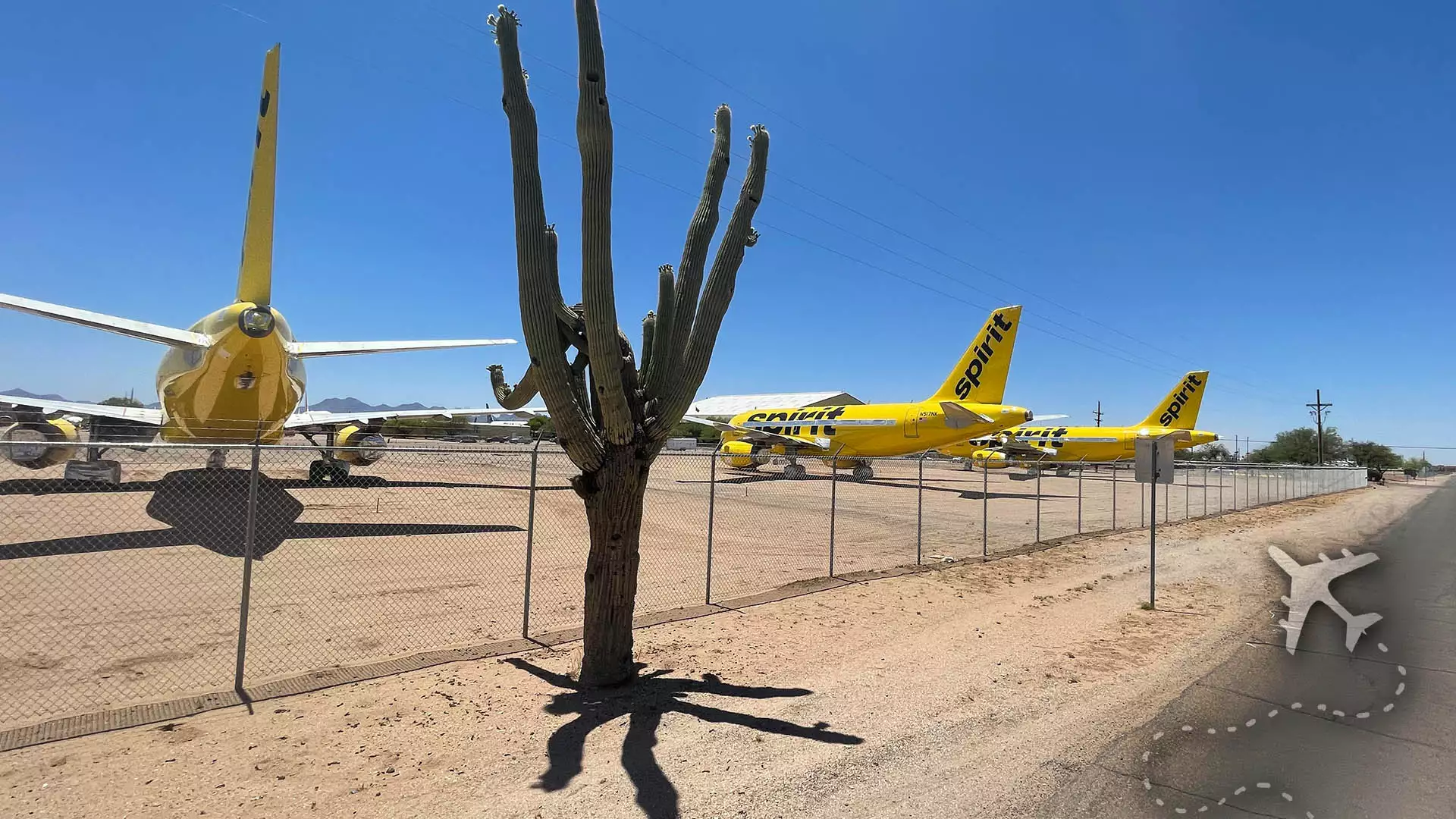
Aircraft from airlines around the world were lined up beneath the desert sun.

No passengers.
No jet bridges.
No baggage carts.
No boarding announcements.
No guy in Boarding Group 7 standing directly in front of the gate while Group 1 is being called.
Just airplanes.
Lots and lots of airplanes.
Some were covered and carefully preserved.
Some looked ready to return to service.
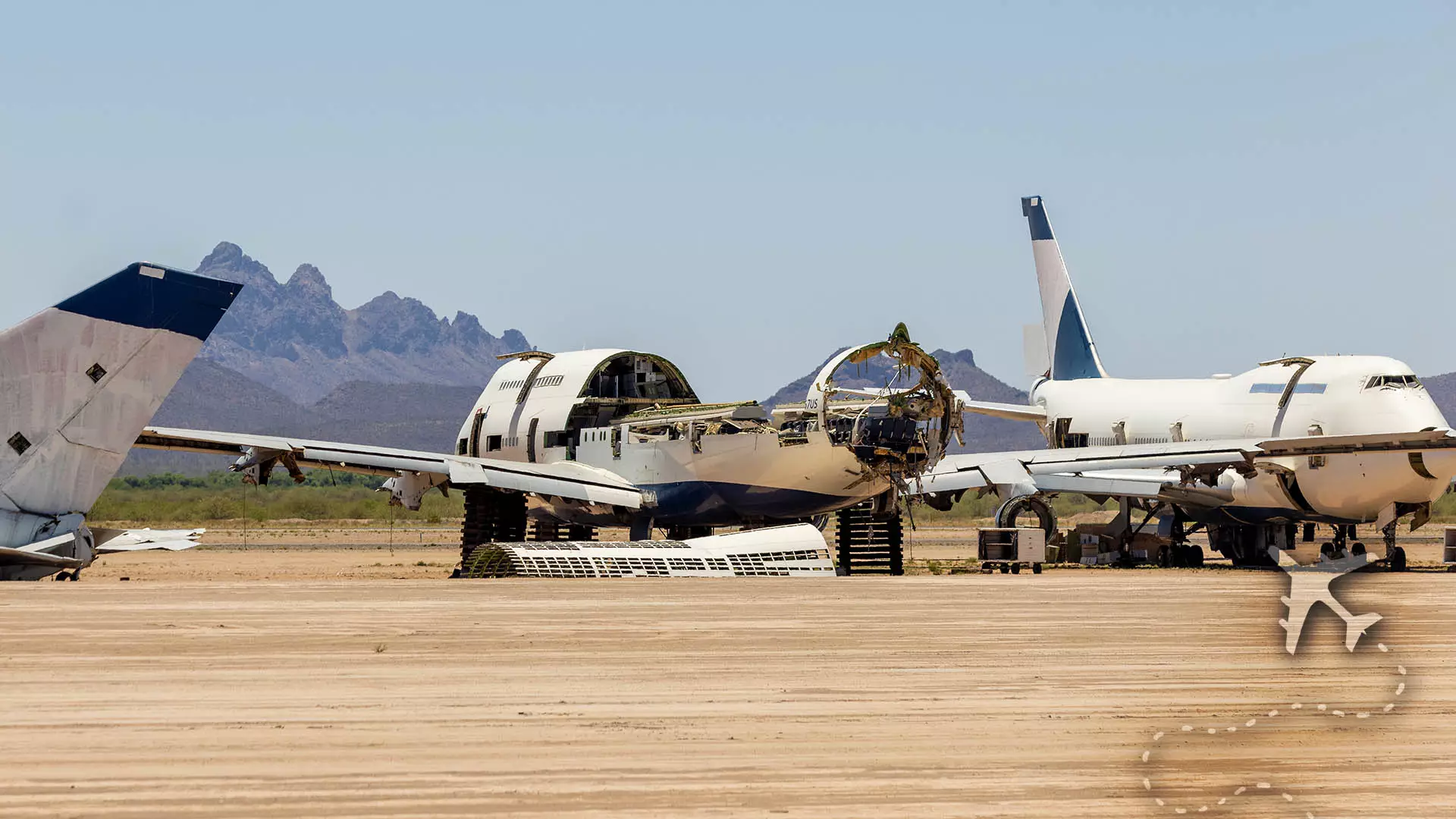
Others had the unmistakable appearance of an aircraft whose next destination was going to be Home Depot’s aluminum aisle.
THIS IS BASICALLY DARK TOURISM FOR AVEEKS
I’ve always had a fascination with dark tourism, abandoned infrastructure and places where humanity built something enormous before eventually deciding:
Yeah, we’re done with that.
Pinal Airpark scratches exactly the same itch.
Except these weren’t abandoned factories or forgotten buildings.
These were machines designed to cross oceans at nearly 600 mph.
And during COVID, many weren’t even particularly old.
They were simply economically useless.
One month you’re carrying 300 passengers across the Atlantic.
The next you’re sitting in Arizona with plastic wrapped around your engines because the entire planet canceled its vacation.
THE 747 REALLY DESERVED BETTER
There’s something especially depressing about seeing a Boeing 747 sitting in the desert.
The 747 spent decades as the undisputed heavyweight champion of commercial aviation.
Huge.
Complicated.
Beautiful.
Completely ridiculous.
An airplane so enormous engineers literally put another fucking floor on part of it.
And now some of them were sitting motionless beneath the Arizona sun.
Near Pinal, there’s also a 747 and DC-9 parked on private property, which gives you an unusually close look at aircraft from two very different generations of aviation.
Just remember:
Private property means private property.
Don’t climb fences.
Don’t wander onto airport property.
And don’t make some poor sheriff listen to your explanation that trespassing was acceptable because you really wanted a picture of an old Douglas.

Apparently “BUT I’M AN AVGeek” isn’t a recognized legal defense.
CAN YOU ACTUALLY VISIT PINAL AIRPARK?
Sort of.
Pinal Airpark isn’t abandoned.
It’s an operational public-use airport with active aviation businesses, restricted areas and all those pesky FAA rules preventing people from wandering onto runways because they saw something cool.
Tours have occasionally been available, but when I visited during COVID, those weren’t happening.
Because apparently gathering strangers together for an airplane graveyard tour during a global pandemic wasn’t high on anyone’s list of essential services.
Fortunately, roads around portions of the airport provide views of the stored aircraft without trespassing or accidentally becoming the subject of an FAA incident report.
And the sight during COVID was fucking surreal.

Airliners lined up across the desert.
Engines covered.
Windows sealed.
Familiar airline liveries thousands of miles from home.
Aircraft designed to connect cities around the world now spending their days staring at dirt.
WHERE GLOBAL AVIATION WENT TO SOCIAL DISTANCE
Eventually, people started flying again.
Borders reopened.
Flights returned.
Airports once again filled with people removing their belts at security and acting genuinely shocked that the TSA doesn’t allow their 19-ounce bottle of shampoo.
Nature was healing.

Some aircraft stored at Pinal returned to service.
Others didn’t.
And that’s what made visiting during COVID so fascinating.
Pinal Airpark wasn’t simply an airplane graveyard anymore.
It was physical evidence of something that would have sounded completely fucking insane just a year earlier:
Humanity basically stopped traveling.
Thousands of airplanes were grounded around the world, and enormous chunks of the global airline fleet ended up parked in deserts waiting to find out whether they’d ever fly again.
For a brief, bizarre moment in history, airports were empty.
The skies were quiet.
And billions of dollars worth of airplanes were sitting under the Arizona sun because the entire fucking planet had nowhere to go.