



Kronborg Castle is a castle. A very nice castle. An historically important castle.
A UNESCO World Heritage Site with towers, cannons, royal chambers, enormous stone walls, Shakespeare references and enough Danish history to keep someone with a history degree visibly aroused for several hours.
And for the first part of my visit, I thought it was…
Solidly mid.
Not bad. Definitely not boring. But Europe has approximately eleven billion castles, fortresses and suspiciously well-preserved stone buildings, so eventually your brain develops a grading curve.
Then I went underground.
Holy shit.
Apparently Kronborg had been hiding all the good stuff in the basement.
DESTINATION: Kronborg Castle
GPS COORDINATES
56.0395, 12.6218
CLOSEST AIRPORT
CURRENT WEATHER
scattered clouds (52F / 11C)

AIR QUALITY INDEX (AQI)
Good (29)
DENMARK INVENTS THE MARITIME COVER CHARGE
Kronborg Castle sits in Helsingør, Denmark, guarding one of the narrowest points of the Øresund Strait between Denmark and Sweden.
This location was incredibly strategic because ships traveling through the strait pretty much had to pass directly in front of it.
Denmark looked at this situation and arrived at the same conclusion airlines would centuries later: Charge them.

Beginning in the 1400s, ships passing through the Øresund had to pay a toll to the Danish crown. The fortress controlling this extremely profitable aquatic checkout lane eventually became the enormous Renaissance castle standing here today.
King Frederick II substantially rebuilt Kronborg in the late 1500s, transforming a practical military fortress into something considerably more appropriate for a king who wanted passing ships to know he had money.
Lots of fucking money.
The castle survived fires, wars, occupations and several centuries of Europeans attacking one another before eventually becoming one of Denmark’s most recognizable landmarks.
Then Shakespeare got involved.
Sort of.
SHAKESPEARE MADE IT FAMOUS WITHOUT ACTUALLY SHOWING UP
If you’ve ever read Hamlet, congratulations.
You’ve already heard of Kronborg.
Shakespeare used the castle as Elsinore, the royal setting for Hamlet, permanently attaching ghosts, murder, insanity and catastrophic family dysfunction to an otherwise respectable piece of Danish real estate.
The funny part? Shakespeare apparently never visited.
Which means he basically wrote one of history’s most famous pieces of destination marketing without bothering to inspect the destination.
Respect.

Kronborg understandably embraces the connection, and you’ll find Hamlet references throughout the castle.
It’s genuinely cool.
But I wasn’t there because of Shakespeare.
I wanted the castle.
YEP. THAT’S DEFINITELY A CASTLE.
Walking toward Kronborg is impressive.
Moat? Check.
Massive walls? Check.
Towers? Check.
Cannons? Obviously.

Copper spires, royal chambers, tapestries and enormous rooms designed specifically to remind peasants they weren’t invited? Absolutely.
The ballroom is roughly 62 meters long and was once one of the largest royal halls in Northern Europe. The chapel survived the castle’s devastating 1629 fire, and the upper levels offer fantastic views across the Øresund toward Sweden.
It’s beautiful.
It’s historic.
It’s impressive.
And after wandering around for a while, my internal review remained: Yep. Pretty cool castle.
I’ve explored fortresses like Fort San Pedro in Cebu, and eventually these places start sharing ingredients.
Walls.
Cannons.
Old rooms.
Important people did important shit here several hundred years ago.

Kronborg does all of that extremely well.
But nothing had really pushed it into the holy-shit-this-place-is-awesome category.
Then I found the stairs going underground.
WAIT. THERE’S A FUCKING BASEMENT?
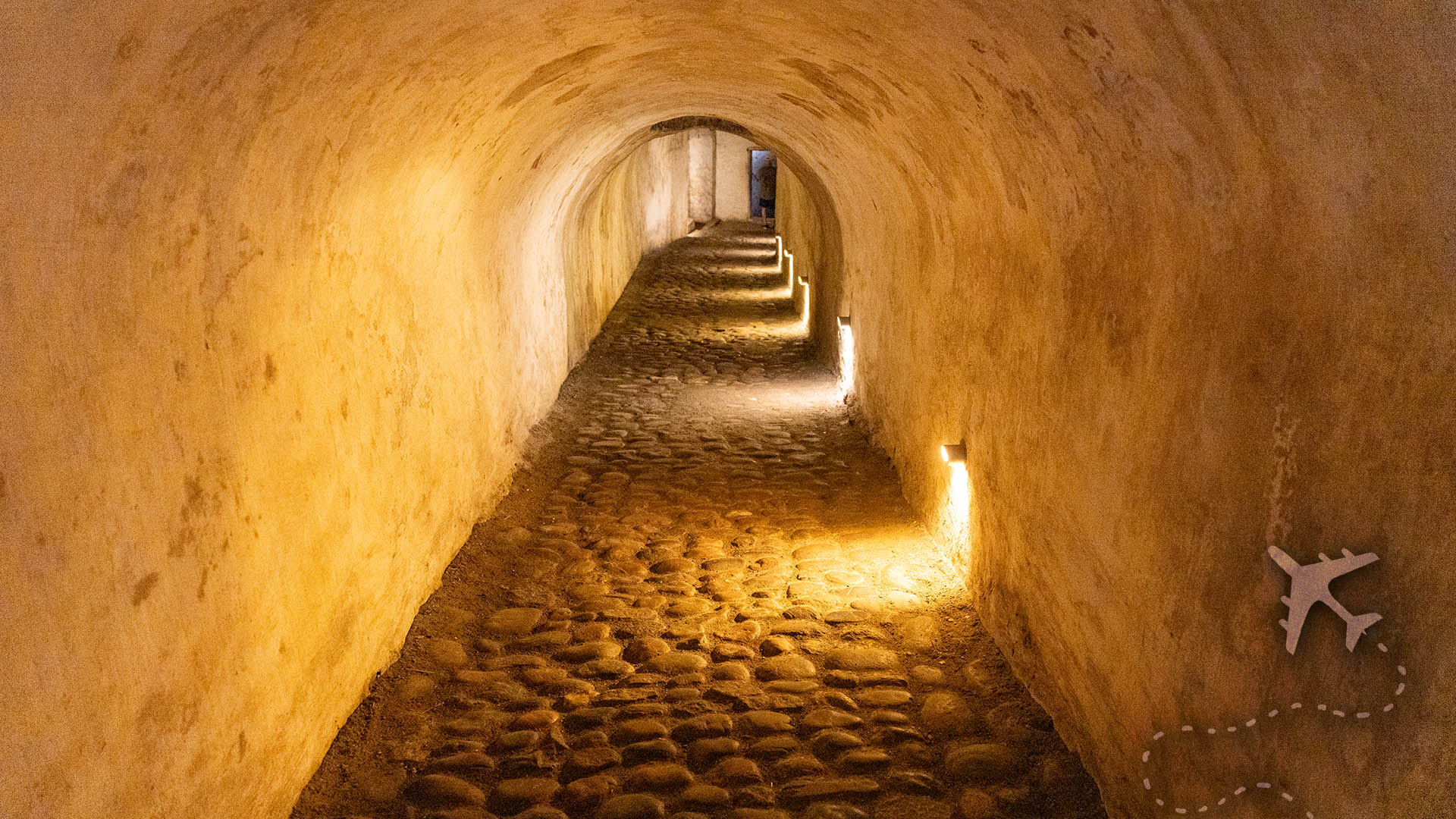
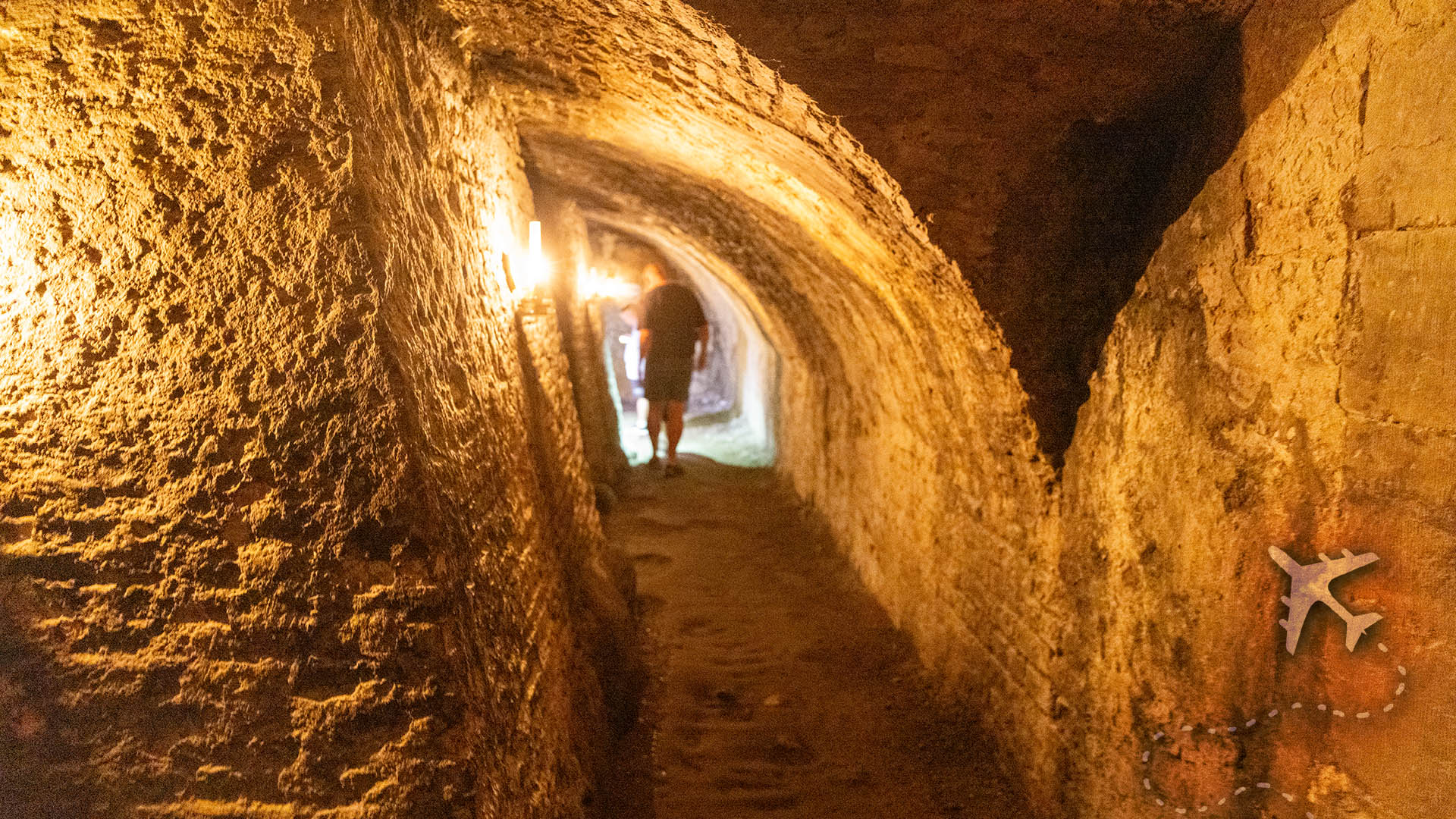
The casemates are the underground military passages beneath Kronborg Castle.
And this is where my opinion of the place changed immediately.
You descend beneath all the polished Renaissance grandeur and suddenly Kronborg becomes an entirely different destination.
The temperature drops.
The light disappears.
The walls become rough stone.
The ceilings get lower.
And the perfectly respectable Danish castle upstairs transforms into a dark military labyrinth.
This was easily the best part of Kronborg Castle.
Not even close.
APPARENTLY THEY PUT ALL THE GOOD SHIT DOWN HERE
The casemates were designed to shelter hundreds of soldiers during wartime.
There were sleeping areas, storage rooms and protected spaces where troops could remain beneath the fortress while whatever disagreement was happening outside was resolved through Europe’s historically preferred method of diplomacy:
Cannons.
Some passages have enough lighting to see where you’re going.

Others disappear into darkness.
You wander through vaulted chambers and stone corridors that feel dramatically different from the polished castle above.
And that’s exactly why they’re so fucking cool.
Upstairs shows you how royalty lived.
Downstairs shows you how the fortress survived.
It reminded me a little of exploring the Catacombs of Lima, where the most interesting part of an otherwise beautiful historic building turned out to be underneath it.
Lima stored tens of thousands of dead people underground.
Kronborg stored soldiers.
Different inventory.
Same basic principle.
DENMARK’S EMERGENCY VIKING IS CURRENTLY SLEEPING
Deep inside the casemates you’ll eventually encounter Holger Danske.
According to Danish legend, Holger sleeps beneath Kronborg Castle and will awaken if Denmark ever faces serious danger.

Which raises the obvious question: Exactly how fucked does Denmark need to be before somebody wakes this guy up?
The enormous statue sits quietly in the darkness looking like an employee who’s been on-call for several hundred years and is becoming increasingly confident nobody remembers his extension.
In a brightly lit museum, the whole thing might feel slightly ridiculous.
Down here?
It works.
The darkness, cold stone and underground corridors give the legend exactly the kind of atmosphere required for a mythical Danish warrior waiting to emerge and start solving geopolitical problems.
AND JUST LIKE THAT, KRONBORG BECOMES BADASS
The casemates completely changed Kronborg for me.
Without them, I’d probably remember the place as a beautiful and historically important Danish castle.

Good photos.
Interesting history.
Nice views.
Hamlet.
Seven out of ten. Would castle again.
But underground, Kronborg finally feels like what it actually was: A fortress.

The enormous walls suddenly make more sense.
The cannons make more sense.
Its position overlooking one of Europe’s most strategically important waterways makes more sense.
It reminded me why I enjoy places like the Buckner Building in Alaska, where military history becomes considerably more interesting when you’re physically standing inside the infrastructure built for people who genuinely expected someone might start shooting at them.
Kronborg’s royal rooms explain history.
The casemates make you feel it.
COME FOR HAMLET. STAY FOR THE FUCKING TUNNELS.
Kronborg Castle absolutely deserves a visit.
Walk through the ballroom. Mid.
See the chapel. Mid.
Photograph Sweden. Extra Mid.
Admire the Renaissance architecture. Mid.
But whatever you do, don’t leave without going underground.
Because that’s where Kronborg stops being another beautiful European castle and becomes something considerably more memorable.
Cold stone corridors.
Dark chambers.
Military history.

A legendary Danish warrior apparently sleeping through his shift.
The castle above ground is cool.
The castle underneath it?
That’s where Kronborg earns its place in the badassery department.