





There are famous places.
Then there are places so ridiculously impressive that every photo you’ve ever seen still undersells them.
Petra belongs in the second category.
I had seen it a thousand times before I ever stepped foot in Jordan. Magazine covers. Documentaries. Instagram influencers pretending they “discovered” it. And, of course, that final scene in Indiana Jones and the Last Crusade, where Harrison Ford rides through a narrow canyon toward the legendary Treasury in search of the Holy Grail.
Like a lot of people, that movie planted Petra on my bucket list decades before I ever booked a flight.
The funny part?
The building everyone knows isn’t even the most impressive thing in Petra.
It’s just the front door.
DESTINATION: Petra
CURRENT WEATHER
clear sky (82F / 28C)

AIR QUALITY INDEX (AQI)
Good (27)
Getting to Petra is a Pain in the Ass
One thing the glossy tourism brochures conveniently forget to mention is that Petra is in the absolute middle of nowhere.
Jordan isn’t a huge country, but somehow Petra manages to sit just far enough away from everything to make every trip feel longer than it should.
Coming from Amman? Expect around three hours if traffic cooperates.
Coming from Aqaba? Another two to three hours.
Coming from Tel Aviv? Yeah, let’s not talk about that trip.
Staying at the Dead Sea? Congratulations, you just added another several hours behind the wheel.
There are buses. There are organized tours. You can rent a car. None of those options are particularly quick.
The Nabataeans apparently picked this location because it was strategically protected by mountains and narrow canyons.
Two thousand years later, it’s still strategically inconvenient.

By the time I rolled into Wadi Musa, the modern town perched above Petra, I understood exactly why this city stayed hidden for centuries.
Nobody accidentally ends up here.
Before Indiana Jones, Almost Nobody Came Here
Here’s something most people don’t realize.
Today Petra is one of the most recognizable archaeological sites on Earth.
That wasn’t always the case.
Yes, archaeologists had rediscovered Petra in 1812 after Swiss explorer Johann Ludwig Burckhardt disguised himself as a Muslim pilgrim to gain access. Yes, historians knew how important it was. Yes, UNESCO declared it a World Heritage Site in 1985.
But tourism?
It was relatively modest.
Then 1989 happened.
Steven Spielberg pointed a camera at Al-Khazneh, cast Harrison Ford as the world’s coolest archaeologist, and suddenly millions of people wanted to ride horses through a canyon searching for the Holy Grail.
One movie transformed Petra from an archaeological curiosity into a global bucket-list destination almost overnight.

SPOILER ALERT: The Treasury doesn’t contain the Holy Grail.
It doesn’t contain ancient booby traps.
There isn’t an invisible bridge.
And choosing the wrong cup won’t instantly turn you into a skeleton.
Hollywood made all that up.
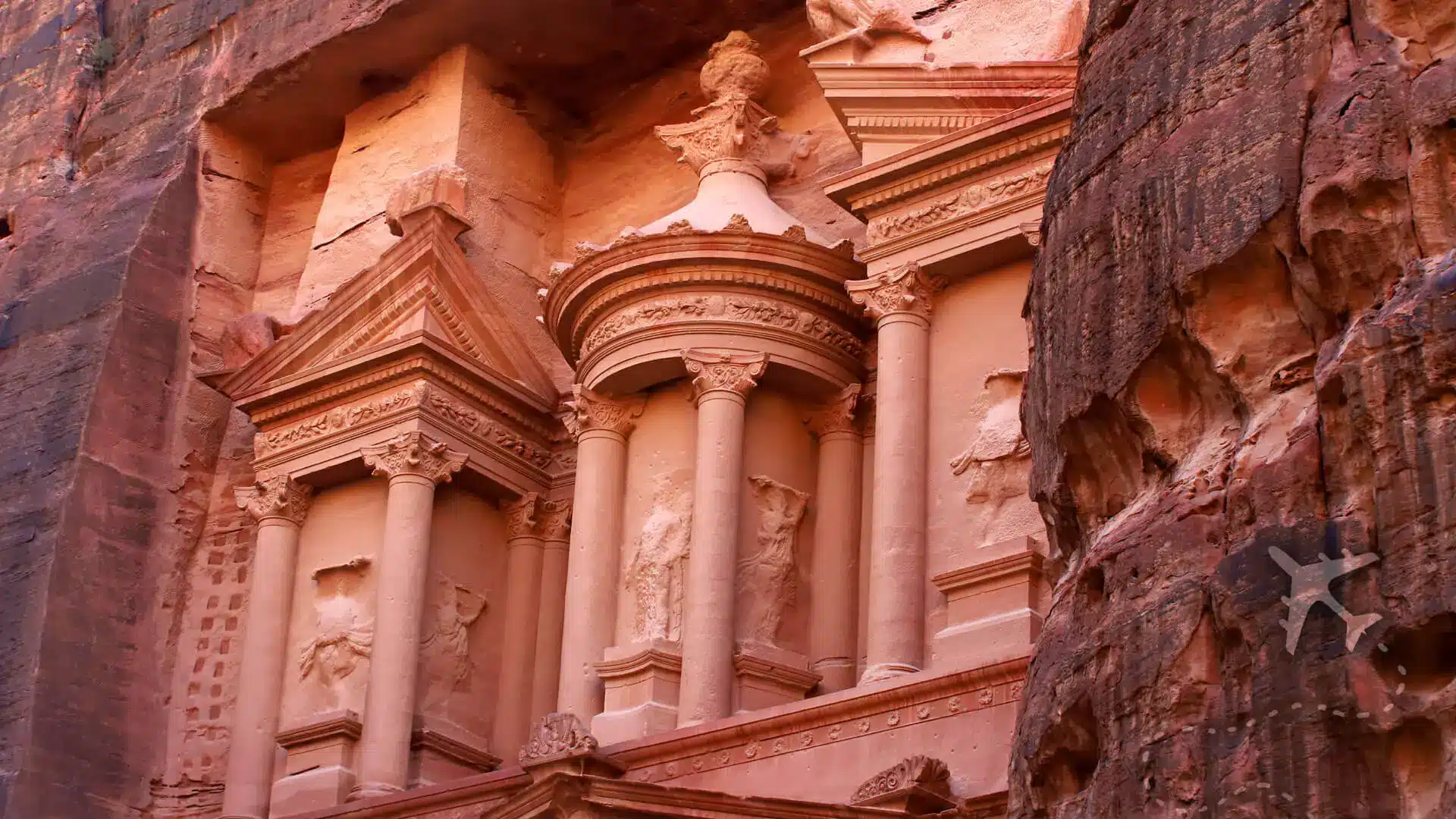
The Treasury was actually most likely built as an elaborate royal tomb for a Nabataean king around the first century AD.
Still…
It’s hard to complain when your movie set happens to be one of the greatest pieces of architecture ever carved by human hands.
The Walk That Makes the Reveal Worth It
The genius of Petra isn’t just what you see.
It’s how you see it.
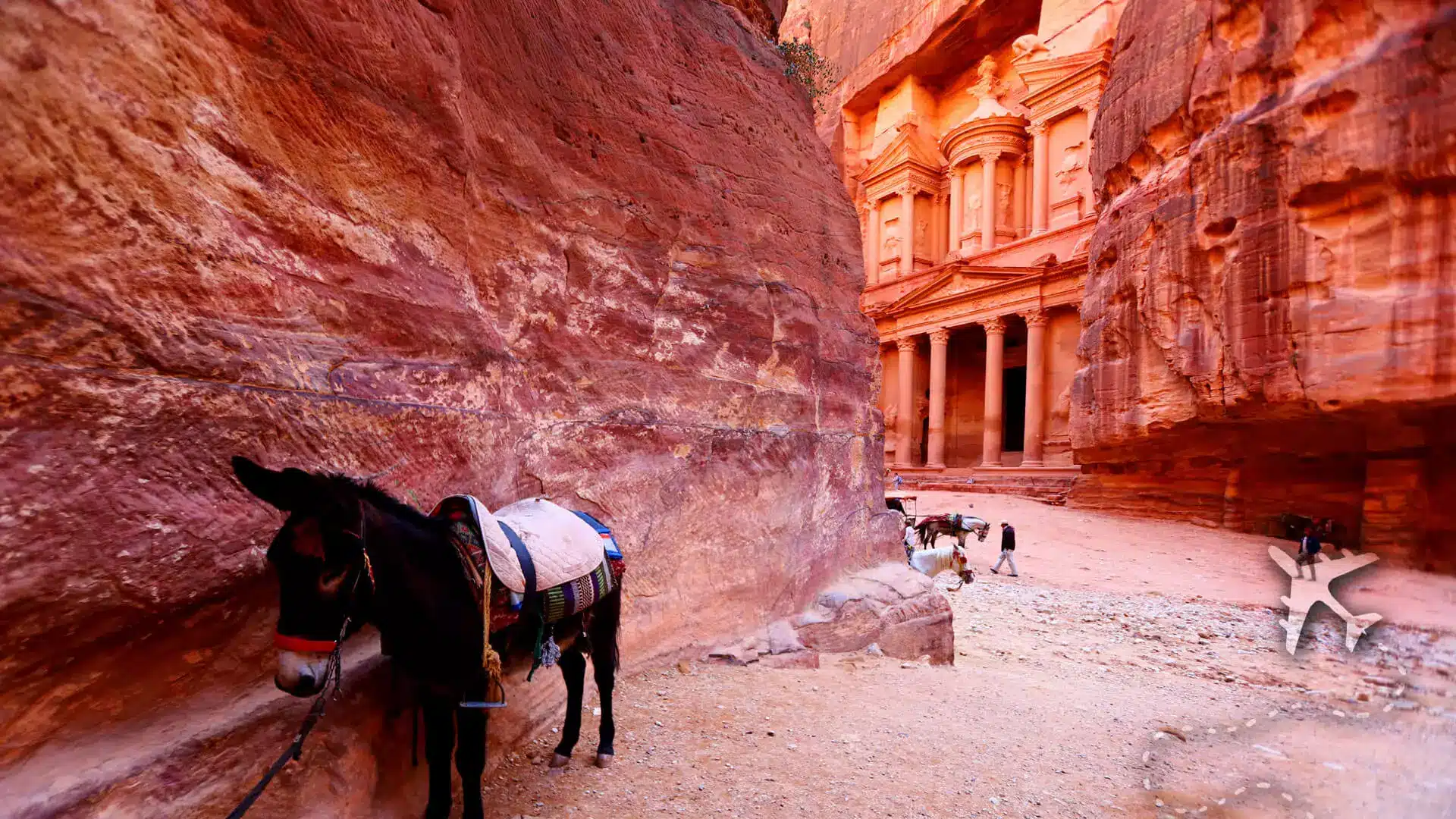
From the visitor entrance, the walk begins innocently enough before funneling into the Siq, a twisting sandstone canyon stretching over a kilometer through towering walls that climb more than 250 feet overhead.
The canyon narrows.
The light changes.
Every bend teases another glimpse of something ahead.
For nearly twenty minutes, you see absolutely nothing except red sandstone, strange rock formations, and the occasional camel trying to convince tourists that walking is overrated.

Then…
A sliver appears.
Just a tiny slice of carved stone.
A few more steps.
Then suddenly the canyon opens.
And there it is.
The Treasury.
No matter how many photos you’ve seen, your brain still needs a second to process what it’s looking at.
This isn’t a building someone assembled.
This entire 130-foot-tall masterpiece was carved directly into a cliff face.
Not built.
Removed.
Someone looked at a mountain and thought, “Let’s make that into architecture.”
The Nabataeans Were Engineering Geniuses
Petra wasn’t simply a city carved into rock because it looked cool.
The Nabataeans built an empire by controlling trade routes that connected Arabia, Egypt, Syria, and the Mediterranean.
Frankincense.
Myrrh.
Spices.
Silk.
Pretty much everything wealthy civilizations wanted passed through Nabataean territory.
Petra became their capital around the fourth century BC, eventually growing into a city of perhaps 20,000 to 30,000 people.
The truly remarkable part wasn’t the buildings.
It was the water.
This is the Jordanian desert.
Rain is scarce.
Yet the Nabataeans engineered dams, channels, underground cisterns, and sophisticated water management systems that allowed an enormous city to flourish where common sense says it shouldn’t exist.
Long before modern plumbing, these people had figured out how to capture every drop that fell from the sky.
That’s arguably even more impressive than the famous facades.
Rome Eventually Showed Up Because Rome Always Shows Up
Good things rarely stay independent forever.
In AD 106, the Roman Empire annexed the Nabataean Kingdom.
Trade routes shifted.
Roman influence spread.
Petra continued to exist, but its importance slowly faded.
Then nature finished the job.
A series of powerful earthquakes, especially the devastating quake in AD 363, destroyed much of the city’s infrastructure, including the elaborate water systems that had made life here possible.
As maritime trade replaced overland caravans, Petra became increasingly irrelevant.
By the early Islamic period, most of the city had been abandoned.
For centuries, only local Bedouin tribes knew its location.
The rest of the world forgot one of humanity’s greatest cities even existed.
The Treasury is Just the Beginning
Most visitors snap a few hundred photos of the Treasury, buy an overpriced bottle of water, and assume they’ve seen Petra.
They’re wrong.
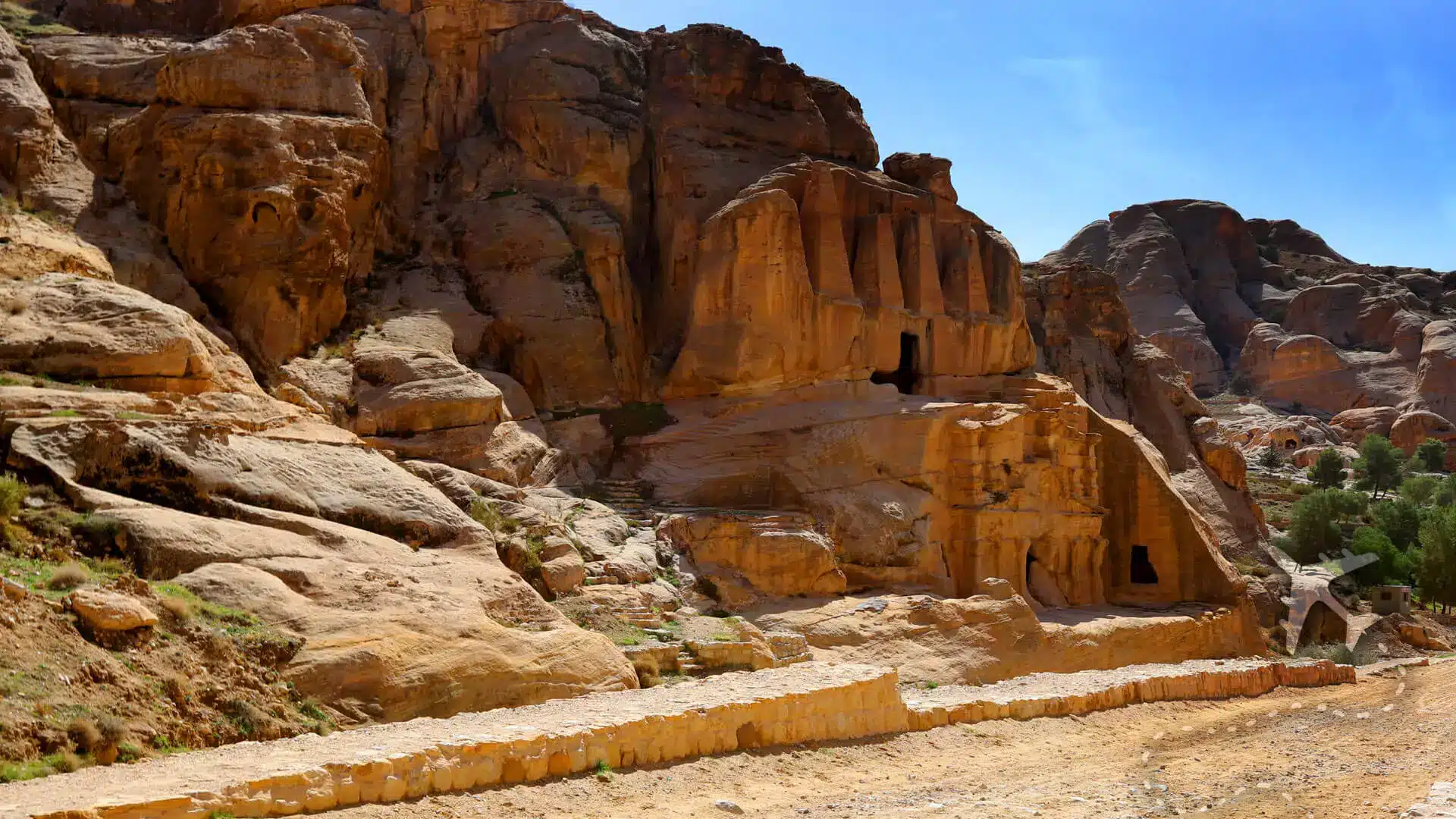
Petra sprawls across miles of valleys, cliffs, tombs, temples, staircases, and ancient streets.

The Roman-style theater was carved directly into the mountainside.
The Royal Tombs tower over the valley.
The Colonnaded Street hints at Petra’s prosperous commercial past.
Then there’s the Monastery.
Getting there requires climbing roughly 800 uneven stone steps, usually while questioning your life choices somewhere around step 400.
But when you finally reach it?
It’s bigger than the Treasury.
Quieter.
Less crowded.
And somehow even more spectacular.
That climb separates the tourists from the people who leave Petra understanding just how enormous this ancient city really was.
Is Petra Worth the Journey?
Abso-fucking-lutely.
Just understand what you’re signing up for.
You’re going to spend hours getting there.
You’re going to do a lot more walking than you planned.
You’re probably won’t see everything in a single day unless you’ve secretly been training for an ultramarathon.
And it’s almost certainly going to be hotter than you expected.
None of that matters.
Because every once in a while, you visit a place that completely lives up to the mythology surrounding it.
Petra is one of those places.
Indiana Jones may have introduced Petra to the world, but the movie only captured a few minutes of a city that took centuries to create.
The Treasury might get everyone through the gate.
The rest of Petra is what leaves you speechless.