

I have a volcano problem.
This has been fairly well documented.
I’ve chased eruptions, wandered across lava fields, stood around sulfur-belching holes in the Earth, driven through volcanic exclusion zones and repeatedly placed myself near mountains whose defining personality trait is occasionally exploding without sufficient notice.
So naturally, when I ended up on Easter Island, there was absolutely no fucking chance I was leaving without adding another volcano to the collection.
Enter Rano Kau.
Now, compared with some of my previous volcanic shenanigans, Rano Kau is considerably less interested in killing anyone. It’s extinct. Very extinct. The geological equivalent of retirement in Florida.
There would be no lava.
No explosions.
No emergency evacuations.
No sulfur trying to dissolve the inside of my nose.
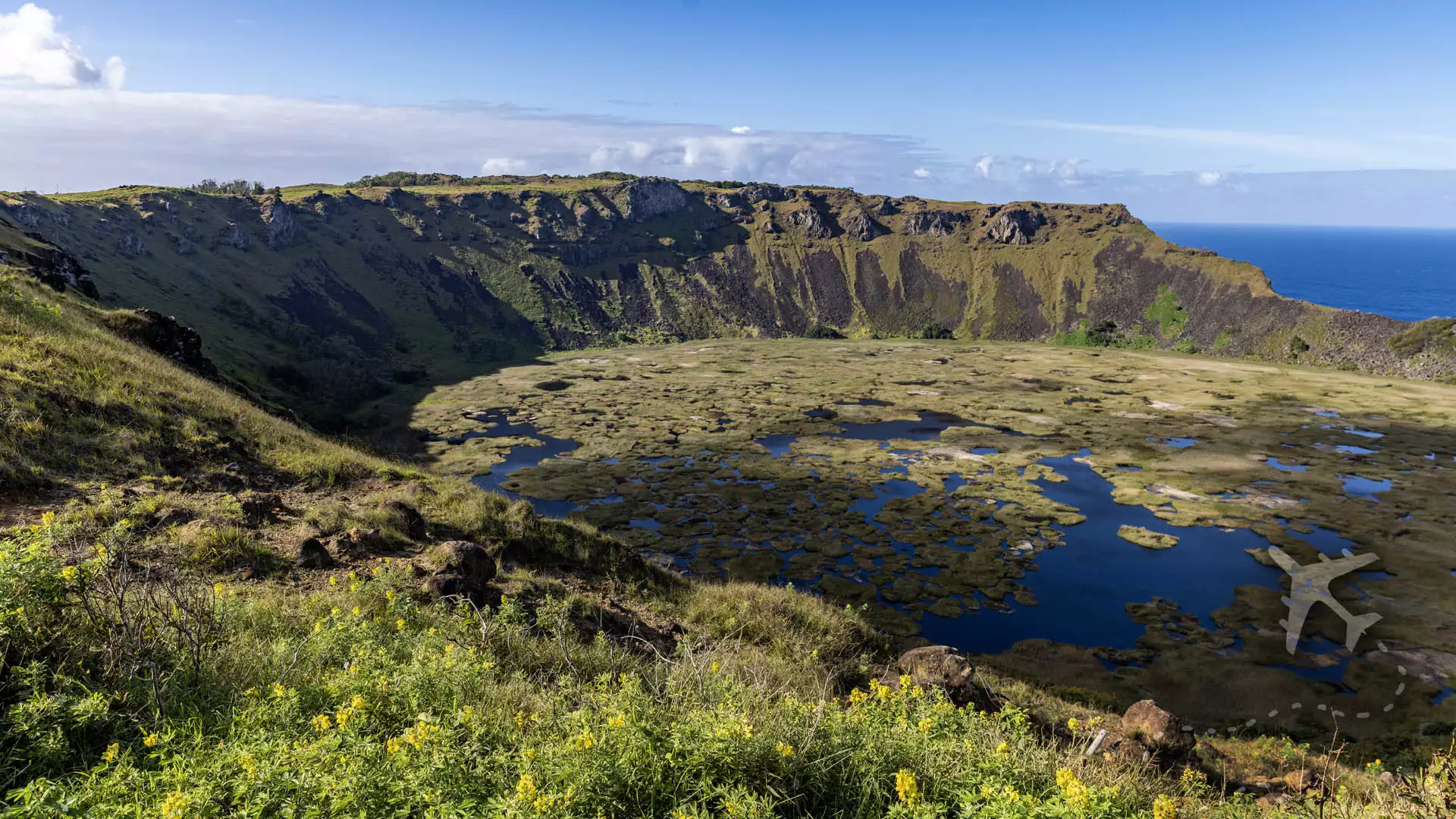
Just one enormous collapsed volcanic crater filled with water, surrounded by one of the most isolated islands on Earth.
Fine.
I’ll take it.
DESTINATION: Rano Kau
GPS COORDINATES
-27.1808, -109.4357
CLOSEST AIRPORT
CURRENT WEATHER
moderate rain (63F / 17C)

AIR QUALITY INDEX (AQI)
Air-quality data is currently unavailable.
I HAVE APPARENTLY STARTED COLLECTING VOLCANOES
At some point, visiting volcanoes stopped being an occasional travel activity and became a recurring theme that probably deserves professional evaluation.
I’ve watched Iceland lose its geological shit at Fagradalsfjall, wandered around the steaming geothermal insanity of Gunnuhver, explored the destruction surrounding Mount Merapi in Indonesia and gone bouncing around the volcanic moonscape of Bromo Tengger Semeru.
There was Kilauea on Hawaii’s Big Island.
There was Mayon in the Philippines, which has spent centuries reminding everyone living nearby that its ridiculously photogenic symmetry comes with some fairly aggressive terms and conditions. The nearby Cagsawa Ruins are basically the historical receipt.
There have been crater lakes, lava fields, geothermal vents, ash-covered landscapes and enough sulfur to permanently recalibrate my definition of “fresh air.”
At this point, the entire collection lives appropriately under Fire, Lava & Bad Ideas.
So when I looked at a map of Easter Island and saw a giant volcanic crater sitting on the southwestern corner of the island, the decision had already been made.
Rano Kau was getting a pin.
WELCOME TO THE WORLD’S LEAST THREATENING VOLCANO ADVENTURE
Rano Kau is one of the three main volcanoes responsible for creating Easter Island, along with Terevaka and Poike.
Which means nearly everything I had spent the trip exploring exists because a bunch of volcanic activity in the middle of the Pacific eventually piled enough rock above sea level for humans to arrive and start carving enormous stone heads.
Geology really committed to the long game here.
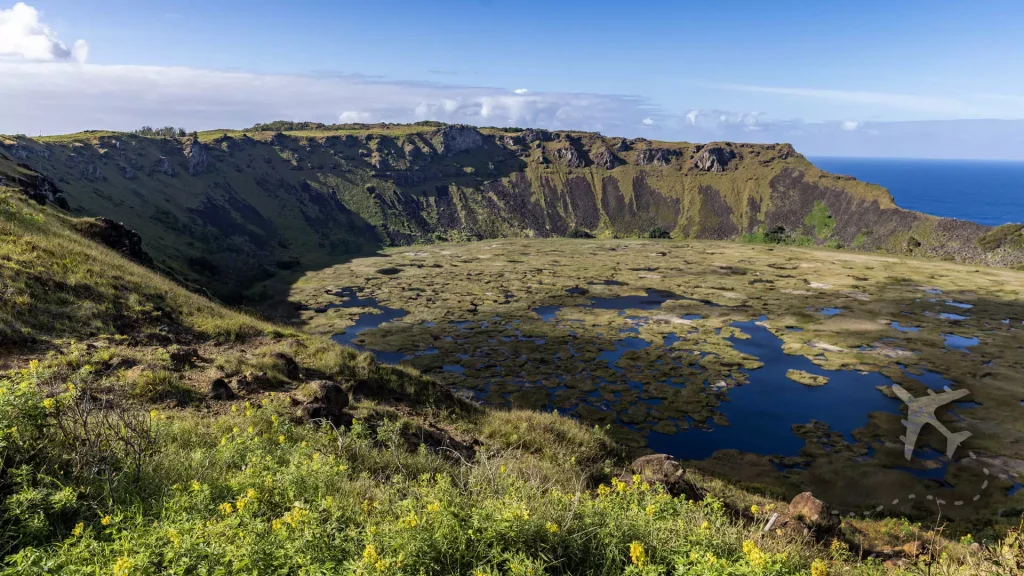
Rano Kau rises about 324 meters above sea level, but the number isn’t really what makes it impressive.
It’s the crater.
The caldera is roughly 1.4 kilometers across, with steep walls dropping toward a freshwater lake hundreds of feet below the rim.
And when you first walk up and see the whole thing?
Okay. That’s pretty fucking cool.
Not Fagradalsfjall-erupting-in-front-of-you cool.
Not Bromo-looking-like-another-planet cool.
Not Merapi-could-potentially-murder-everyone cool.
But definitely stop-walking-and-stare-at-the-giant-hole cool.
THIS VOLCANO HAS BEEN RETIRED FOR A WHILE
If you’re coming to Rano Kau hoping for dramatic volcanic activity, I have some disappointing news.
You missed it.
By roughly a few hundred thousand years.
The youngest volcanic rocks associated with Rano Kau are hundreds of thousands of years old, and whatever geological tantrums created this enormous thing ended long before Easter Island started worrying about tourists taking inappropriate selfies with moai.
What remains is the enormous collapsed caldera.
Over time, water collected inside it, creating one of Easter Island’s few natural freshwater bodies. Vegetation now covers much of the surface, forming patches and floating mats that give the crater this bizarre green-and-blue texture when viewed from above.

It almost stops looking volcanic.
Almost.
Then you remember you’re staring into the collapsed top of an enormous volcano sitting on a microscopic speck of land surrounded by thousands of miles of Pacific Ocean.
Perspective helps.
THE VIEW MAY ACTUALLY BE BETTER THAN THE VOLCANO
This was the part I wasn’t really expecting.
Rano Kau gives you a spectacular reminder of just how hilariously isolated Easter Island actually is.
Most of the time while exploring Rapa Nui, you’re looking at moai, archaeological sites, rolling grasslands or whatever other weird shit has captured your attention.
From up here, the geography becomes much more obvious.
There’s the crater immediately below you.
Then the slopes of Rano Kau.
Then this tiny strip of island.
And then…
Pacific Ocean.
A frankly unreasonable amount of Pacific Ocean.
The horizon just keeps going.
It makes Easter Island feel incredibly small because, scientifically speaking, it is incredibly small.
You’re standing on the edge of a giant volcanic crater on a tiny volcanic island surrounded by one of the largest oceans on Earth.
Suddenly all those giant stone statues scattered around the island somehow seem even weirder.
AND THEN I STARTED LOOKING FOR SHINY BLACK ROCKS
Because apparently simply looking at the crater wasn’t enough.
Rano Kau and the surrounding volcanic landscape contain obsidian, the black volcanic glass created when silica-rich molten rock cools rapidly.
And once I knew that, I started looking at the ground.
Because of course I did.
Obsidian isn’t lying around Rano Kau like someone dumped a truckload of black glass across the hiking trail. If you’re expecting the ground to sparkle like a volcanic jewelry store, you’re going to be disappointed.
But it is there.
You just have to actually look.

Every once in a while I’d spot a piece among the otherwise ordinary volcanic rock. Dark. Smooth. Sometimes slightly glossy when the light hit it correctly.
And suddenly I was crouching down examining rocks like an eight-year-old who had just discovered geology.
Travel does strange things to people.
The obsidian found around Rapa Nui was enormously useful to the island’s earlier inhabitants, who fashioned volcanic glass into cutting tools and other implements. When properly fractured, obsidian can produce ridiculously sharp edges.
Which also means this is one of those rare destinations where staring at the ground is both historically interesting and potentially useful for preventing something sharp from introducing itself to your foot.
Look.
Photograph.
Appreciate.
Leave it where it is.
Rapa Nui National Park does not need you taking geological souvenirs home because you suddenly became Indiana Jones at the crater.
EASTER ISLAND IS BASICALLY ONE GIANT VOLCANO PROJECT
Rano Kau also makes the rest of Easter Island start making more geological sense.
The island isn’t merely a place that happens to have some volcanoes.
The island is volcanoes.
Three major volcanic systems eventually merged together to create the triangular chunk of land we now call Easter Island.

And volcanic geology is woven through nearly everything people come here to see.
The moai themselves were overwhelmingly carved from volcanic tuff at Rano Raraku.
The red pukao sitting on some of their heads came from volcanic scoria at Puna Pau.
Obsidian became tools.
Volcanic craters became freshwater reservoirs.
Basically, without volcanoes there is no Easter Island.
There’s just ocean.
A lot of fucking ocean.
RANO KAU ISN’T THE MOST EXCITING VOLCANO I’VE VISITED
And that’s okay.
If we’re ranking my volcano adventures strictly by geological insanity, Rano Kau isn’t going anywhere near the top.
Fagradalsfjall was actively erupting.
Gunnuhver has boiling mud and steam shooting out of the Earth like Iceland forgot to install pressure-relief valves.
Merapi has obliterated entire communities.
Bromo looks like someone accidentally opened a portal to another planet.
Rano Kau?
Rano Kau has been sleeping peacefully for an extremely long time.
But that doesn’t make it boring.
It makes it different.

I’ve visited another version of this in the Galápagos at Los Gemelos, where volcanic processes created enormous collapse pits in the Santa Cruz highlands. Those aren’t volcanic craters at all, despite looking suspiciously like them.
Rano Kau is the real deal.
A massive volcanic caldera slowly transformed by water, vegetation, erosion and a few hundred thousand years of Mother Nature having absolutely nowhere else to be.
Sometimes the aftermath is the attraction.
THEN HUMANS MADE THE STORY EVEN WEIRDER
Because apparently a giant volcanic crater wasn’t interesting enough, humans eventually added religion, competition and extremely questionable cliff-related decision-making.
On the crater rim sits Orongo, the ceremonial village associated with the Rapa Nui Birdman tradition.
The Tangata Manu competition involved representatives competing to obtain the first egg of the sooty tern from Motu Nui, one of the small offshore islands visible from the crater area.
This required descending enormous cliffs, swimming through open ocean, retrieving an egg and eventually getting the damn thing back.
You know.
Normal religious ceremony stuff.
Standing around Rano Kau makes the insanity of this considerably easier to appreciate because you can actually see the cliffs and the ocean involved.
This wasn’t some ceremonial jog around the village followed by refreshments.
People were throwing themselves into an absolutely ridiculous physical challenge involving cliffs, waves and an egg.
Suddenly my decision to travel around the world photographing dangerous volcanoes feels almost responsible.
Almost.
COME FOR THE CRATER, STAY FOR THE HOLY-SHIT-WE-ARE-REALLY-OUT-HERE VIEW
Rano Kau probably isn’t going to be the thing you remember most about Easter Island.
Let’s be realistic.
The moai have that category pretty thoroughly locked down.
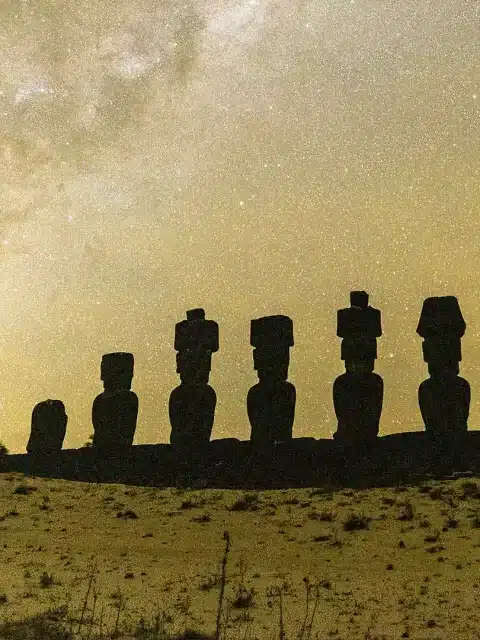
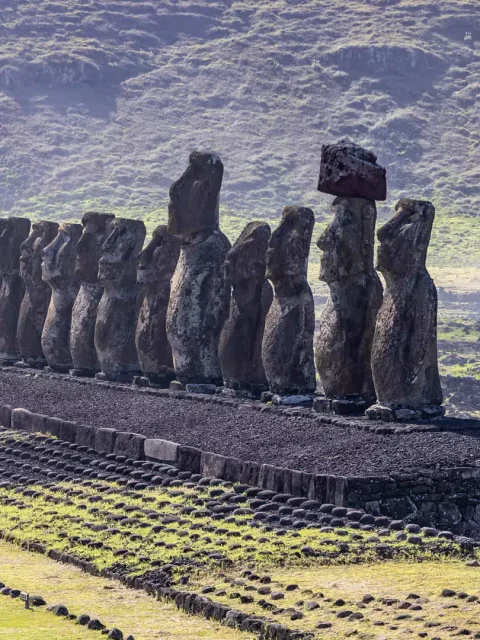
Seeing Ahu Tongariki lined with enormous stone figures is surreal. Wandering around Rano Raraku and seeing unfinished moai still embedded in the landscape is even stranger. And somehow Easter Island even manages to put giant statues beside actual sand at Anakena Beach, because apparently the moai needed a beach day too.
Rano Kau is quieter.
There isn’t a giant attraction screaming for your attention.
There’s just an enormous crater, a lake, some volcanic glass hiding among the rocks and sweeping views across a tiny island sitting absurdly alone in the Pacific.
And after spending years chasing volcanoes around the planet, I actually appreciated that.
No eruption.
No lava.
No toxic gas.
No evacuation zone.
No volcano attempting to murder me.
Just another little pin on the map documenting my increasingly difficult-to-explain fascination with places where the Earth has, at some point, completely lost its shit.
Volcano shenanigans: Easter Island edition.
Mission accomplished.