

I had just finished walking around Rano Raraku and was still riding what can only be described as some sort of ancient Polynesian archaeological cocaine high.
Seriously.
After years of wanting to visit Easter Island, walking among the moai at Rano Raraku had absolutely scrambled my brain. There were moai everywhere. Standing. Buried. Half-carved. Staring dramatically into the distance like 800-year-old stone influencers waiting for someone to discover their Instagram accounts.
It was fucking spectacular.
So naturally, my guide looked at me and essentially said: YOLO. Want to go see fifteen more?
Well, obviously.
Because apparently the cure for moai sensory overload is considerably more moai.
DESTINATION: AHU TONGARIKI
GPS COORDINATES
-27.1258, -109.2770
CLOSEST AIRPORT
CURRENT WEATHER
scattered clouds (68F / 20C)

AIR QUALITY INDEX (AQI)
Good (48)
FIFTEEN MINUTES LATER, THINGS GOT YUGE
Ahu Tongariki sits almost next door to Rano Raraku on the eastern side of Easter Island.
And by “next door,” I mean roughly 15 minutes away by car, which makes pairing these two places one of the easiest decisions you’ll make while exploring Rapa Nui.
You basically leave the factory and drive directly to the showroom.
Rano Raraku is where most of Easter Island’s moai were carved from volcanic tuff. Ahu Tongariki is where 15 of these gigantic bastards are now lined up on the largest restored ceremonial platform on the island.
And I need to emphasize something here.
THEY. ARE. FUCKING. HUGE.

Photos don’t explain Ahu Tongariki properly.
They can’t.
You look at photographs online and think, Oh, those are some pretty big statues.
No.
Your brain has been lied to.
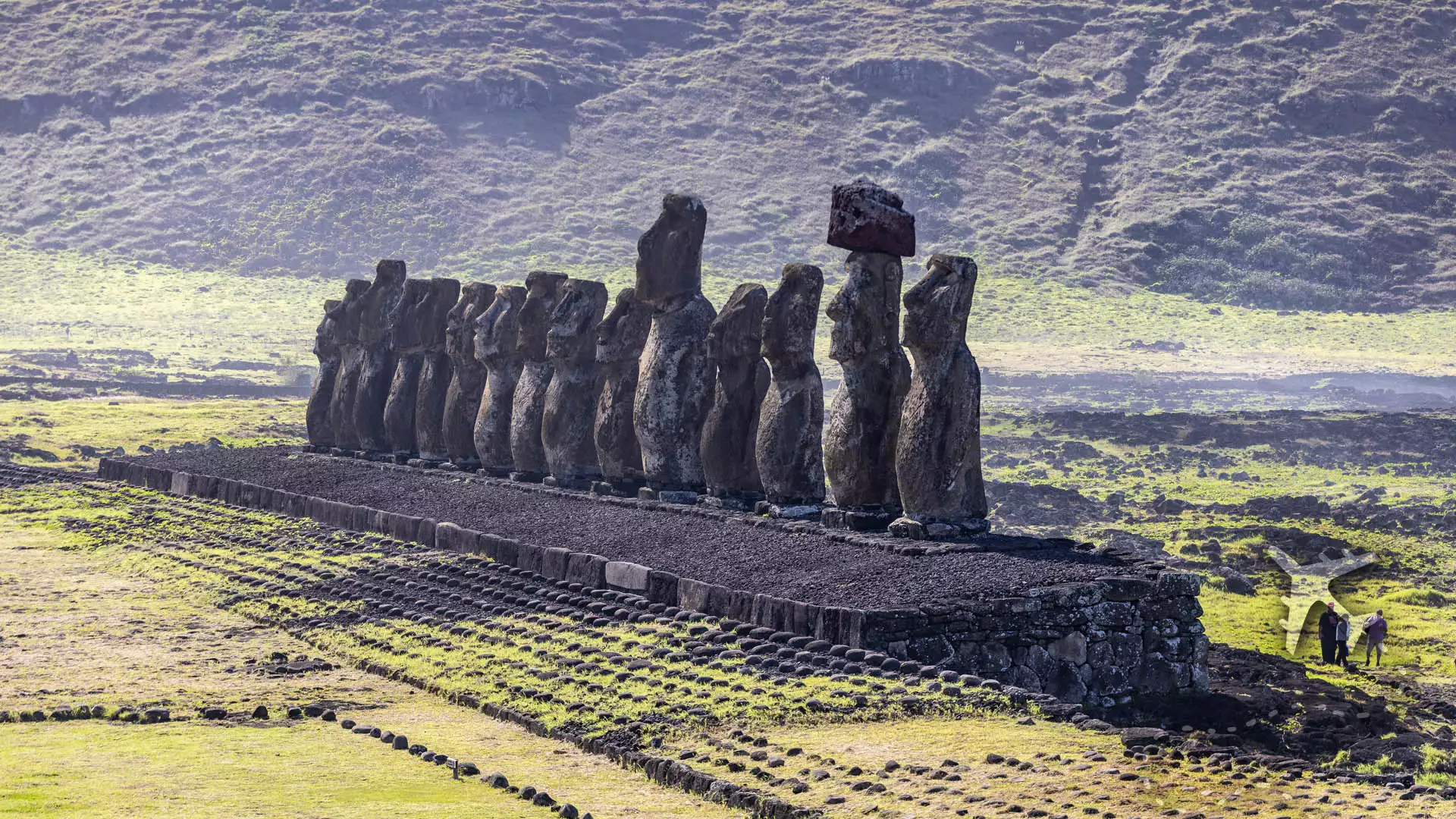
FIND THE TINY HUMANS
Look closely at my photograph.
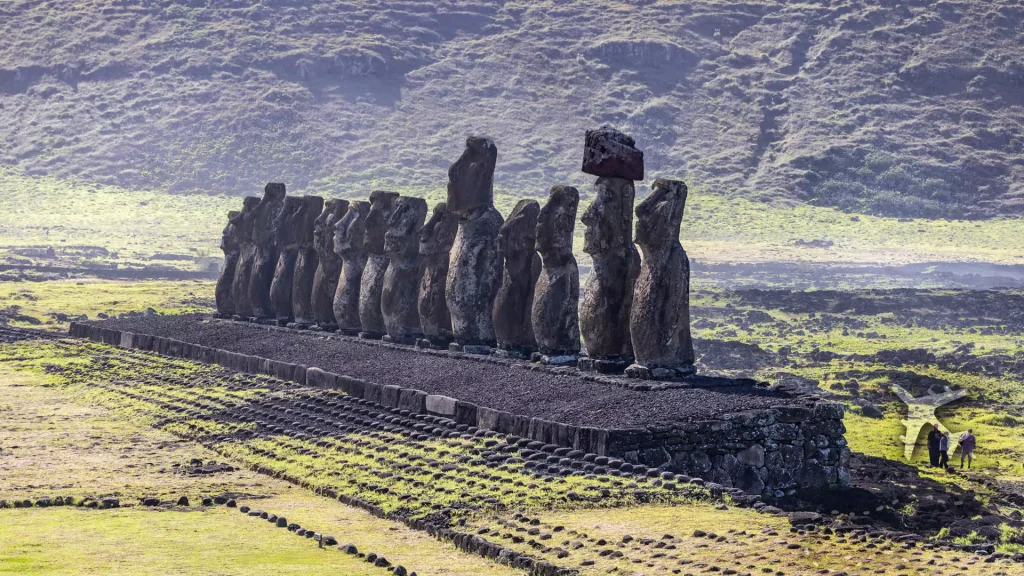
See those tiny little humans underneath my DESTINATIONS UNKNOWN logo?
Those are actual full-sized people.
Not ants.
Not decorative landscaping.
People.
That is probably the easiest way I can explain the scale of Ahu Tongariki.
When there isn’t a person standing nearby, your brain doesn’t have anything useful for comparison. The moai just look like statues sitting in a big empty field.
Put a human next to one and suddenly your brain goes:
HOLY SHIT.
The largest moai standing at Ahu Tongariki is roughly nine meters tall and weighs somewhere around 80-plus tons.
And there are 15 moai standing together.
This isn’t one impressive statue that everyone gathers around.
It’s an entire fucking lineup.
You walk toward them and they just keep getting bigger.
And bigger.
And…
YUGE.
SO WHAT EXACTLY IS AHU TONGARIKI?
This is where we sneak some education into the sensory overload.
An ahu is a ceremonial stone platform used by the Rapa Nui people, generally associated with ancestors, burials and important community spaces.
Ahu Tongariki was one of the most significant of these ceremonial centers on Easter Island, and today its restored platform stretches roughly 200 meters across the landscape.
Sitting on top are those 15 enormous moai.
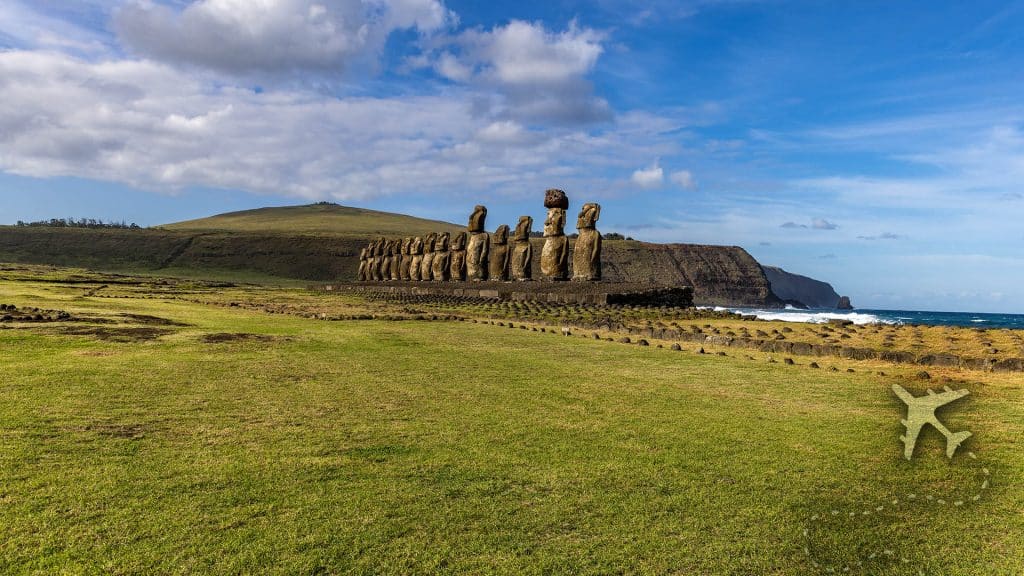
They don’t face the ocean, either.
Like most moai placed on ahu around Easter Island, they face inland, toward the community they were intended to watch over.
Which somehow makes the whole thing even more impressive.
You’re not looking at decorations.
You’re standing in what was once an incredibly important part of an actual Rapa Nui community.
The giant stone dudes were basically watching the neighborhood.
Ancient HOA enforcement was apparently fucking serious.
WHEN WAS AHU TONGARIKI BUILT?
The exact timeline isn’t as tidy as Google would probably like.
Ahu Tongariki developed over several centuries during the height of Rapa Nui’s moai-building period, with major construction generally associated with roughly the 13th through 15th centuries.
So there wasn’t some Tuesday afternoon when everyone showed up, finished Ahu Tongariki and went home.
The site evolved.

Moai were carved at nearby Rano Raraku, transported across the island and erected on ceremonial platforms like this one.
Which raises the obvious question.
How the hell do you move an 80-ton rock statue without a crane?
Excellent question.
Welcome to one of Easter Island’s greatest mysteries.
THEY BUILT THESE WITHOUT A FUCKING CRANE
Remember where I had just been?
That’s important because almost all of Easter Island’s moai were carved there.
So the Rapa Nui weren’t merely carving gigantic statues.
They then had to move them.
Researchers have proposed all sorts of theories over the years involving sledges, rollers, ropes and other methods. One of the more fascinating modern experiments demonstrated that teams using ropes could rock a standing replica from side to side and gradually move it forward.
Basically…
the moai may have walked.

Which sounds completely ridiculous until you remember that Rapa Nui oral traditions described the statues as walking to their destinations.
Suddenly Grandma’s weird family story deserves another listen.
Whatever exact combination of engineering, manpower and prehistoric profanity accomplished the job, standing at Ahu Tongariki makes the achievement considerably harder to dismiss as some cute ancient construction project.
These things are enormous.
And the people who built them somehow moved them across an island.
AND THEN HUMANITY KNOCKED THEM DOWN
Eventually, the moai at Ahu Tongariki were toppled.
Many of Easter Island’s statues fell during a period of enormous social and political change on Rapa Nui, particularly during the 17th and 18th centuries.
The old version of Easter Island history loved the wonderfully dramatic narrative that the Rapa Nui civilization simply destroyed itself after cutting down all its trees, exhausting its resources and descending into chaos.
Because humanity apparently enjoys history considerably more when there’s a convenient lesson about everyone being stupid.
The reality appears considerably more complicated.

Environmental change, resource pressures, internal conflict, European contact, disease and slave raids all became part of Rapa Nui’s extraordinarily difficult history.
Whatever the exact circumstances, by the 19th century, essentially all of the island’s standing moai had been toppled.
Ahu Tongariki was no exception.
And then Mother Nature decided the place hadn’t suffered enough.
BECAUSE A TSUNAMI APPARENTLY WANTED A TURN
In 1960, the massive Valdivia earthquake struck Chile.
At magnitude 9.5, it remains the strongest earthquake ever instrumentally recorded.
The earthquake generated a Pacific-wide tsunami that eventually reached Easter Island and slammed into Ahu Tongariki.
Because knocking gigantic statues over apparently wasn’t enough.

Let’s scatter them around too.
The tsunami pushed stones and moai farther inland, leaving the ceremonial complex in even worse condition.
So the magnificent row of 15 moai you’re looking at today isn’t something that simply survived untouched for centuries.
What you’re seeing is one hell of a restoration project.
SOME ASSEMBLY REQUIRED
During the 1990s, Ahu Tongariki underwent a major restoration involving Rapa Nui specialists and archaeologists, with substantial support from Japan.
The scattered moai were carefully studied, moved and re-erected.
By the mid-1990s, all 15 were standing again.

And thank fucking God somebody went through the trouble.
Because seeing Ahu Tongariki today is one of those experiences where photographs spectacularly fail at their one job.
I’d seen pictures before coming here.
Lots of them.
I knew what Ahu Tongariki looked like.
I knew there were 15 moai.
I knew they were big.
None of that prepared me for actually standing there.
YOUR CAMERA IS LYING TO YOU
Photography compresses everything.
Especially when you’re using a wide-angle lens trying to squeeze fifteen gigantic statues into one frame.
The landscape is enormous.
The sky is enormous.
The Pacific Ocean is sitting behind you being enormous.
And suddenly these massive moai somehow look…
reasonable.
They’re not reasonable.
Walk closer.

Suddenly you’re staring upward at these gigantic stone faces wondering how the hell people carved them, transported them, raised them, knocked them over, scattered them with a tsunami and then managed to stand the fucking things back up again.
That scale is what stayed with me.
Rano Raraku had been emotional because you’re essentially walking through the birthplace of the moai. You see unfinished statues still attached to the mountain. You see bodies disappearing beneath the ground. You start understanding how enormous the entire moai-building operation really was.
Then you drive 15 minutes down the road to Ahu Tongariki and see the finished product.
Factory tour complete. Welcome to the showroom.
YES, EVERYONE WANTS THE SUNRISE PHOTO
Ahu Tongariki is also famous for sunrise.
You’ve probably seen the photograph even if you don’t recognize the name.
Fifteen moai.
Black silhouettes.
Sun rising behind them.
Sky exploding into various shades of orange while photographers quietly elbow one another over six inches of tripod territory.
It’s one of the classic photographs of Easter Island.
But here’s the thing.
Don’t convince yourself sunrise is the only reason to come here.

I didn’t need some biblical explosion of golden light to make Ahu Tongariki impressive.
Seeing these things up close in normal daylight was more than enough.
Actually, daylight arguably makes appreciating their scale easier because you can see the individual statues, their different proportions and the enormous platform beneath them.
Sunrise gives you the postcard.
Daylight gives you the HOLY FUCK THESE THINGS ARE BIG experience.
I know which one stuck with me.
YOU’RE GOING TO NEED A GUIDE
Ahu Tongariki sits inside Rapa Nui National Park, so visiting isn’t quite a matter of renting a car, wandering onto the grass and introducing yourself to the ancestors.
Access to many archaeological sites on Easter Island is controlled, and visitors generally need the national park ticket and an accredited Rapa Nui guide for sites requiring guided entry.
Which initially sounds mildly annoying.
Then you actually do it.
Having someone standing beside you explaining what you’re looking at changes these places completely.
Without context, Ahu Tongariki is fifteen giant statues.
With context, you start understanding the ahu beneath them, the communities that surrounded them, where the statues came from, how they might have been transported, why they were toppled and how the entire complex was reconstructed.
Suddenly you’re not photographing rocks.
You’re photographing a surviving piece of a civilization.
If you’re planning the whole trip, my Easter Island travel guide covers the broader logistics and other places worth squeezing into your time on this ridiculously isolated speck of volcanic rock.
AND THE MOAI BULLSHIT STILL WASN’T OVER
At this point I’d done Rano Raraku.
Now Ahu Tongariki.
My camera’s memory cards were probably preparing to file a workplace complaint.
And Easter Island still wasn’t finished with me.
Because elsewhere around Rapa Nui you get completely different versions of the same story.
At Anakena Beach, the moai somehow ended up beside the island’s rare sandy beach, because apparently even ancient ancestors appreciate oceanfront real estate.
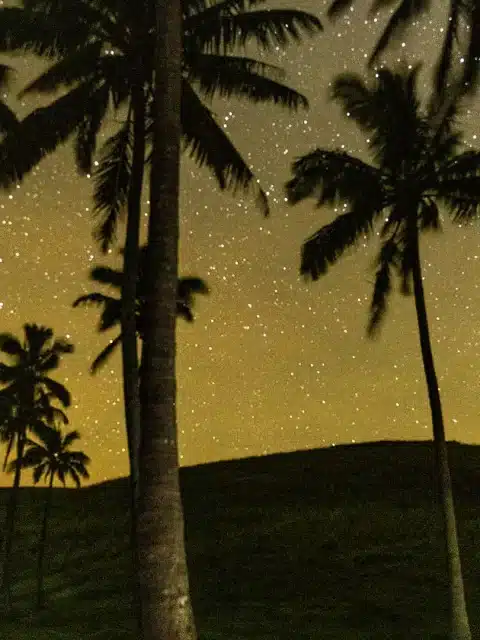
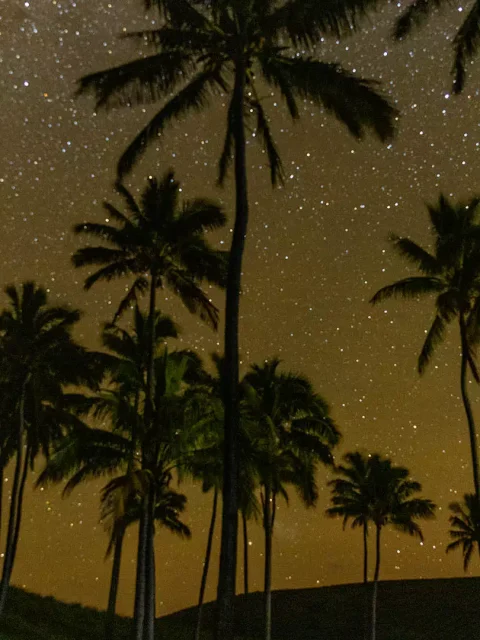
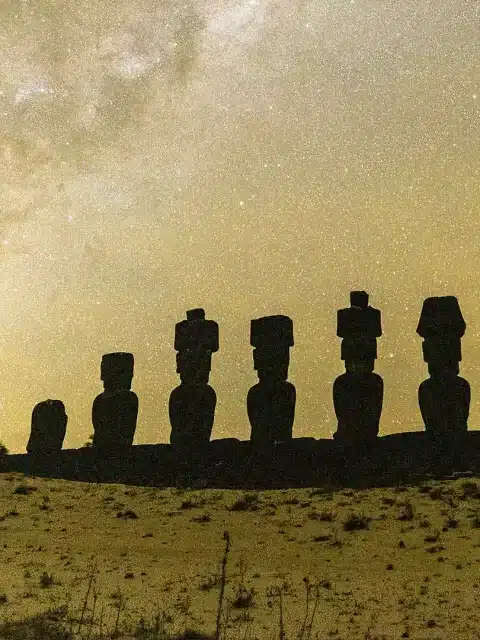
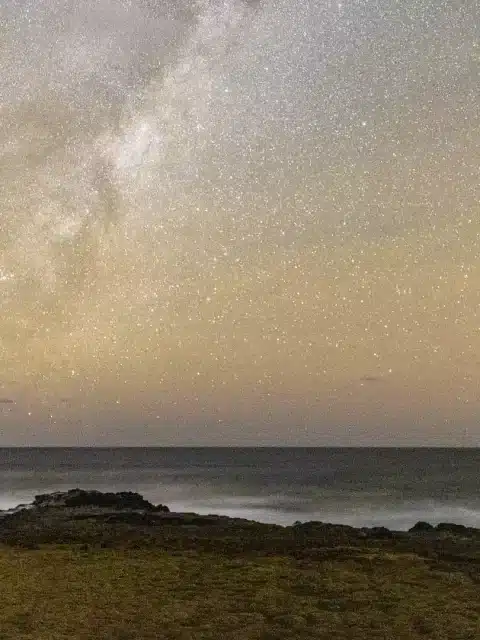
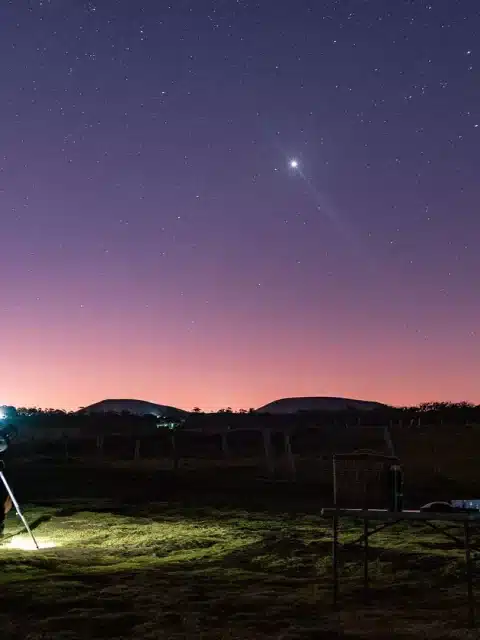
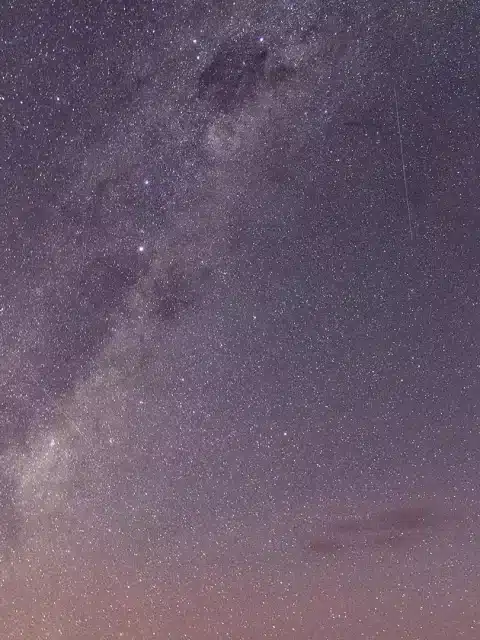
I also returned to the moai after dark while stargazing on Easter Island, which turns these already ridiculous statues into silhouettes beneath one of the darkest skies I’ve ever photographed.
But Ahu Tongariki was different.
It was scale.
Fifteen enormous moai standing shoulder to shoulder across this massive stone platform with essentially nothing around them competing for your attention.
No photograph I’d seen before the trip prepared me for it.
And I’m not sure any photograph I took does either.
So look at the pictures.
Admire the moai.
Then find the tiny humans underneath my logo.
That’s when Ahu Tongariki starts making sense.
And when you finally stand there yourself?
Yeah.
They’re even fucking bigger.