




There are certain animals you understand intellectually before seeing them in person.
Elephants are big.
Giraffes are tall.
Whale sharks are enormous.
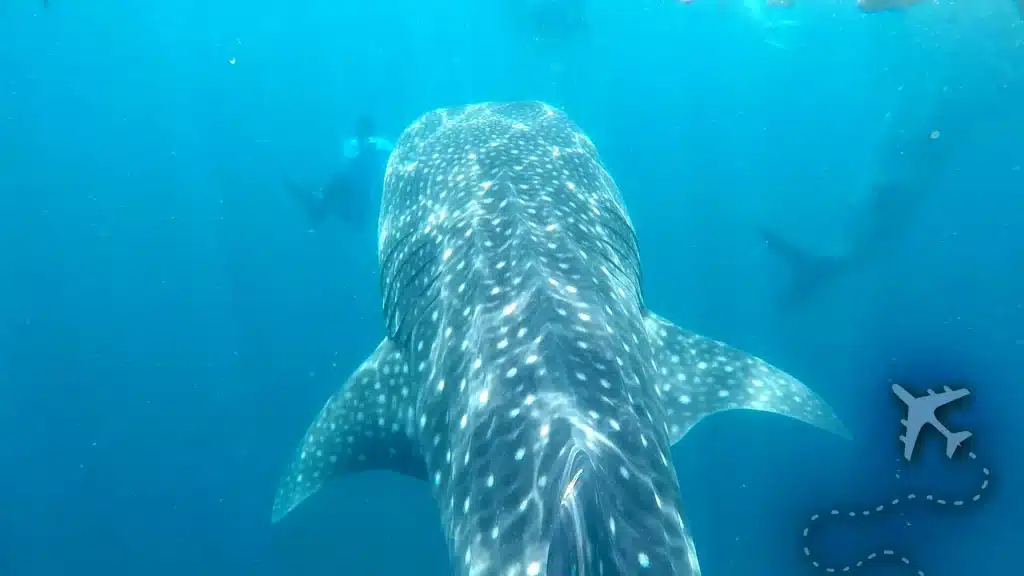
Then you jump into the ocean, look underwater and see a six-meter-long fucking fish casually swimming directly toward you.
And suddenly the brochure description feels wildly inadequate.
This was my first encounter with a whale shark, the largest fish on Earth, and within about three seconds I understood why people travel halfway around the planet for wildlife encounters like this.
But before I could swim with the sharks, I first had to survive something considerably more dangerous: A Filipino bus driver.
DESTINATION: OSLOB WHALE SHARKS
GPS COORDINATES
9.5209, 123.4317
CLOSEST AIRPORT
CURRENT WEATHER
light rain (84F / 29C)

AIR QUALITY INDEX (AQI)
Moderate (58)
THE MOST DANGEROUS ANIMAL IN CEBU DRIVES A BUS
Oslob sits along the southeastern coast of Cebu, several hours south of Cebu City.
Getting there sounds simple.
Get on bus.
Travel south.
Get off bus.
See enormous fish.
Except apparently the driver of my bus had spent his childhood studying Formula 1 onboard footage and was now attempting to qualify for the fucking Monaco Grand Prix in a full-size passenger bus.
The road south follows the coastline through towns, villages and winding stretches of pavement where traffic laws seemed less like actual laws and more like interesting suggestions from the government.
Our driver overtook everything.
Cars.
Trucks.
Motorcycles.
Probably several generations of his own family.
Blind corners presented absolutely no meaningful deterrent.
Oncoming traffic merely created additional opportunities for overtaking.
Every few minutes the bus would accelerate toward another vehicle, swing into the opposite lane and remain there just long enough for me to begin mentally distributing my possessions among surviving relatives.
Then we’d somehow squeeze back into our lane.
Nobody else seemed concerned.
The locals were sleeping.
I was gripping the seat wondering whether my travel insurance covered death by public transportation driven by a man with absolutely nothing left to lose.

Eventually we arrived in Oslob.
Alive.
Which already felt like a successful wildlife encounter.
OH, RIGHT. THE WORLD’S LARGEST FUCKING FISH
The whale sharks around Oslob are generally adolescents.
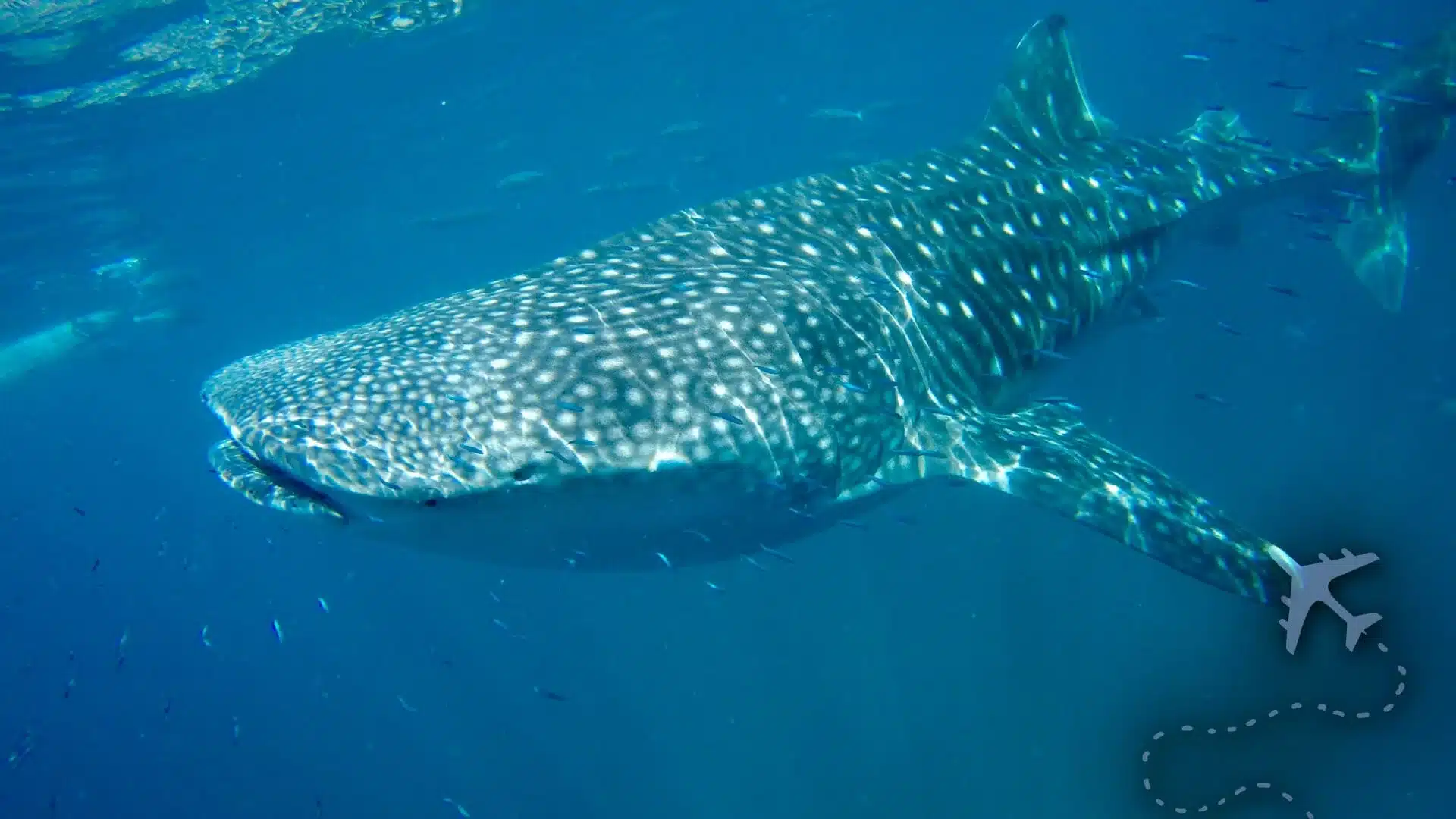
That sounds reassuring until someone explains that an adolescent whale shark can still measure roughly four to six meters long.
That’s 13 to 20 feet of fish.
Apparently “juvenile” means something very different when you’re talking about the largest fish species on the planet.
From the boat, you don’t immediately comprehend the scale.

You see a dark shape moving beneath the water.
Then a dorsal fin.
Maybe a tail.
Interesting.
Cool.
Big fish.
Then you put on a mask, jump overboard and stick your face underwater.
Holy. Shit.
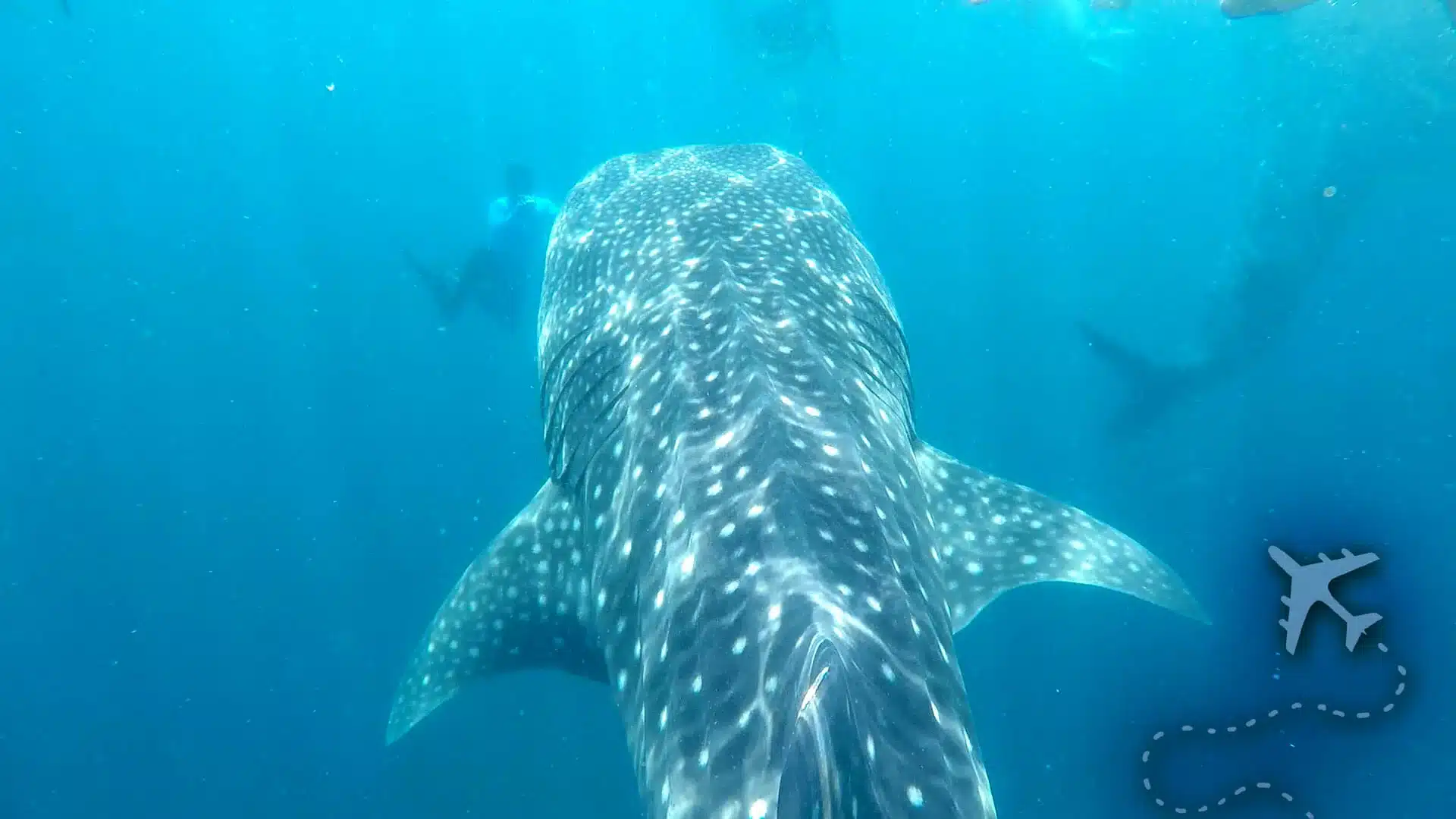
There’s an animal the approximate length of a small bus gliding directly past you.
And unlike the bus I had just ridden from Cebu, this enormous creature was moving slowly, predictably and with absolutely no apparent desire to kill me.
YOUR BRAIN NEEDS A MINUTE
Whale sharks are technically sharks, which means part of your brain immediately activates several decades of extremely useful Jaws-based survival training.
Shark.
Water.
Human.
This seems poorly thought out.

Except whale sharks couldn’t give less of a shit about you.
They’re filter feeders, cruising through the water eating plankton and other tiny organisms while humans desperately paddle around them taking underwater photographs.
The sharks just keep swimming.
Slowly.
Gracefully.
Completely unimpressed by the tourists losing their collective minds ten feet away.
And because they’re so ridiculously large, your brain has trouble judging distance underwater.
A whale shark that appears reasonably far away suddenly becomes an enormous spotted wall of fish passing directly in front of you.

The mouth alone looks large enough to swallow luggage.
Fortunately, you’re not on the menu.
This wasn’t my first bizarre wildlife encounter in the Philippines either. A trip over to Bohol puts you face-to-face with tarsiers, tiny little Pokémon-looking furballs that occupy essentially the opposite end of the animal-size spectrum.
The Philippines apparently decided normal-sized wildlife was boring.
OSLOB HAS FIGURED OUT HOW TO MAKE WHALE SHARKS SHOW UP
The whale shark experience in Oslob is unusual because local operators feed the sharks, encouraging them to remain near shore.
Small boats carry visitors offshore while other boats distribute food into the water.
The sharks know the routine.
Breakfast appears.
Whale sharks appear.

Tourists collectively shit themselves.
Everybody wins.
Well… sort of.
The practice has also made Oslob one of the more controversial whale shark destinations in the world. Feeding wild animals can alter their natural behavior and migration patterns, so it’s worth understanding what you’re participating in before jumping into the water.
That distinction became much more obvious to me years later when I went swimming with whale sharks in Sumbawa, Indonesia.
That experience involved flying east from Bali, waking up around 4:00 AM, spending hours aboard a handmade wooden boat in Saleh Bay and listening to local crews use radios to figure out where the sharks had appeared.
No guaranteed breakfast reservation.
No convenient gathering spot.
Just a gigantic bay and everyone trying to find a gigantic fish.
Same animal.
Completely different adventure.
THEY’RE BASICALLY SUBMARINE-SIZED GOLDFISH
After the initial shock wears off, swimming with whale sharks becomes strangely peaceful.
They aren’t aggressive.
They aren’t chasing anything.
They aren’t particularly interested in you.

They’re basically massive spotted goldfish with better public relations.
One slowly cruises past.
Another appears from deeper water.
Then suddenly there’s one underneath you.
That’s when scale becomes difficult to describe.
Seeing a four-to-six-meter animal in photographs doesn’t properly communicate what that means when you’re floating next to it wearing nothing but swim trunks and a snorkel.
You feel very, very small.
And that’s exactly what makes it so fucking cool.
It’s the same feeling I’ve gotten from some of my favorite wildlife experiences around the world. You’re suddenly standing, swimming or sitting in an open safari vehicle next to something you’ve previously only seen on television.
Sometimes that’s a whale shark.
Sometimes it’s hunting the Big Five in Pilanesberg National Park.
And sometimes you’re in South Africa mounting cameras to a safari vehicle shortly before discovering that a lion is perfectly capable of eating your camera.
Wildlife photography has occasionally been rough on the equipment budget.
THIS WAS ONLY THE BEGINNING
Oslob completely ruined whale sharks for me.
Because once you’ve been underwater next to the world’s largest fish, seeing another one becomes something you actively start looking for.
Years later, that obsession eventually sent me to Saleh Bay in Sumbawa to swim with whale sharks in Indonesia.
The Indonesian trip was harder.
The logistics were considerably more ridiculous.
The sharks were bigger.
And finding them required the same kind of radio-powered wildlife intelligence network I later encountered while looking for lions and rhinos on safari.
But Oslob was the first.
And there’s something unforgettable about the first time you put your face underwater and realize the enormous shadow approaching you isn’t a boat.
It’s alive.
It’s twenty feet long.
And it’s coming directly toward you.
Whoa. Holy shit.
That’s really all the sophisticated wildlife commentary required.
I had traveled several hours south through Cebu aboard a bus driven by a man who apparently considered overtaking on blind corners a competitive sport, climbed into a tiny boat and voluntarily jumped into the ocean with sharks the size of delivery trucks.
And somehow, by the end of the day, there was absolutely no question which part had been dangerous.
The fucking bus.